
Plant
Coral Honeysuckle
Lonicera sempervirensAlso known as Trumpet Honeysuckle, Scarlet Honeysuckle, Woodbine
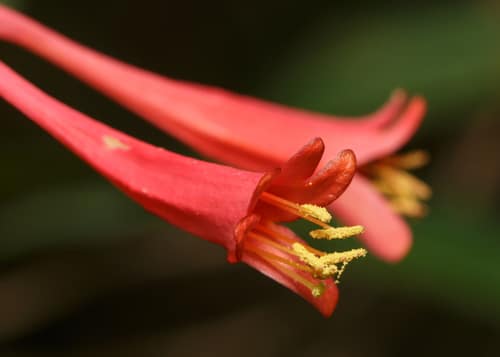
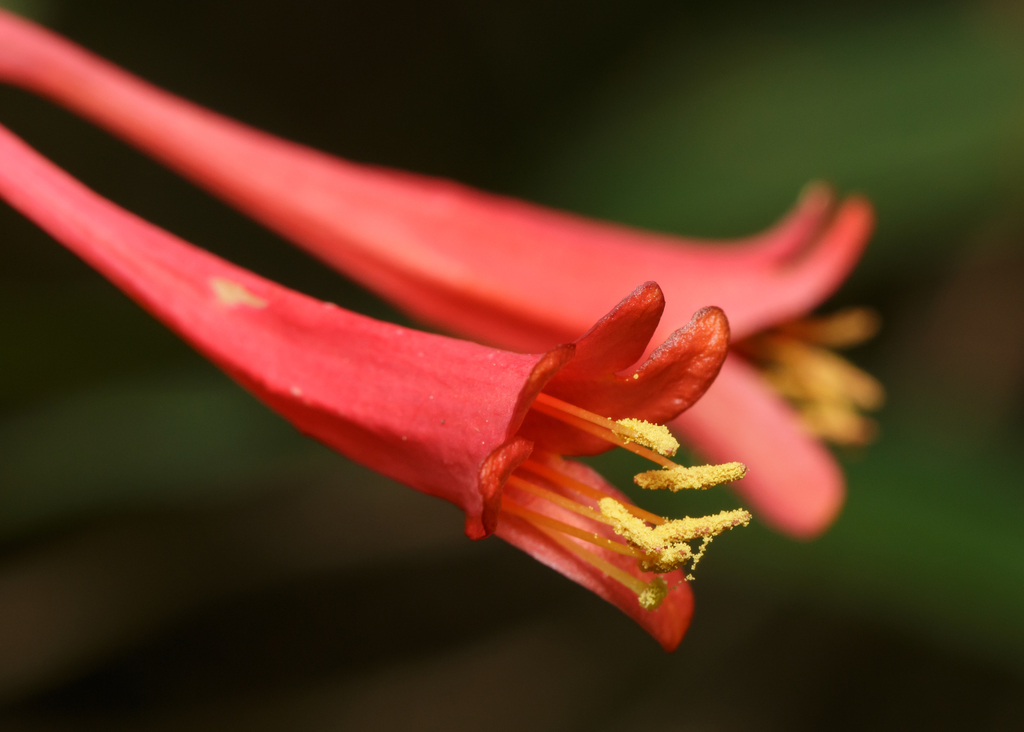
Coral honeysuckle twines gracefully through sunny forest margins and garden trellises, producing vibrant clusters of trumpet-shaped, crimson-to-coral flowers with bright yellow interiors. Highly favored by ruby-throated hummingbirds, these tubular blooms lack the heavy perfume of exotic honeysuckles but offer rich nectar reserves from spring into late summer. In warm southern climates, the smooth, blue-green foliage remains evergreen throughout the year, followed by glossy red autumn berries that sustain migratory birds.
ViningFloweringAttracts Hummingbirds
—observations
—countries
—peak records
Least ConcernConservation statusIUCN Red List categoriesLCNTVUENCREWEXLeast ConcernRed List categories, explained →
Diet & preySunlight, Water, Soil Nutrients
Predators
- White-tailed Deer
- Aphids
- Snowberry Clearwing Caterpillar
ThreatsHabitat clearing, competition from invasive Japanese honeysuckle
HabitatsWoodland edges, thickets, fence rows, pine flatwoods
Life span15–30+ years
Classification
- OrderDipsacales
- FamilyCaprifoliaceae
- GenusLonicera
- SpeciesLonicera sempervirens
Range data is not available yet.
Interaction riskHigh
- Low
- Moderate
- High
- Very high
- Why interaction risk is high
- Berries are mildly toxic if eaten; wild berries also have dangerous look-alikes, so never ingest.
- Why it is dangerous
- Leaves and berries contain mildly toxic saponins that cause vomiting and diarrhea if ingested by humans or domestic pets.
- How to recognize a risky encounter
- Recognized by smooth opposite leaves, with the top pair fused into a solid circular disk beneath bright red flowers.
- What to do
- Appreciate this native vine visually, but keep children and curious pets from nibbling on the red fruit.
Responsible observation
- Garden Planting: Provide a sturdy trellis or fence in full sun to encourage dense flowering and healthy growth.
- Wildlife Watching: Position vines near windows or patios to observe feeding hummingbirds from a comfortable distance.
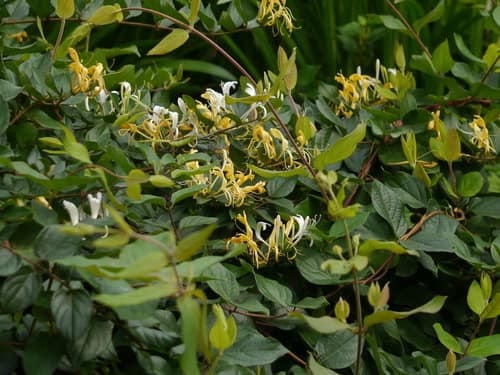
Competitor (c) Dinesh Valke, some rights reserved (CC BY-SA) · cc-by-sa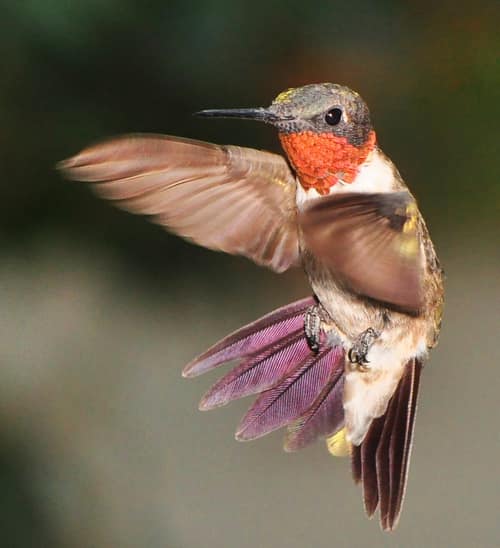
Pollinator jeffreyw / CC BY 2.0 · cc-by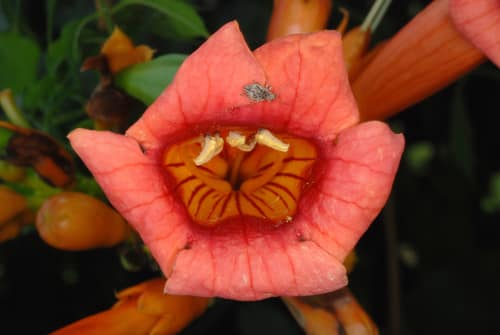
Frequent Companion (c) Douglas Goldman, some rights reserved (CC BY-SA), uploaded by Douglas Goldman · cc-by-sa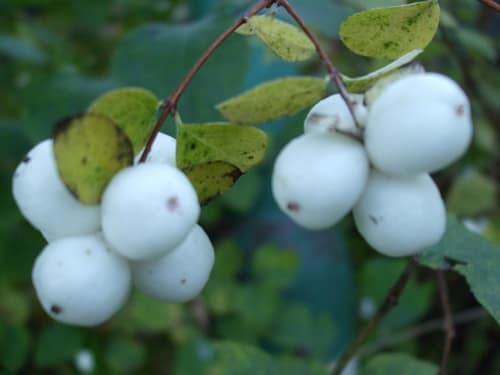
Close Relative (c) tomasz przechlewski, some rights reserved (CC BY) · cc-by
Help improve the field guideSomething wrong?
Checking your Fauna account…Report a name, category, or profile issue for review.