
Plant · GBIF taxon 5329904
Giant Taro
Alocasia macrorrhizosAlso known as Giant Alocasia, Cunjevoi, Ape, Biga
Giant taro produces some of the largest undivided leaves in the plant kingdom, unfurling towering green canopy shields supported by thick, succulence-rich stems. Rooted in humid tropical understories, creeping rhizomes store immense energy reserves that fuel rapid growth along shady stream banks and wet forest floors. Traditional cultures across the Pacific cultivated it for millennia, carefully processing its starch-rich corms through intense heat to breakdown defensive irritants.
TropicalBroadleafPerennial
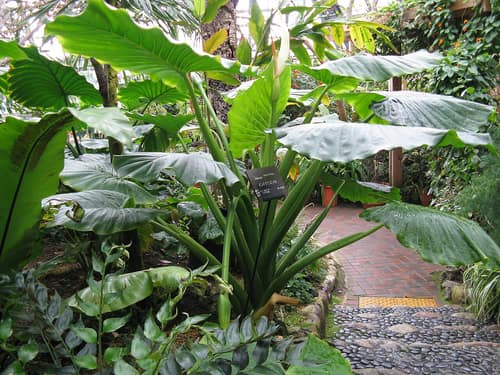
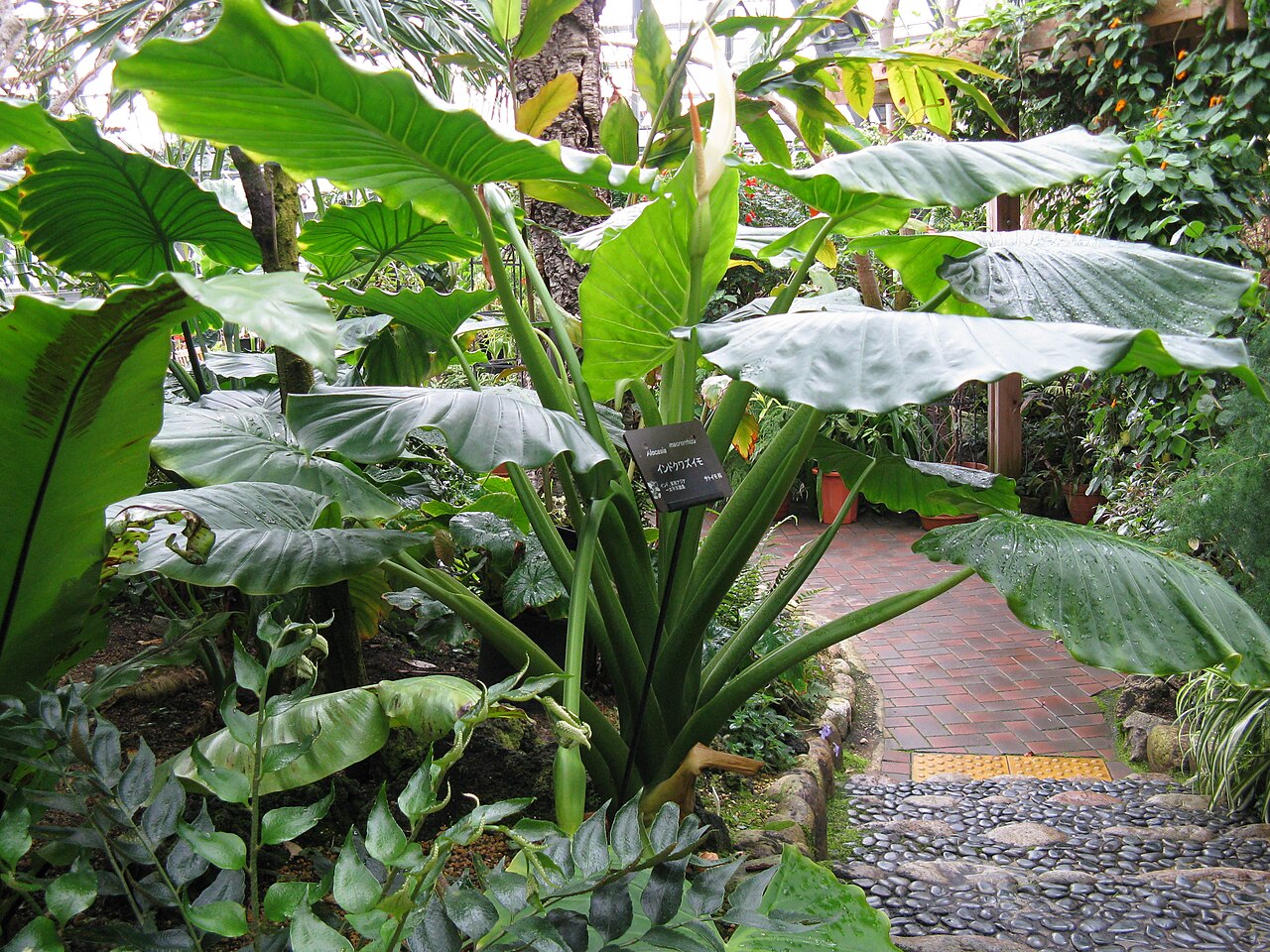
—observations
—countries
—peak records
Not EvaluatedConservation statusIUCN Red List categoriesLCNTVUENCREWEXNot Evaluated — not placed on the risk ladderRed List categories, explained →
Diet & prey
- Sunlight
- Soil Moisture
- Nitrogen
Predators
- Snails and Slugs
- Spider Mites
- Caterpillars
ThreatsLand development, habitat alteration, frost in non-tropical zones
HabitatsRainforest understory, stream banks, humid tropical lowlands
Life spanPerennial (decades via rhizome)
Classification
- OrderAlismatales
- FamilyAraceae
- GenusAlocasia
- SpeciesAlocasia macrorrhizos
Range data is not available yet.
Interaction riskHigh
- Low
- Moderate
- High
- Very high
- Why interaction risk is high
- Contains calcium oxalate crystals that cause severe mouth pain if eaten and irritate skin on contact.
- Why it is dangerous
- Contains sharp calcium oxalate crystals that cause intense burning and swelling in the mouth if eaten, alongside skin irritation from raw sap.
- How to recognize a risky encounter
- Recognize this giant herb by its upright, arrow-shaped glossy leaves reaching over a meter long on sturdy stalks.
- What to do
- Wear protective gloves when trimming foliage or handling cut stems, and keep domestic animals away.
Responsible observation
- Observation: Look for leaves that point upward toward the light, distinguishing this genus from down-pointing Colocasia species.
- Cultivation: Give plants rich, moist soil, high humidity, and filtered sunlight to mimic their native rainforest habitat.
- Safety Precaution: Avoid cutting foliage without gloves to prevent raw sap from touching bare skin.
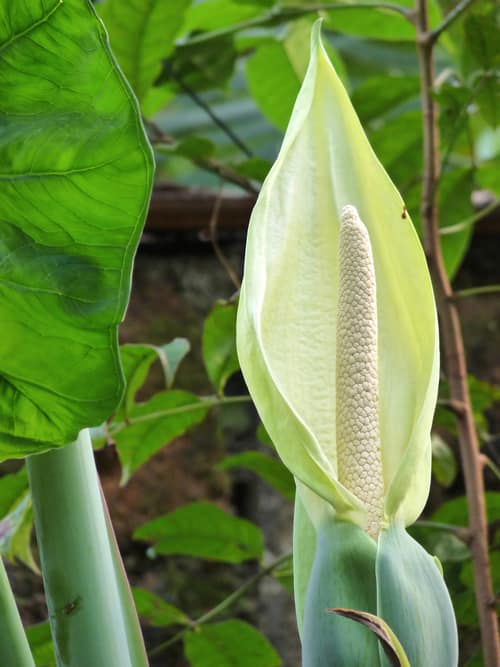
Related Arum (c) Jeevan Jose, Kerala, India, some rights reserved (CC BY-SA) · cc-by-sa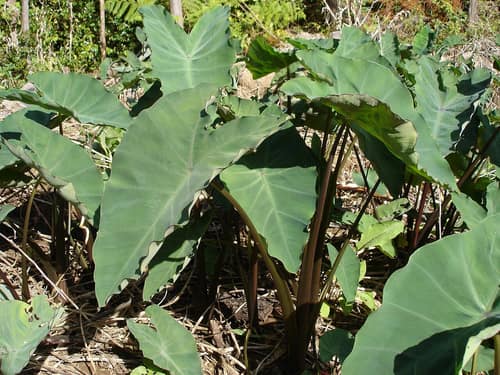
Close Relative No machine-readable author provided. Thierry Caro assumed (based on copyright claims). / CC BY-SA 2.5 · cc-by-sa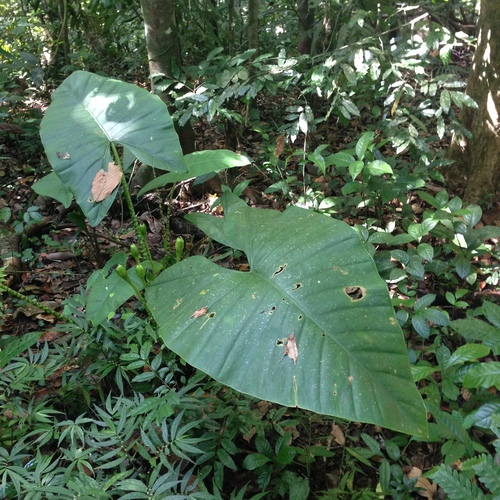
Genus Relative no rights reserved, uploaded by Dag Endresen · cc0
Help improve the field guideSomething wrong?
Checking your Fauna account…Report a name, category, or profile issue for review.