
Plant
Blueberry Lily
Dianella revolutaAlso known as Blue Flax-lily, Black-anther Flax-lily, Spreading Flax-lily
Tufted clumps of Blueberry Lily send up slender, branching stems each spring and summer, topped with star-like violet-blue flowers that nod above narrow, strap-like leaves. Native bees must vibrate the dark anthers at high frequencies to shake pollen loose, a specialized process called buzz pollination. Glossy indigo berries follow the blooms, drawing birds and reptiles that scatter the seeds across Australian woodlands and heathlands.
PerennialFloweringDrought-Tolerant
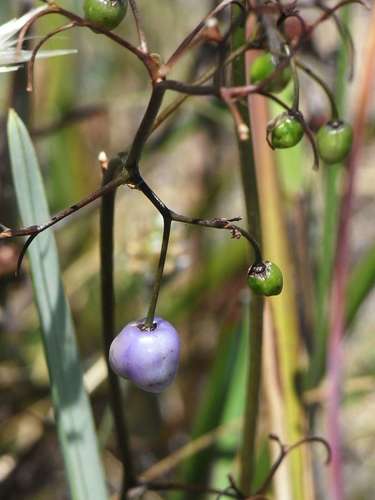
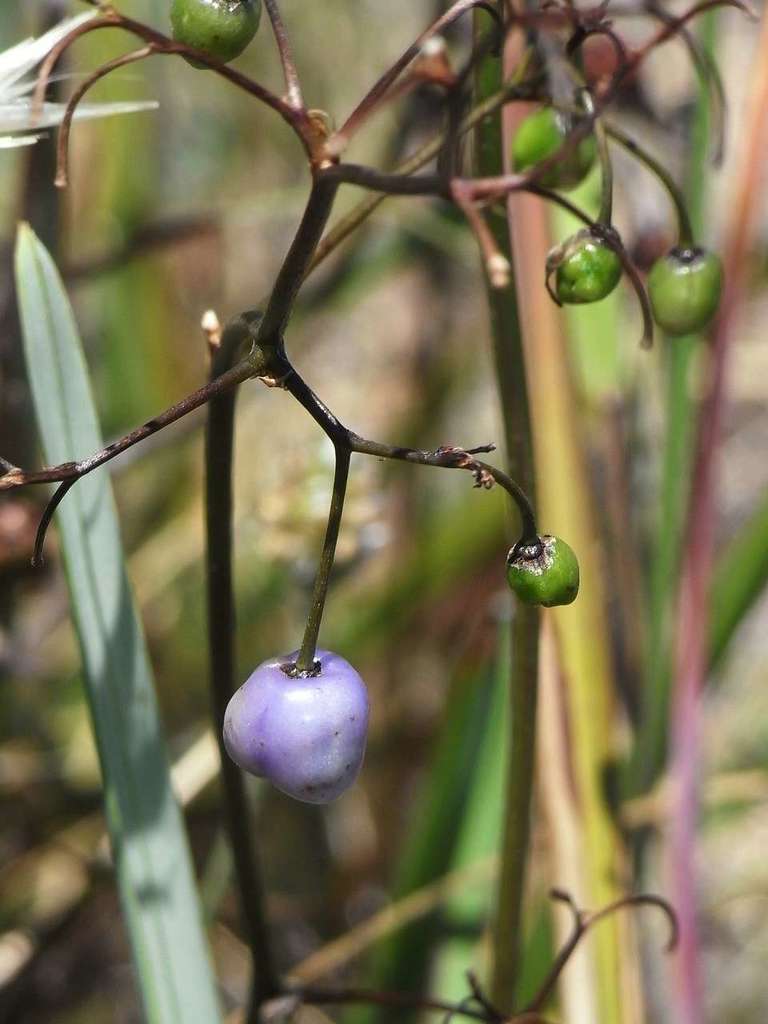
—observations
—countries
—peak records
Least ConcernConservation statusIUCN Red List categoriesLCNTVUENCREWEXLeast ConcernRed List categories, explained →
Diet & preySunlight, Water, Soil nutrients
Predators
- Eastern Grey Kangaroo
- Swamp Wallaby
- European Rabbit
ThreatsHabitat clearing, invasive weeds, and frequent intense wildfires
HabitatsOpen woodlands, coastal heathlands, grasslands, and rocky slopes across Australia
Life spanPerennial, living 10–20 years or more via underground rhizomes
Classification
- OrderAsparagales
- FamilyAsphodelaceae
- GenusDianella
- SpeciesDianella revoluta
Range data is not available yet.
Interaction riskLow
- Low
- Moderate
- High
- Very high
- Why interaction risk is low
- Wild berries have toxic look-alikes; never eat based on app identification alone.
Responsible observation
- Leaf Margins: Run a finger gently along the leaf edge to feel how it rolls under, a key ID trait.
- Anther Color: Look closely at the flower center for bright yellow filaments topped with dark brown to black anthers.
- Pollinator Watch: Listen for a high-pitched buzz on sunny mornings as native bees shake pollen from the blooms.
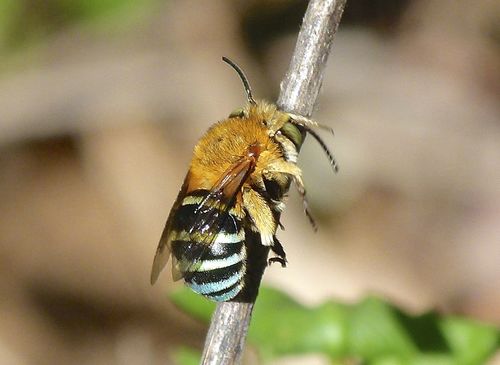
Pollinator (c) Steve Kerr, some rights reserved (CC BY), uploaded by Steve Kerr · cc-by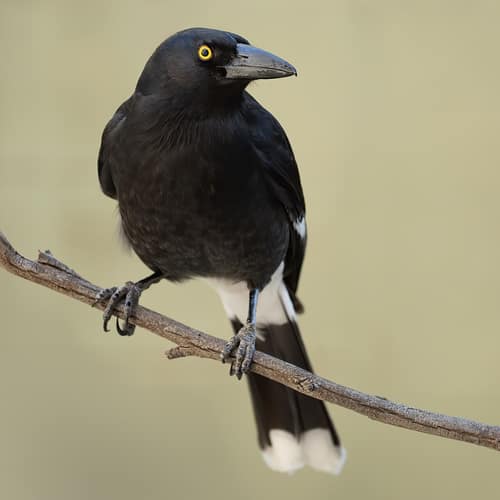
Seed Disperser JJ Harrison (https://www.jjharrison.com.au/) / CC BY-SA 4.0 · cc-by-sa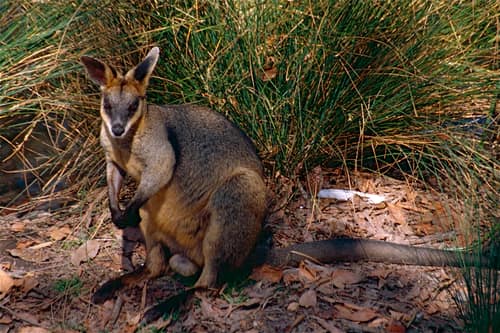
Herbivore (c) Bernard DUPONT, some rights reserved (CC BY-SA) · cc-by-sa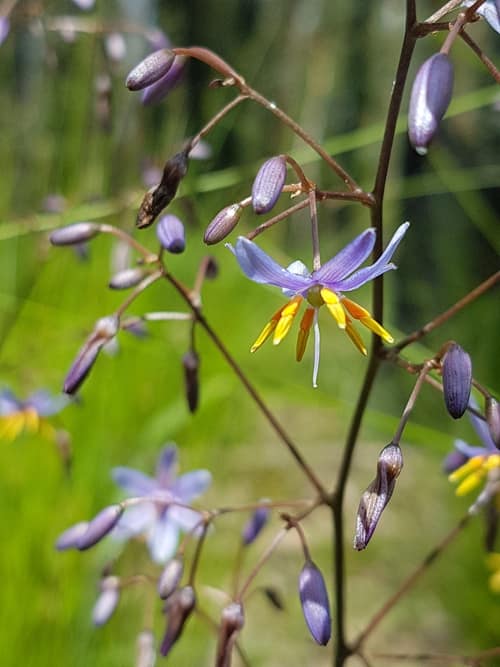
Close Relative no rights reserved, uploaded by Vale Jenny Conolly · cc0
Help improve the field guideSomething wrong?
Checking your Fauna account…Report a name, category, or profile issue for review.