
Plant
Khasi Pine
Pinus kesiyaAlso known as Benguet Pine
Khasi pines are tall, fast-growing conifers with slender needles bundled in threes and thick, deeply fissured bark that shields mature trunks from seasonal ground fires. Across the mountain ridges of mainland Southeast Asia and the Philippines, they form open, sun-drenched woodlands where wind carries their winged seeds into freshly burned or disturbed soil. Resin-rich wood and rapid early growth have also made them a favored timber and pulp plantation tree across southern Africa and South America.
EvergreenConiferFire-adapted
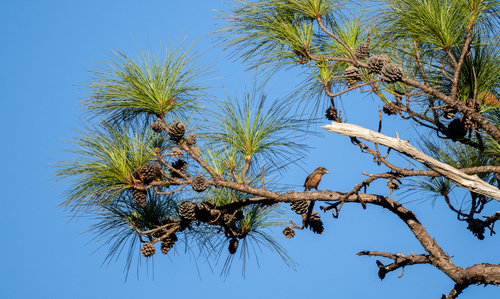
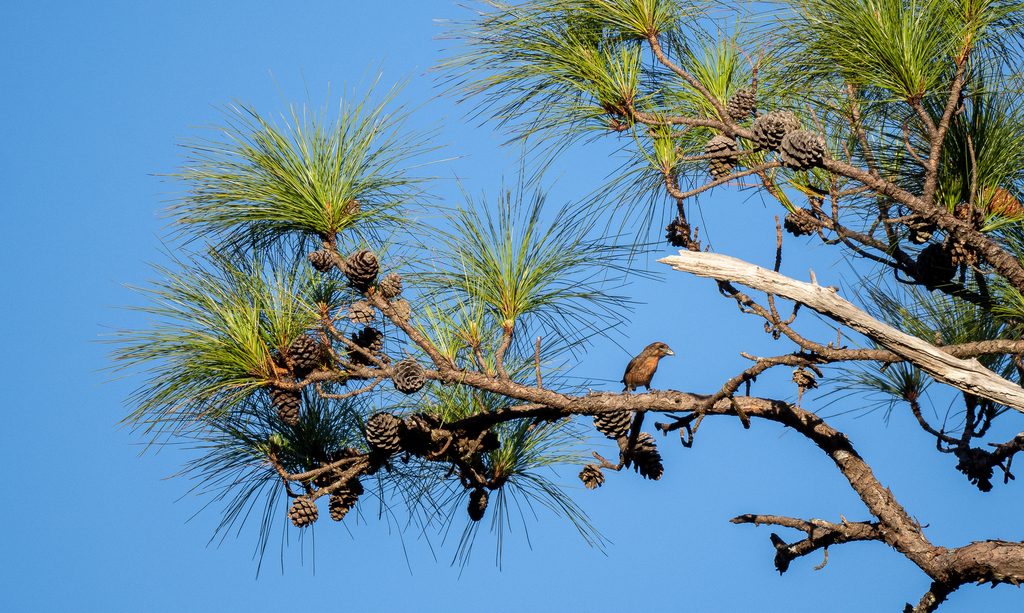
—observations
—countries
—peak records
Least ConcernConservation statusIUCN Red List categoriesLCNTVUENCREWEXLeast ConcernRed List categories, explained →
Diet & preyPhotosynthetic (sunlight, water, soil nutrients)
Predators
- Pine bark beetles
- Pine shoot moths
- Seed-eating birds
ThreatsUnsustainable logging, severe wildfires, and agricultural clearing
HabitatsMontane forests, open ridges, and pine savannas (800–2,500 m)
Life span100–200 years
Classification
- FamilyPinaceae
- SpeciesPinus kesiya
Range data is not available yet.
Interaction riskLow
- Low
- Moderate
- High
- Very high
- Why interaction risk is low
- Safe to observe at a normal distance.
Responsible observation
- Needle Count: Check for slender needles grouped in bundles of three, 15 to 20 cm long.
- Cones and Bark: Look for egg-shaped woody cones and thick, deeply plated reddish-brown bark.
- Resin Caution: Avoid touching fresh bark wounds, as the sticky oleoresin is difficult to wash off skin and clothing.

Seed Predator (c) Stanley Davis, some rights reserved (CC BY), uploaded by Stanley Davis · cc-by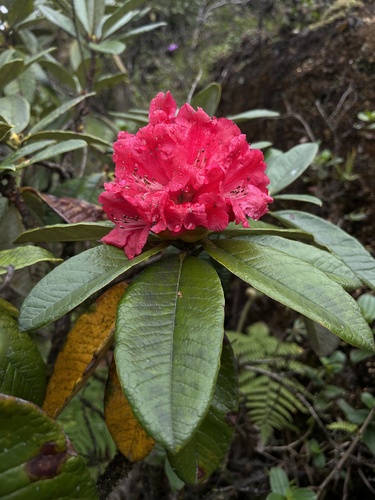
Frequent Companion (c) Vsevolod Rudyi, some rights reserved (CC BY), uploaded by Vsevolod Rudyi · cc-by Image unavailable
Frequent Companion 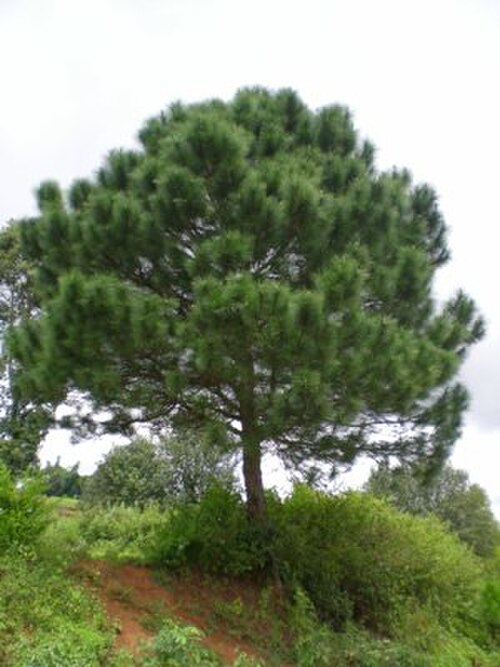
Close Relative Yetunminn at Flickr / CC BY 2.0 · cc-by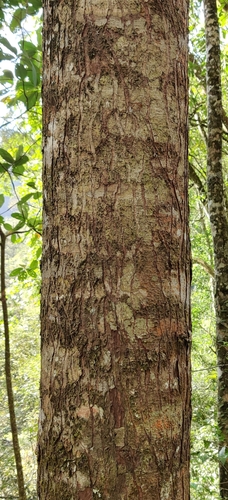
Close Relative (c) Thomas Gyselinck, some rights reserved (CC BY), uploaded by Thomas Gyselinck · cc-by
Help improve the field guideSomething wrong?
Checking your Fauna account…Report a name, category, or profile issue for review.