
Plant
Pinus montezumae
Pinus montezumaeAlso known as Montezuma Pine, Ocote Pine, Pino Ocote
Montezuma pine forms grand, spreading crowns atop tall, thick-barked trunks across the temperate highlands of Mexico and northern Central America. Its exceptionally long, drooping needles hang in lush clusters of five, giving mature canopies an elegant, weeping silhouette that sways noticeably in mountain breezes. Fire-adapted and resilient, young seedlings spend several years in a grass stage developing a stout taproot and fire-resistant bark before surging skyward.
ConiferEvergreenHighland
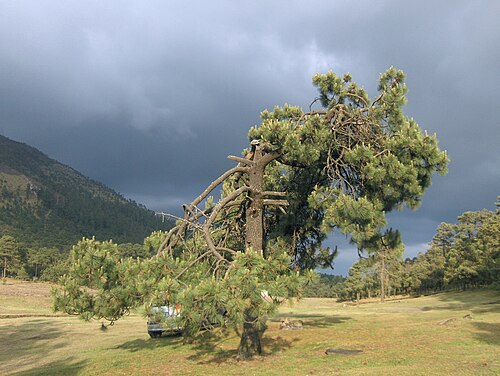
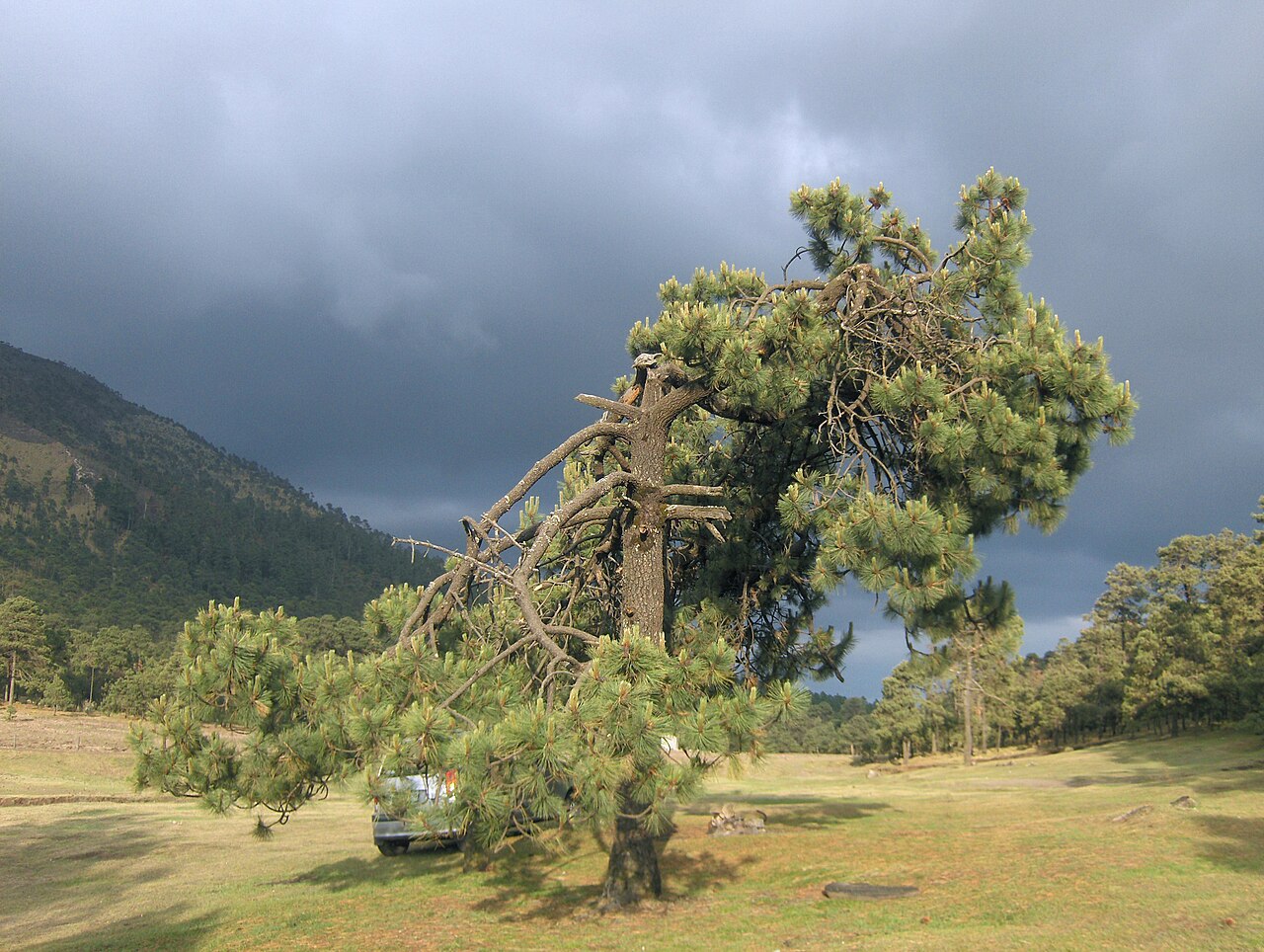
—observations
—countries
—peak records
Least ConcernConservation statusIUCN Red List categoriesLCNTVUENCREWEXLeast ConcernRed List categories, explained →
Diet & preySunlight, Atmospheric carbon dioxide, Soil water and minerals
Predators
- Roundheaded pine beetle
- Mexican pine beetle
- Wood-decay fungi
ThreatsDeforestation, illegal logging, bark beetle infestations, and altered wildfire regimes
HabitatsMontane cloud forests, temperate pine-oak woodlands, and volcanic slopes
Life span150–300 years
Classification
- FamilyPinaceae
- SpeciesPinus montezumae
Range data is not available yet.
Interaction riskLow
- Low
- Moderate
- High
- Very high
- Why interaction risk is low
- Safe to observe at a normal distance.
Responsible observation
- Viewing canopies: Look upward to spot the large, ovoid seed cones clustered near branch tips.
- Root protection: Avoid trampling or compacting the soil directly beneath the drip line of mature trees.
- Bark examination: Observe the deeply furrowed, dark grey bark that protects the trunk against mountain ground fires.
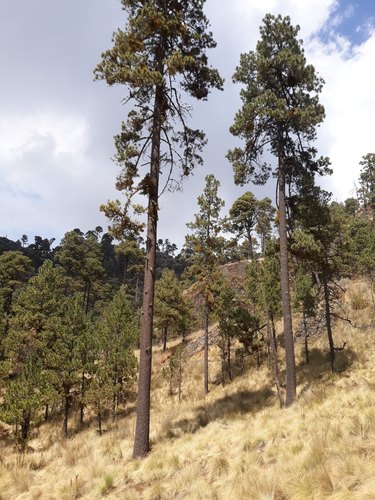
Close Relative (c) Jalil R., some rights reserved (CC BY-SA) · cc-by-sa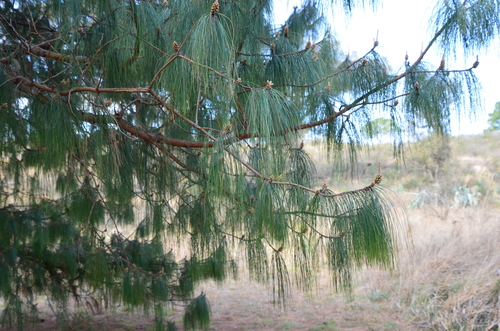
Close Relative (c) Lauu, some rights reserved (CC BY), uploaded by Lauu · cc-by Image unavailable
Close Relative 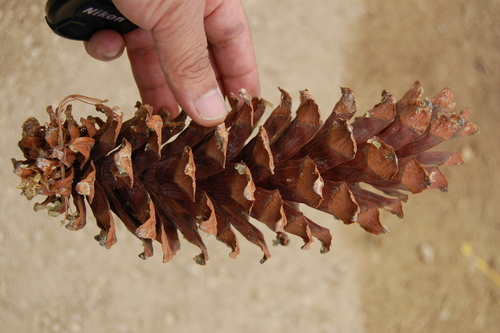
Close Relative (c) Neptalí Ramírez Marcial, some rights reserved (CC BY), uploaded by Neptalí Ramírez Marcial · cc-by
Help improve the field guideSomething wrong?
Checking your Fauna account…Report a name, category, or profile issue for review.