
Fungus · GBIF taxon 5249253
Conifer Mazegill
Gloeophyllum sepiariumAlso known as Rusty Gilled Polypore, Yellow-Red Gill Bracket
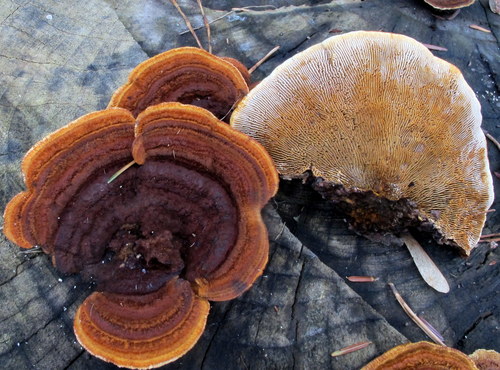
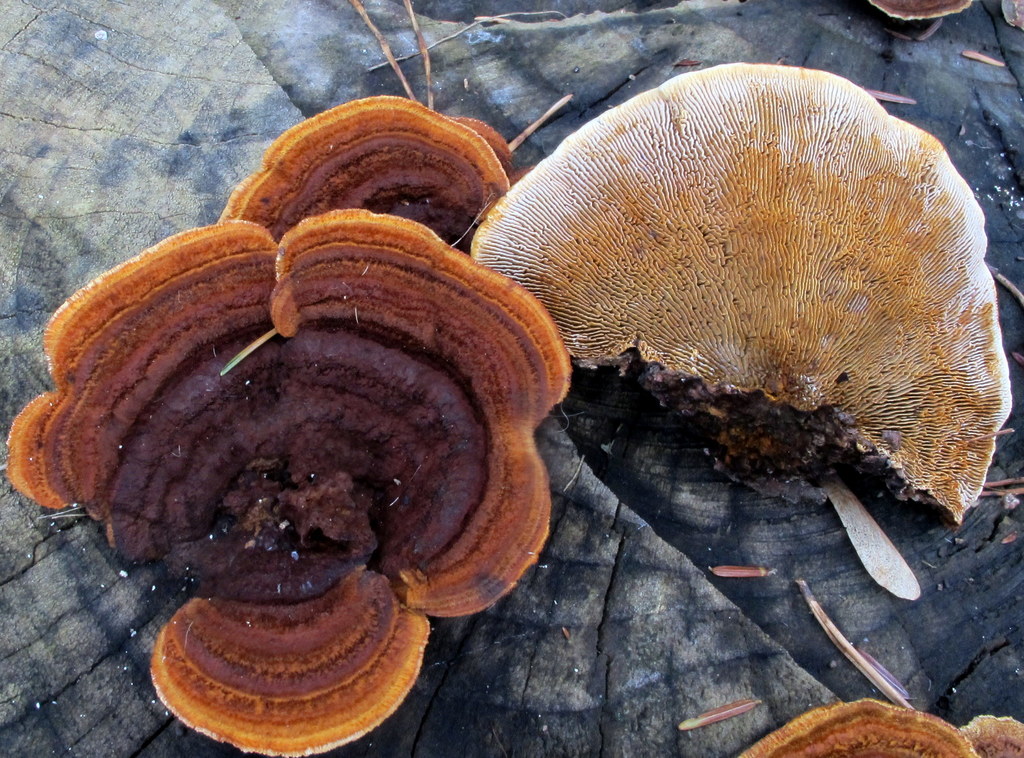
Conifer mazegills are tough, bracket-forming fungi that play a vital role in forest ecosystems by breaking down cellulose in dead coniferous wood. Their upper surfaces feature striking concentric bands of rusty orange, yellow, and dark brown, while the underside reveals a complex maze of gill-like pores. Frequently found on fallen pine logs, building timbers, and fence posts, these resilient fruit bodies can dry out completely during dry spells and revive when rain returns.
Wood-DecayBracket FungusBrown Rot
 1 / 7
1 / 7—observations
—countries
—peak records
Not EvaluatedConservation statusIUCN Red List categoriesLCNTVUENCREWEXNot Evaluated — not placed on the risk ladderRed List categories, explained →
Diet & prey
- Dead conifer wood
- Cellulose
- Hemicellulose
Predators
- Fungus beetles
- Fungus gnat larvae
- Slugs
ThreatsRemoval of deadwood in managed forests
HabitatsConiferous forests, pine plantations, wooden fences, and outdoor timber structures
Life spanPerennial fruit bodies surviving multiple seasons
Classification
- OrderGloeophyllales
- FamilyGloeophyllaceae
- GenusGloeophyllum
- SpeciesGloeophyllum sepiarium
Range data is not available yet.
Interaction riskLow
- Low
- Moderate
- High
- Very high
- Why interaction risk is low
- Many wild fungi have toxic look-alikes; never ingest wild mushrooms based on app identification alone.
Responsible observation
- Inspect the Underside: Look beneath the shelf to observe the characteristic maze-like, blade-like pore structure.
- Check the Substrate: Confirm whether the fungus is growing on coniferous timber or fallen pine logs.
- Examine Color Zones: Look for bright orange growing edges contrasting with older, darker inner zones.
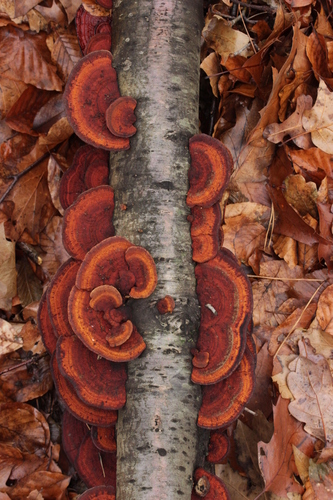
Similar Fungus (c) Björn Sothmann, some rights reserved (CC BY-SA), uploaded by Björn Sothmann · cc-by-sa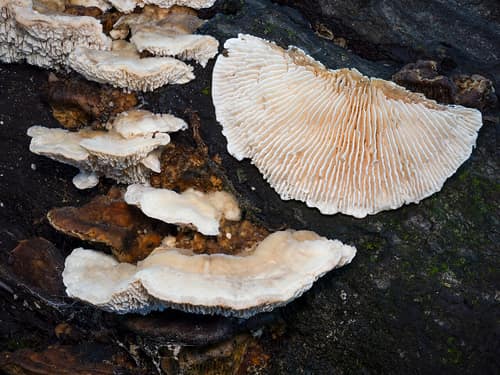
Similar Fungus Alan Rockefeller / CC BY 4.0 · cc-by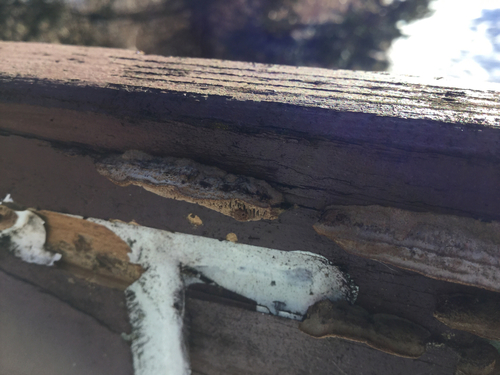
Close Relative no rights reserved · cc0 Image unavailable
Close Relative
Help improve the field guideSomething wrong?
Checking your Fauna account…Report a name, category, or profile issue for review.