
Fungus
Common Ink Cap
Coprinopsis atramentariaAlso known as Alcohol Inky Cap, Tippler's Bane, Inky Cap
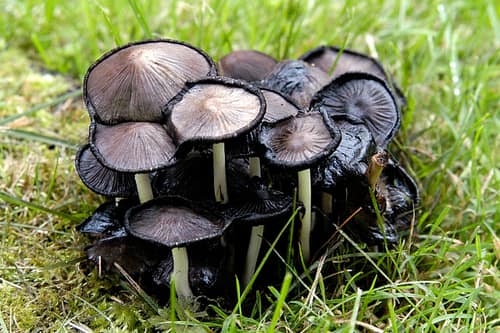
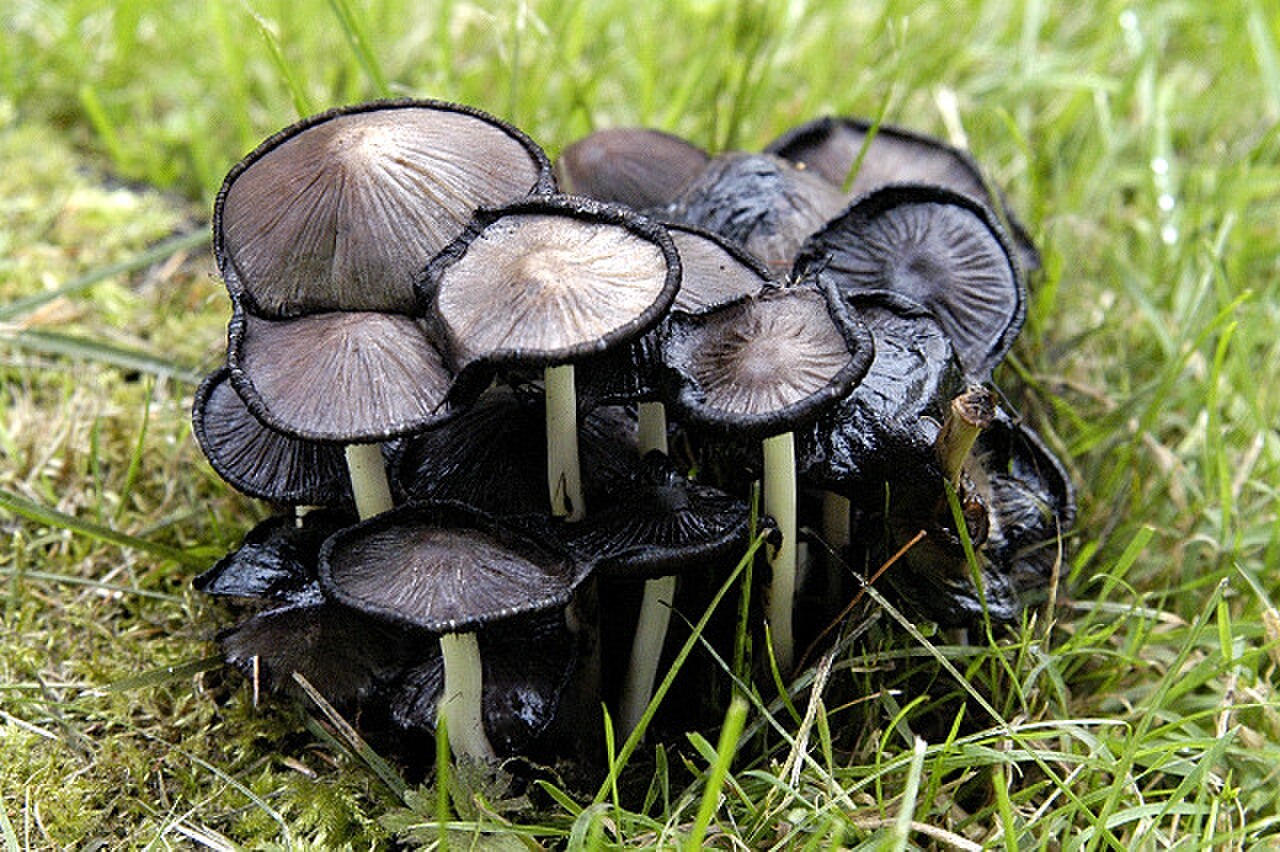
Common ink caps emerge in tight clusters from buried wood, lawns, and disturbed ground, rapidly transforming from neat grey bells into flattened disks. Within hours of expanding, the cap edges undergo self-digestion, liquifying into a thick black ink that drips away to disperse spores. This saprobic fungus plays an essential role in breaking down woody debris and recycling soil nutrients across northern temperate regions.
FungusSaprobicDeliquescent
—observations
—countries
—peak records
Not EvaluatedConservation statusIUCN Red List categoriesLCNTVUENCREWEXNot Evaluated — not placed on the risk ladderRed List categories, explained →
Diet & preySaprobic (decaying wood and organic matter)
Predators
- Slugs
- Fungus gnat larvae
- Springtails
ThreatsHabitat loss and land development
HabitatsGrassy fields, woodland edges, disturbed soil
Life spanFruiting body lasts 1–3 days before dissolving
Classification
- OrderAgaricales
- FamilyPsathyrellaceae
- GenusCoprinopsis
- SpeciesCoprinopsis atramentaria
Range data is not available yet.
Interaction riskHigh
- Low
- Moderate
- High
- Very high
- Why interaction risk is high
- Contains coprine which causes severe illness if combined with alcohol, and wild mushrooms have toxic look-alikes; never consume.
- Why it is dangerous
- Contains coprine, which blocks alcohol metabolism and causes severe vomiting, flushing, and rapid heart rate if alcohol is consumed.
- How to recognize a risky encounter
- Recognized by smooth to finely scaly greyish-brown bell caps growing in dense clusters around buried wood.
- What to do
- Safe to inspect and photograph up close, but wash hands afterwards and never consume wild mushrooms.
Responsible observation
- Observation Timing: Inspect patches early in the morning before fruiting bodies liquefy under warm sun.
- Spore Inspection: Take spore prints from young caps prior to auto-digestion to view black spore deposits.
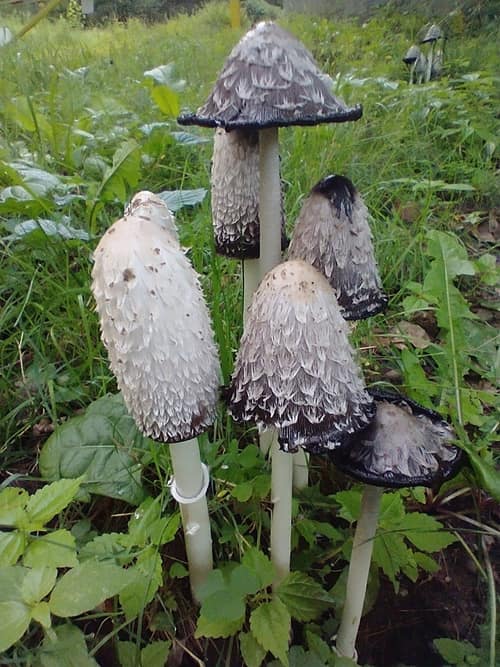
Look-Alike (c) Tom Norton, some rights reserved (CC BY), uploaded by Tom Norton · cc-by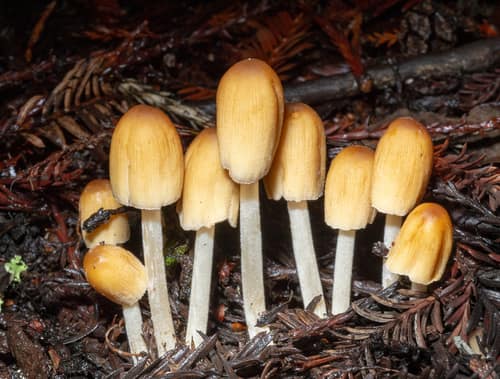
Close Relative (c) Alan Rockefeller, some rights reserved (CC BY), uploaded by Alan Rockefeller · cc-by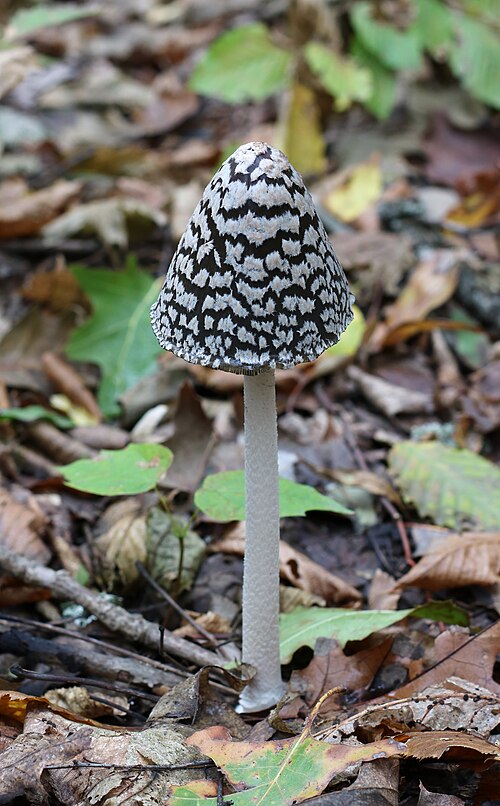
Close Relative George Chernilevsky / CC BY 4.0 · cc-by
Keep collecting in Fauna
Found in Collections
Species set Pro
Fungi Forager
Common Ink Cap is found in this collection. Identify it in Fauna to fill this slot and continue your progress.
Unlock to track progress
Help improve the field guideSomething wrong?
Checking your Fauna account…Report a name, category, or profile issue for review.