
Fungus
Pixie's Parasol
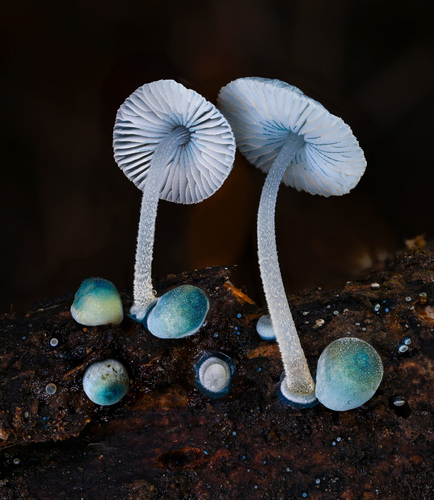
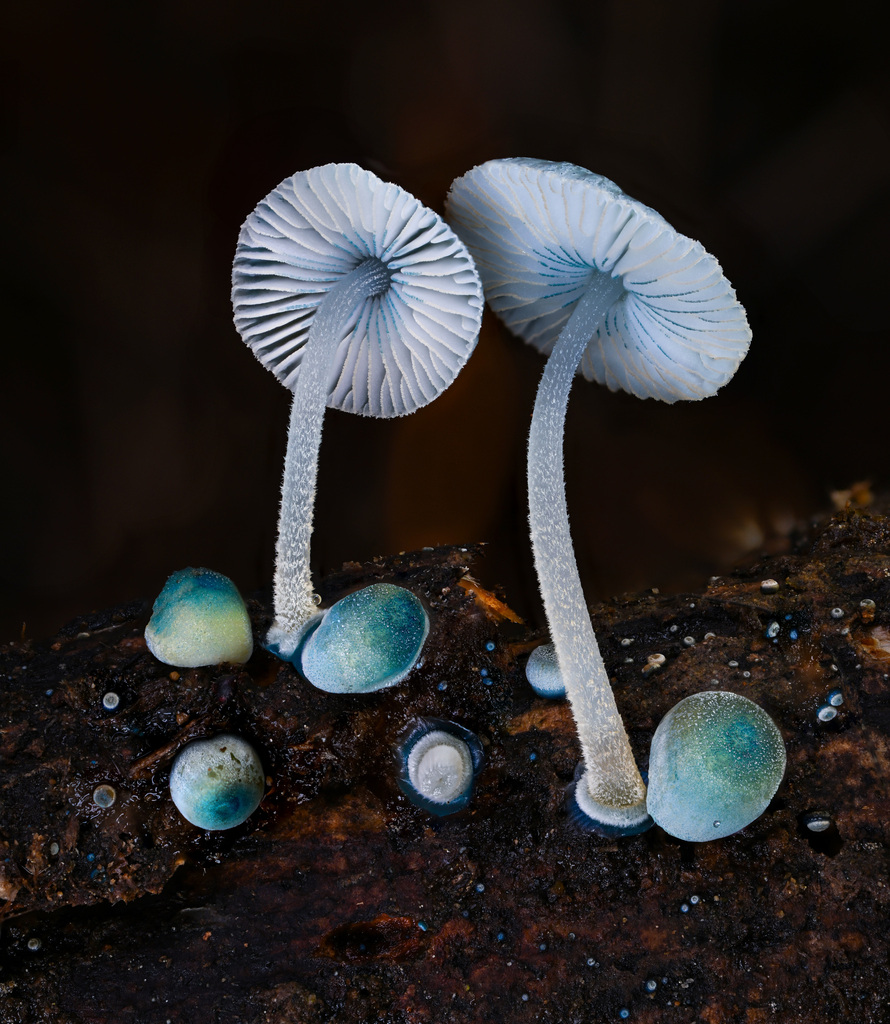
Mycena interruptaAlso known as Cyan Parasol
Gleaming like tiny neon jewels against damp rainforest logs, these delicate fungi produce brilliant cyan caps coated in a sticky gelatinous film. Found exclusively in Southern Hemisphere cool-temperate forests, they break down decaying wood to return vital nutrients to the rainforest floor. As the fruiting body matures, the electric blue hue slowly fades to pale whitish-blue, giving way to white spores dispersed on humid breezes.
Bright BlueSaprotrophicRainforest
—observations
—countries
—peak records
Not EvaluatedConservation statusIUCN Red List categoriesLCNTVUENCREWEXNot Evaluated — not placed on the risk ladderRed List categories, explained →
Diet & preyDecaying hardwoods, Rotting eucalyptus wood, Fall leaf litter
Predators
- Slugs
- Snails
- Fungal gnats
ThreatsDeforestation, severe wildfire, habitat fragmentation
HabitatsCool temperate rainforests, wet sclerophyll forests
Life spanFruiting bodies last 2–5 days; mycelium persists for years
Classification
- OrderAgaricales
- FamilyMycenaceae
- GenusMycena
- SpeciesMycena interrupta
Range data is not available yet.
Interaction riskLow
- Low
- Moderate
- High
- Very high
- Why interaction risk is low
- Many wild mushrooms have toxic look-alikes; never eat wild fungi based on app identification alone.
Responsible observation
- Spotting: Search wet mossy logs in damp eucalyptus or Southern Beech rainforests during autumn.
- Lighting: Use diffusers to capture the translucent blue cap texture without intense reflections.
- Preservation: Avoid touching caps to prevent removing the delicate sticky coating.
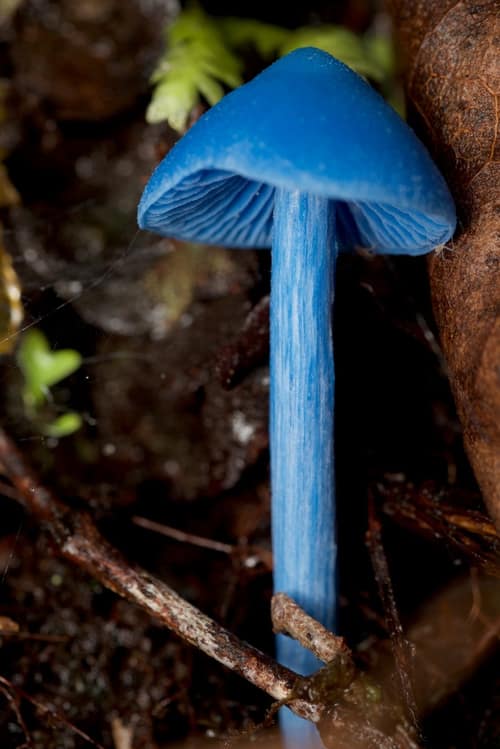
Similar Color (c) Jon Sullivan, some rights reserved (CC BY) · cc-by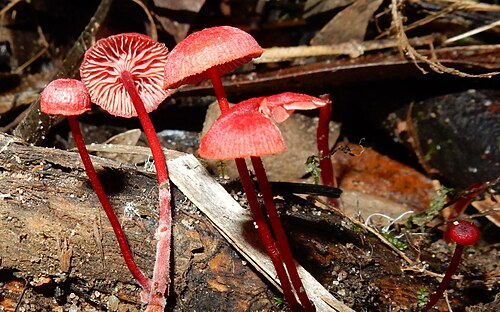
Close Relative Poyt448, Peter Woodard / CC BY-SA 4.0 · cc-by-sa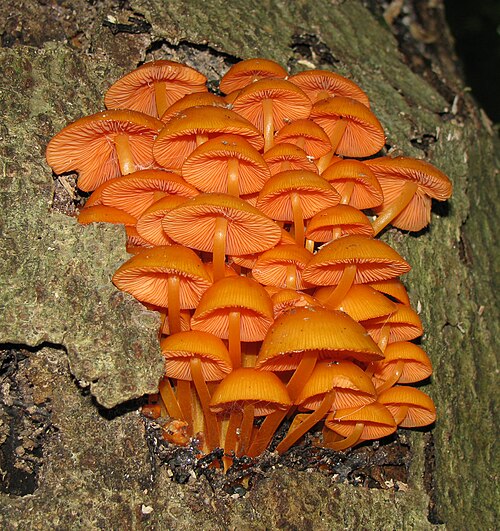
Close Relative Dan Molter (shroomydan) / CC BY-SA 3.0 · cc-by-sa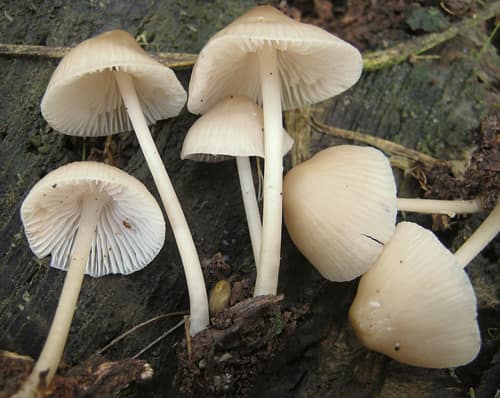
Close Relative (c) 2011-12-03_Mycena_galericulata_(Scop.)_Gray_188645.jpg, some rights reserved (CC BY-SA) · cc-by-sa
Help improve the field guideSomething wrong?
Checking your Fauna account…Report a name, category, or profile issue for review.