
Fungus · GBIF taxon 5240596
Orange Mycena
Mycena leaianaAlso known as Lea's Mycena, Orange Bonnet
Orange mycenas produce dense, striking clusters of brilliant orange caps on decaying hardwood logs and stumps during damp weather. Young fruiting bodies feature a sticky, gelatinous coating that fades as the bell-shaped caps expand and turn yellowish towards the margin. As vital decomposers, these fungi break down tough plant fibers like lignin, returning vital nutrients to woodland soils.
WoodlandDecomposerCluster-forming
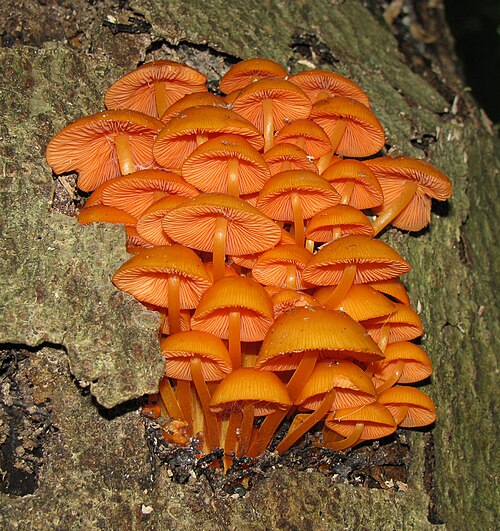
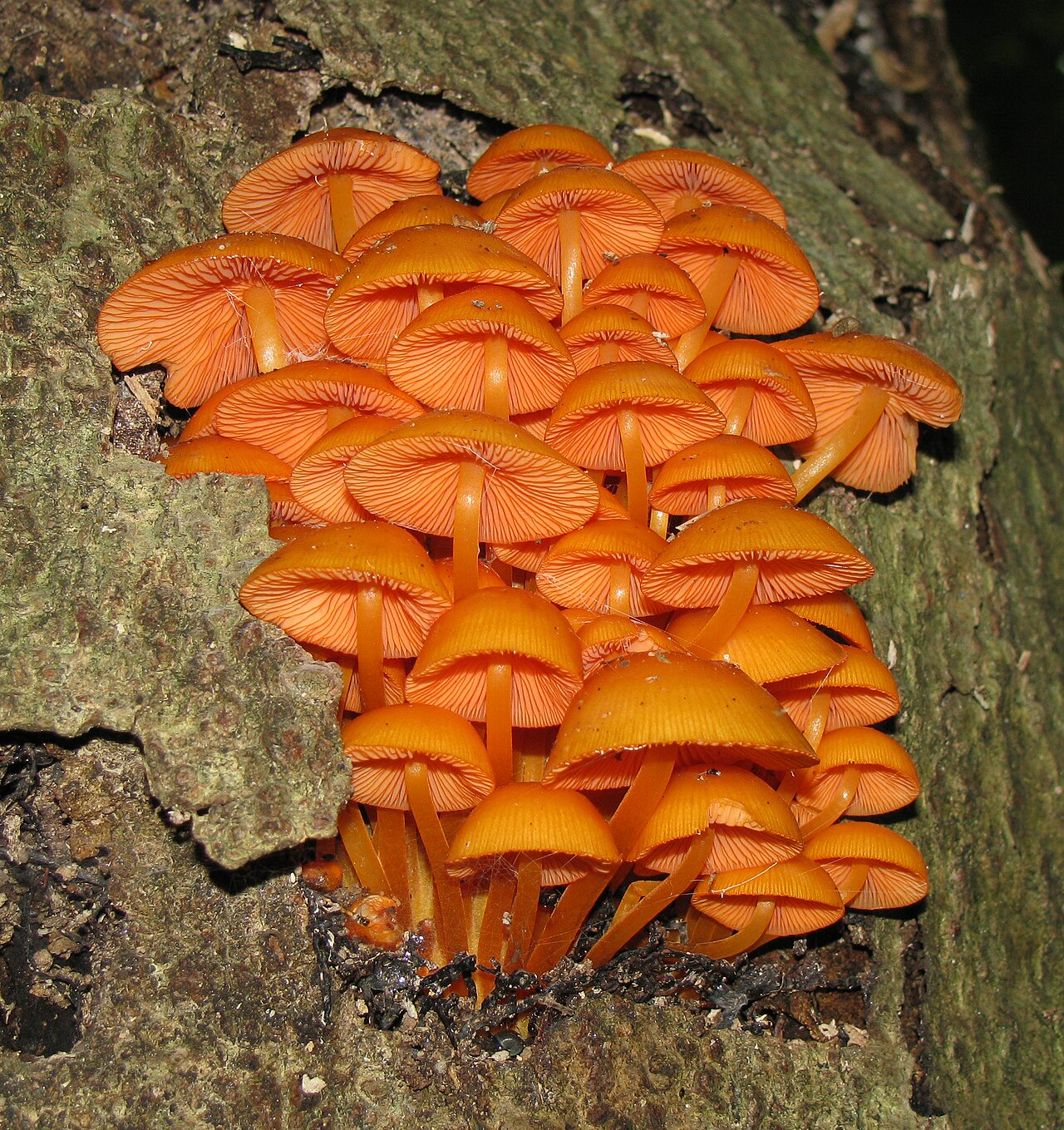
Licensed referenceDan Molter (shroomydan) / CC BY-SA 3.0 · cc-by-sa
—observations
—countries
—peak records
Least ConcernConservation statusIUCN Red List categoriesLCNTVUENCREWEXLeast ConcernRed List categories, explained →
Diet & prey
- Decaying hardwood
- Lignin
- Cellulose
Predators
- Fungus gnats
- Slugs
- Beetles
ThreatsHabitat destruction, deforestation
HabitatsDeciduous forests, damp woodlands, rotting hardwood logs
Life spanFruiting body lasts several days; subterranean mycelium lives multi-year
Size / weightNot available
Classification
- OrderAgaricales
- FamilyMycenaceae
- GenusMycena
- SpeciesMycena leaiana
Range data is not available yet.
Interaction riskLow
- Low
- Moderate
- High
- Very high
- Why interaction risk is low
- Many edible mushrooms have toxic look-alikes; never eat wild fungi based on app identification alone.
Responsible observation
- Substrate check: Look for bright clusters anchored directly to decaying hardwood logs and mossy stumps.
- Gill examination: Turn the cap over to inspect the distinctive reddish-orange tint along the gill edges.
- Observe cap texture: Note the slippery, gelatinous surface on fresh caps during wet morning walks.
 Image unavailable
Close Relative 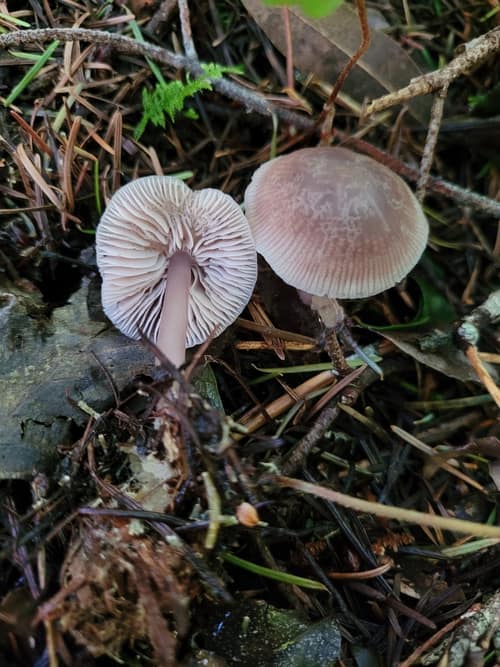
Close Relative (c) Mandy Hackney, some rights reserved (CC BY), uploaded by Mandy Hackney · cc-by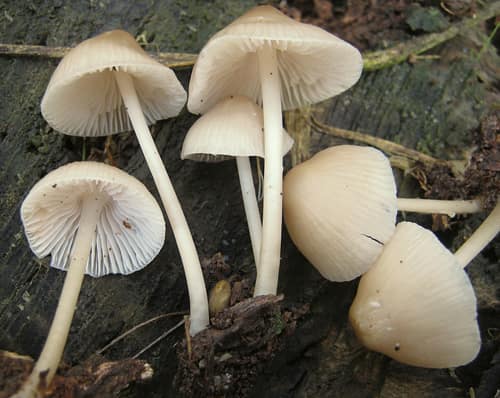
Close Relative (c) 2011-12-03_Mycena_galericulata_(Scop.)_Gray_188645.jpg, some rights reserved (CC BY-SA) · cc-by-sa
Help improve the field guideSomething wrong?
Checking your Fauna account…Report a name, category, or profile issue for review.