
Fungus · GBIF taxon 5240273
Yellow Patches
Amanita flavoconiaAlso known as Yellow Wart, Orange Amanita, Yellow-dust Amanita, American Yellow Dust Amanita
Bright yellow-orange caps dotted with fragile yellow warts make this mycorrhizal fungus a striking sight along forest floors in eastern North America. It forms vital underground partnerships with hemlocks, oaks, and pines, exchanging soil nutrients for sugars produced by trees. As fruiting bodies mature, the vibrant cap margins smooth out and leave behind a delicate, powdery skirt on the upper stem.
FungusForest FloorMycorrhizal
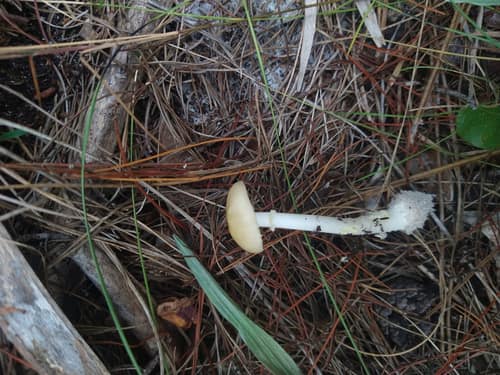
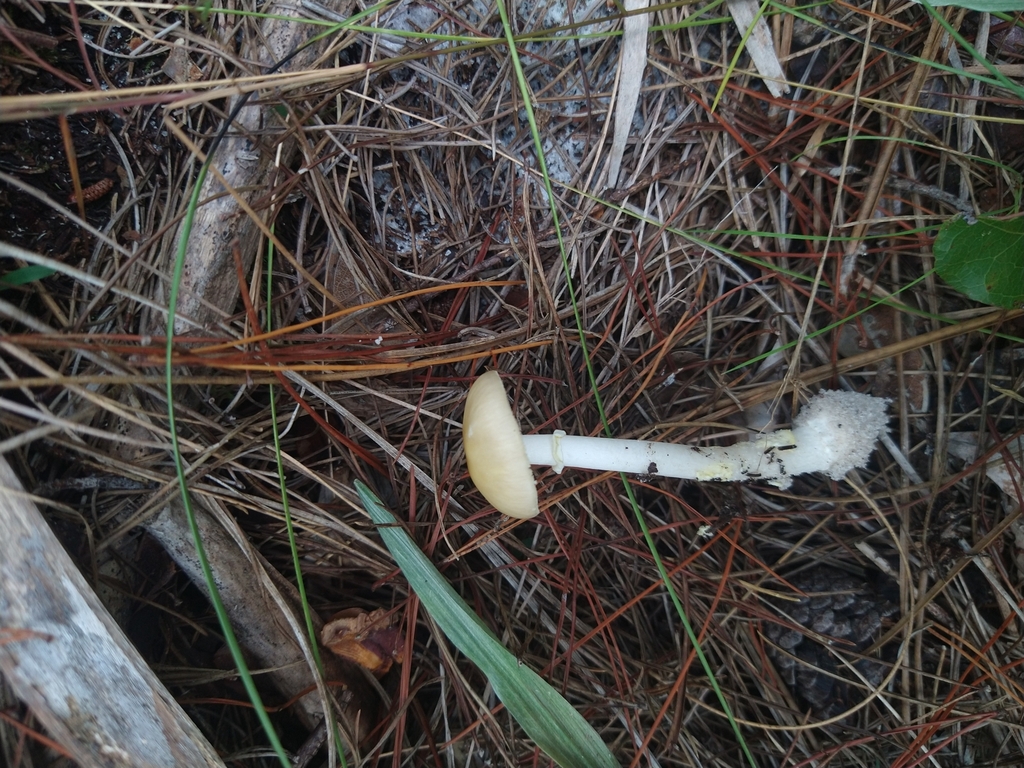
—observations
—countries
—peak records
Not EvaluatedConservation statusIUCN Red List categoriesLCNTVUENCREWEXNot Evaluated — not placed on the risk ladderRed List categories, explained →
Diet & prey
- Mycorrhizal (symbiotic with trees)
Predators
- Fungus gnats
- Slugs
- Squirrels
ThreatsHabitat destruction, clear-cutting, prolonged drought
HabitatsBroad-leaved and mixed forests, particularly near eastern hemlock and oak
Life spanFruiting body lasts 5–10 days; underground mycelium persists for decades
Size / weightNot available
Classification
- OrderAgaricales
- FamilyAmanitaceae
- GenusAmanita
- SpeciesAmanita flavoconia
Range data is not available yet.
Interaction riskHigh
- Low
- Moderate
- High
- Very high
- Why interaction risk is high
- May cause gastrointestinal illness and wild fungi have toxic look-alikes; never ingest wild mushrooms.
- Why it is dangerous
- Contains mild toxins causing severe gastrointestinal distress, and closely resembles several lethally poisonous Amanita species.
- How to recognize a risky encounter
- Look for an orange-yellow cap covered in bright yellow warts, paired with a powdery bulb at the base.
- What to do
- Observe and photograph in place without consuming, and wash hands thoroughly after touching wild mushrooms.
Responsible observation
- Check the Base: Carefully inspect the stem base to observe yellow remnants of the universal veil.
- Look Near Hemlocks: Search rich forest floor leaf litter under eastern hemlocks and oaks from summer through autumn.
- Photograph Key Details: Capture photos of the cap surface, stem ring, and base to assist with correct identification.
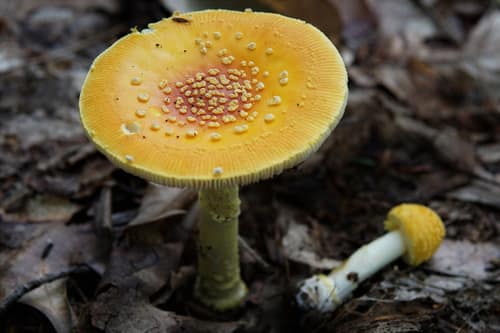
Look-alike (c) Erlon Bailey, some rights reserved (CC BY-SA), uploaded by Erlon Bailey · cc-by-sa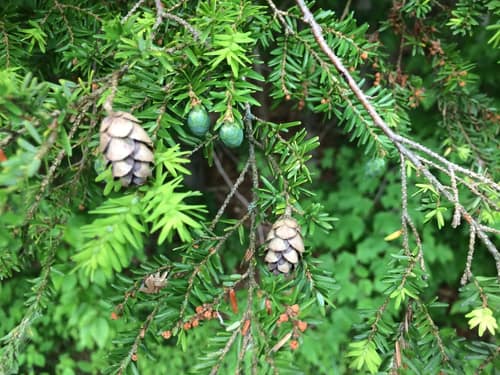
Symbiont (c) Ian Manning, some rights reserved (CC BY), uploaded by Ian Manning · cc-by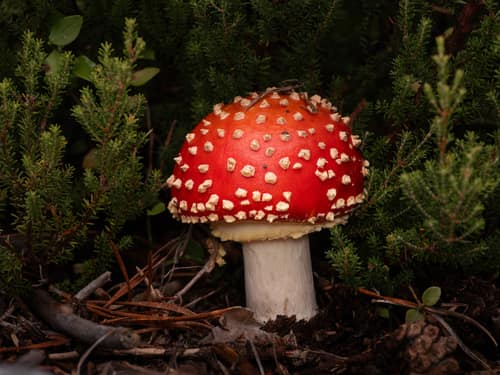
Close Relative (c) Borja Fierro, some rights reserved (CC BY), uploaded by Borja Fierro · cc-by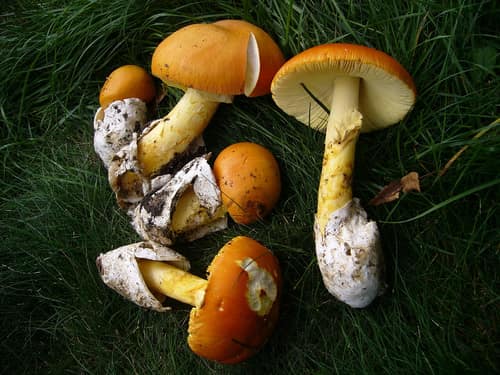
Close Relative Yaqui / CC BY-SA 3.0 · cc-by-sa
Keep collecting in Fauna
Found in Collections
Species set Pro
Fungi Forager
Yellow Patches is found in this collection. Identify it in Fauna to fill this slot and continue your progress.
Unlock to track progress
Help improve the field guideSomething wrong?
Checking your Fauna account…Report a name, category, or profile issue for review.