
Fungus
Common Earthball
Scleroderma citrinumAlso known as Pigskin Poison Puffball, Yellow Earthball, False Truffle
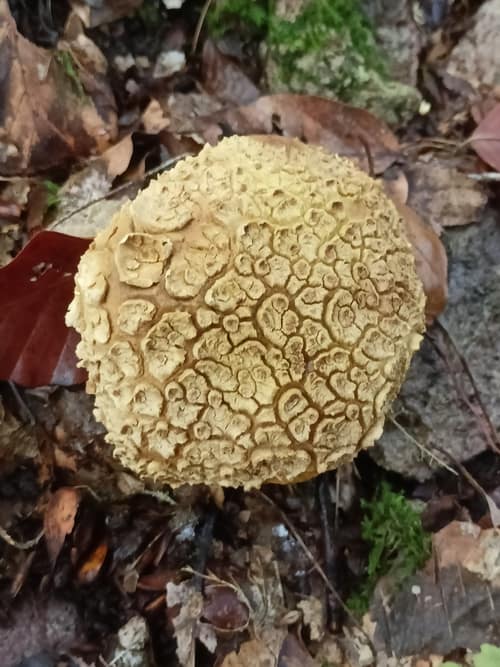
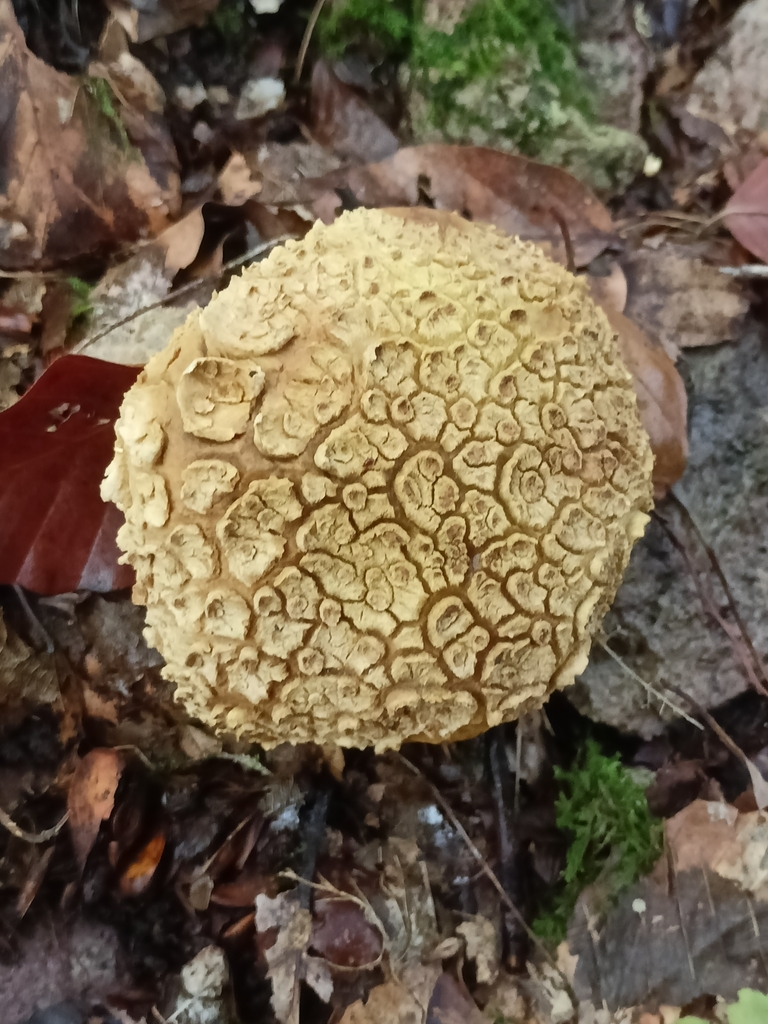
Common earthballs feature tough, yellowish-brown skins covered in coarse warts, often resembling small rough potatoes scattered across mossy forest floors. Inside, the spore mass matures into a dense, dark purple-black core before drying into a powdery dust that releases when rainwater or passing animals breach the leathery casing. These mycorrhizal fungi form beneficial underground partnerships with trees, particularly oaks and pines growing in nutrient-poor, acidic soils.
PoisonousWoodlandMycorrhizal
—observations
—countries
—peak records
Not EvaluatedConservation statusIUCN Red List categoriesLCNTVUENCREWEXNot Evaluated — not placed on the risk ladderRed List categories, explained →
Diet & preyMycorrhizal
Predators
- Slugs
- Fungus beetles
- Parasitic boletes
ThreatsHabitat loss and soil contamination
HabitatsAcidic woodland soils, mossy banks, decaying wood
Life spanFruiting body lasts several weeks
Classification
- OrderBoletales
- FamilySclerodermataceae
- GenusScleroderma
- SpeciesScleroderma citrinum
Range data is not available yet.
Interaction riskHigh
- Low
- Moderate
- High
- Very high
- Why interaction risk is high
- Causes severe gastrointestinal upset if eaten; wild fungi have toxic look-alikes, so never ingest unverified specimens.
- Why it is dangerous
- Contains toxins that trigger severe gastrointestinal symptoms including intense vomiting, cramps, and dizziness if consumed.
- How to recognize a risky encounter
- Recognized by its thick, warty, yellowish-brown skin and dark purple-black, solid interior.
- What to do
- Avoid ingestion entirely, wash hands after touching wild fungi, and leave intact for spore dispersal.
Responsible observation
- Sectioning Inspection: Cut open an old specimen to reveal the firm, dark purple-black interior mass.
- Habitat Spotting: Search around the roots of oak, birch, and pine trees in mossy, acidic soils.
- Parasite Look-Out: Check mature earthballs for the small parasitic bolete mushroom growing from their sides.
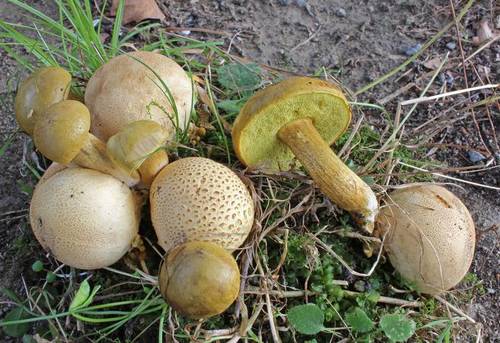
Parasite (c) Davide Puddu, some rights reserved (CC BY), uploaded by Davide Puddu · cc-by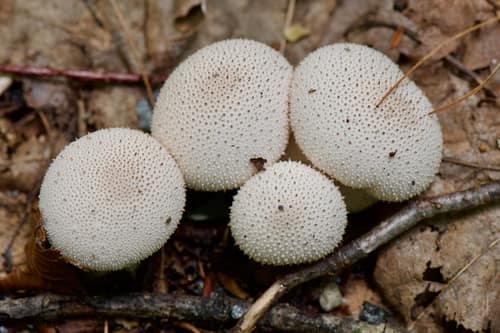
Look-Alike (c) Michael Nerrie, some rights reserved (CC BY), uploaded by Michael Nerrie · cc-by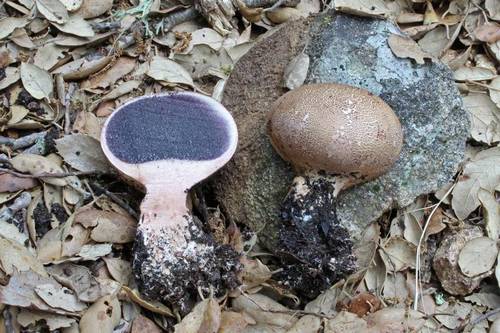
Close Relative (c) Davide Puddu, some rights reserved (CC BY), uploaded by Davide Puddu · cc-by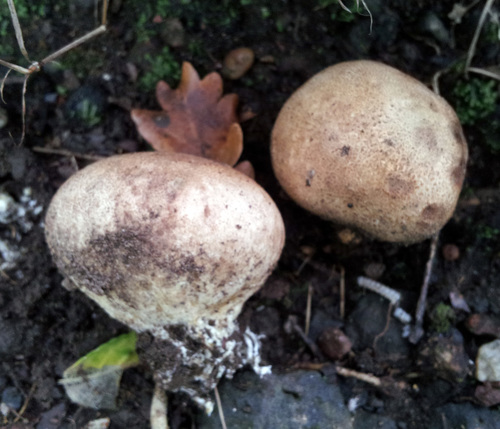
Close Relative no rights reserved, uploaded by Peter de Lange · cc0
Help improve the field guideSomething wrong?
Checking your Fauna account…Report a name, category, or profile issue for review.