
Fungus
Onion Earthball
Scleroderma cepaAlso known as Smooth Earthball
Smooth earthballs produce dense, rounded fruiting bodies that anchor into sandy or disturbed soil with a cluster of mycelial cords. As the thick, leathery peridium matures, the interior gleba darkens rapidly from firm whitish tissue into a powdery mass of purplish-black spores. Rainfall and physical disturbance eventually rupture the outer shell, releasing spore clouds into the surrounding woodland ecosystem.
FungusMycorrhizalWoodland


—observations
—countries
—peak records
Not EvaluatedConservation statusIUCN Red List categoriesLCNTVUENCREWEXNot Evaluated — not placed on the risk ladderRed List categories, explained →
Diet & preyMycorrhizal
Predators
- Fungus gnat larvae
- Slugs
- Woodland rodents
ThreatsSevere soil compaction and broad-spectrum fungicide use
HabitatsDeciduous and coniferous woodlands, parklands, sandy paths, and disturbed soil
Life spanFruiting body persists 2–8 weeks; underground mycelium can live for decades
Classification
- OrderBoletales
- FamilySclerodermataceae
- GenusScleroderma
- SpeciesScleroderma cepa
Range data is not available yet.
Interaction riskHigh
- Low
- Moderate
- High
- Very high
- Why interaction risk is high
- Toxic if ingested; many wild mushrooms have toxic look-alikes, so never eat wild fungi based on app identification.
- Why it is dangerous
- Contains gastrointestinal toxins that induce severe nausea, profuse vomiting, abdominal cramps, and diarrhea within hours of ingestion.
- How to recognize a risky encounter
- Recognizable by its smooth to finely cracked yellowish-tan peridium, tough leathery rind, and purple-black interior gleba.
- What to do
- Do not ingest; wash hands after handling cut or bruised specimens to prevent accidental transfer of spores or fungal matter.
Responsible observation
- Internal Check: Slice crosswise to observe the dense, dark purple-black interior that distinguishes it from harmless puffballs.
- Spore Safety: Avoid squeezing dry, mature specimens directly toward your face to prevent inhaling dense spore clouds.
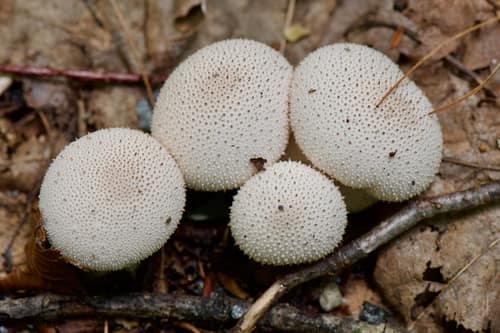
Look-Alike (c) Michael Nerrie, some rights reserved (CC BY), uploaded by Michael Nerrie · cc-by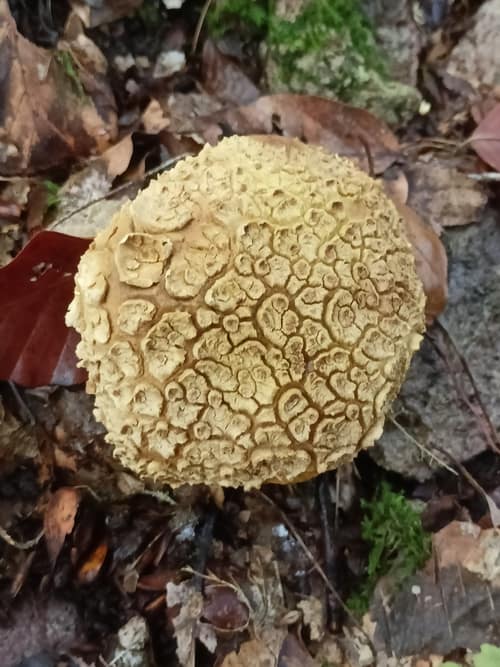
Close Relative (c) Malte Krömer, some rights reserved (CC BY), uploaded by Malte Krömer · cc-by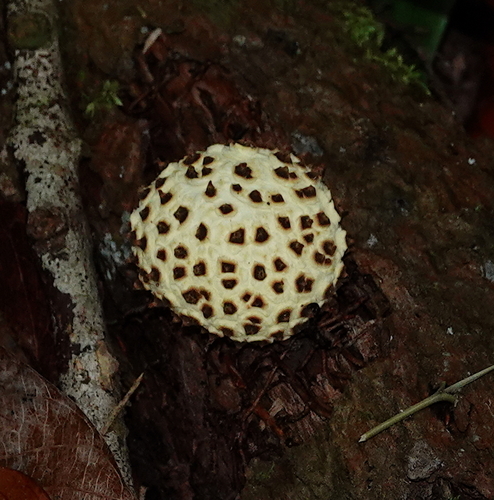
Close Relative (c) desertnaturalist, some rights reserved (CC BY), uploaded by desertnaturalist · cc-by
Help improve the field guideSomething wrong?
Checking your Fauna account…Report a name, category, or profile issue for review.