
Fungus · GBIF taxon 5239766
Hygroscopic Earthstar
Astraeus hygrometricusAlso known as Barometer Earthstar, False Earthstar
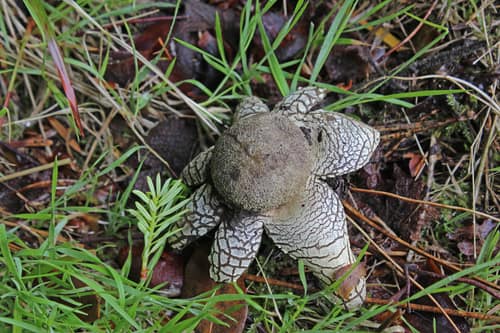
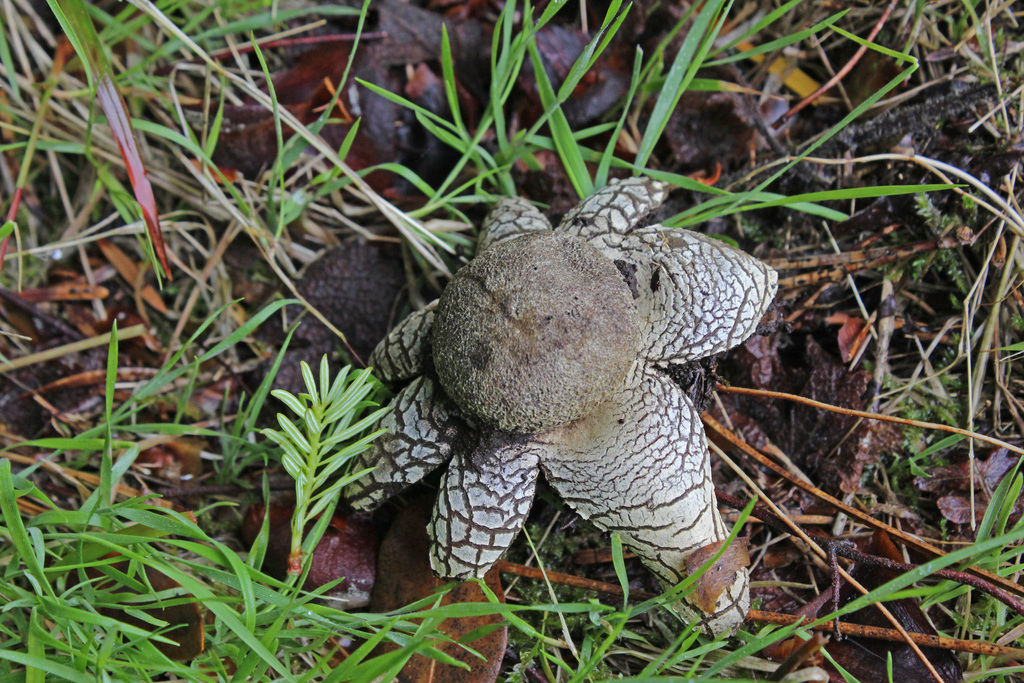
The Hygroscopic Earthstar begins as a round body whose thick outer layer splits into star-shaped rays around a central spore sac. The rays spread in moist air and curl inward when dry, repeatedly changing the fruiting body's shape.
Earthstar FungusHygroscopic RaysMycorrhizal Partner
 1 / 7
1 / 7—observations
—countries
—peak records
Not EvaluatedConservation statusIUCN Red List categoriesLCNTVUENCREWEXNot Evaluated — not placed on the risk ladderRed List categories, explained →
Diet & prey
- Trades soil water and mineral nutrients with plant roots for sugars through an ectomycorrhizal partnership
Predators
- Slugs
- Fungus beetles
- Small mammals
ThreatsHost-tree loss, soil compaction, land clearing, altered fire, fungicide exposure, and prolonged drought
HabitatsDry sandy woodland, pine and oak forest, scrub, exposed banks, and soil beneath leaf or needle litter
Life spanDry fruiting bodies may persist for months, while the underground mycelium can live for years
Size / weightNot available
Classification
- FamilyDiplocystidiaceae
- SpeciesAstraeus hygrometricus
Range data is not available yet.
Interaction riskLow
- Low
- Moderate
- High
- Very high
- Why interaction risk is low
- Earthstars have confusing look-alikes, and dry specimens are easily misidentified; do not eat or ingest any wild earthstar.
Responsible observation
- Moisture: Compare open rays after rain with inward-curled rays during dry weather.
- Center: Note the round papery spore sac without squeezing or puffing it.
- Foraging: Never eat a wild earthstar based on an app identification.
Help improve the field guideSomething wrong?
Checking your Fauna account…Report a name, category, or profile issue for review.