
Fungus · GBIF taxon 5239471
Elegant Stinkhorn
Mutinus elegansAlso known as Headless Stinkhorn, Devil's Dipstick
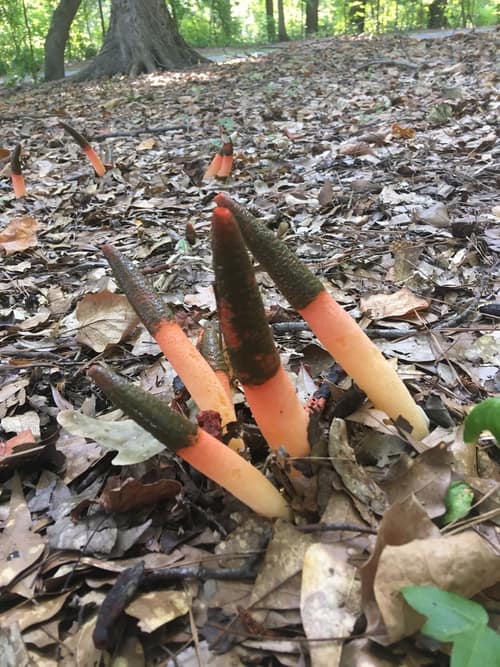
Emerging from a gelatinous egg-like sac, the elegant stinkhorn forms a hollow, vivid orange-pink column tapering to a sharp point. Its upper section is coated in a dark, foul-smelling slime called gleba, which attracts carrion flies and beetles to disperse its spores. This saprotrophic fungus quickly breaks down organic matter in woodchips, rich garden soil, and damp woodland leaf litter.
FungusOdorousDecomposer
 1 / 7
1 / 7—observations
—countries
—peak records
Not EvaluatedConservation statusIUCN Red List categoriesLCNTVUENCREWEXNot Evaluated — not placed on the risk ladderRed List categories, explained →
Diet & prey
- Saprotrophic
Predators
- Flies
- Beetles
- Slugs
ThreatsFungicide use, heavy soil cultivation
HabitatsDeciduous forests, garden beds, mulch, lawns
Life spanFruit body lasts 1–3 days (mycelium persists indefinitely)
Size / weightNot available
Classification
- OrderPhallales
- FamilyPhallaceae
- GenusMutinus
- SpeciesMutinus elegans
Range data is not available yet.
Interaction riskLow
- Low
- Moderate
- High
- Very high
- Why interaction risk is low
- Many wild mushrooms have toxic look-alikes; never eat wild fungi based on app identification alone.
Responsible observation
- Spotting: Look for bright orange spikes protruding from woodchips or leaf litter after late summer rains.
- Scent Detection: Follow the fetid, carrion-like odor to find emerging specimens hidden under foliage.
- Observing Insects: Watch flies gather on the olive-green gleba to feed and transport spores.

Look-alike This image was created by user John S. Harper (jsharper) at Mushroom Observer, a source for mycological images.You can contact this user here. / CC BY-SA 3.0 · cc-by-sa
Close Relative (c) Tina Ellegaard Poulsen, some rights reserved (CC BY), uploaded by Tina Ellegaard Poulsen · cc-by
Close Relative (c) Bernie Paquette, some rights reserved (CC BY) · cc-by
Keep collecting in Fauna
Found in Collections
Species set Pro
Fungi Forager
Elegant Stinkhorn is found in this collection. Identify it in Fauna to fill this slot and continue your progress.
Unlock to track progress
Help improve the field guideSomething wrong?
Checking your Fauna account…Report a name, category, or profile issue for review.