
Fungus · GBIF taxon 5239466
Red Stinkhorn
Mutinus raveneliiAlso known as Ravenel's Red Stinkhorn, Ravenel's Stinkhorn
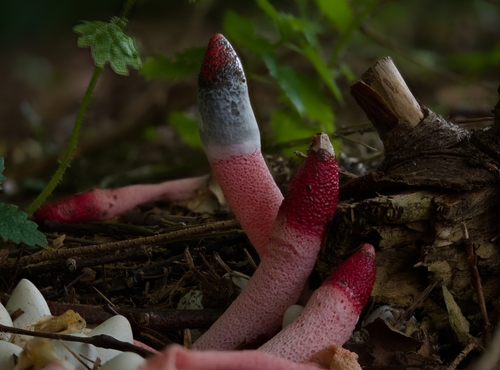
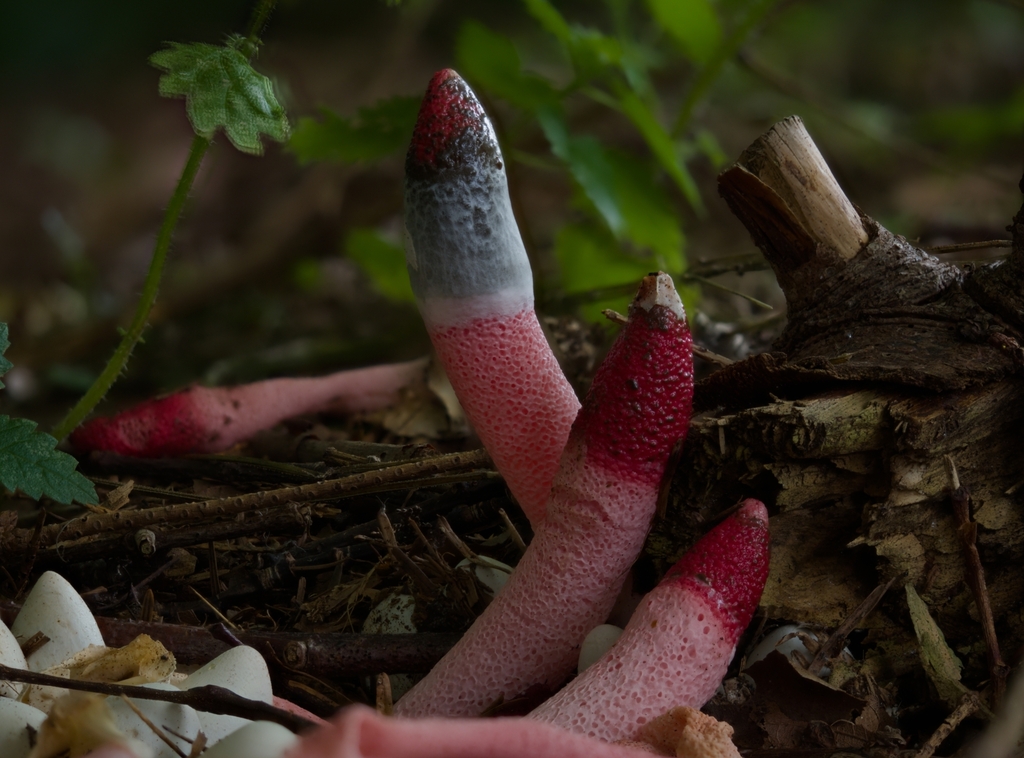
Red stinkhorns emerge from golf-ball-sized gelatinous eggs into slender, vibrant pinkish-red stalks coated near the tip with a slimy, foul-smelling spore mass called gleba. The pungent odor mimics carrion to attract flies and beetles, which inadvertently carry the spores away on their bodies. As effective saprotrophs, they rapidly break down lignified mulch and wood debris, collapsing within a day or two of emergence.
FungusDecomposerSpore Producer
 1 / 7
1 / 7—observations
—countries
—peak records
Not EvaluatedConservation statusIUCN Red List categoriesLCNTVUENCREWEXNot Evaluated — not placed on the risk ladderRed List categories, explained →
Diet & prey
- Decaying wood
- Organic mulch
- Plant debris
Predators
- Blowflies
- Slugs
- Carrion beetles
ThreatsFungicide application, heavy soil compaction, and mulch removal
HabitatsDeciduous woodlands, garden mulch beds, parks, and compost heaps
Life span1–3 days as a fruiting body; mycelium persists for years underground
Size / weightNot available
Classification
- FamilyPhallaceae
- SpeciesMutinus ravenelii
Range data is not available yet.
Interaction riskLow
- Low
- Moderate
- High
- Very high
- Why interaction risk is low
- Many edible mushrooms have toxic look-alikes; never eat wild fungi based on app identification alone.
Responsible observation
- Follow Your Nose: Track the fetid, rotting-meat scent in damp mulched beds or wooded clearings to find them.
- Observe Quickly: Photograph specimens early in the day, as the fragile stalks quickly collapse.
- Inspect the Base: Look around the stalk base to spot the unruptured, gelatinous egg structures.
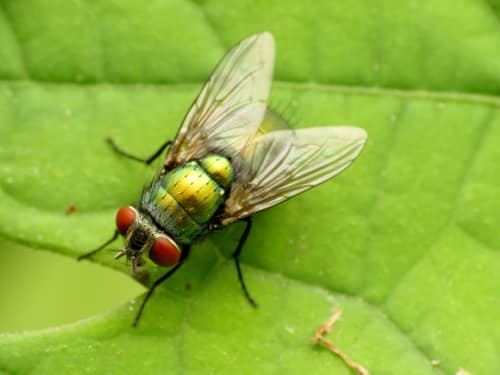
Spore Disperser (c) Katja Schulz, some rights reserved (CC BY), uploaded by Katja Schulz · cc-by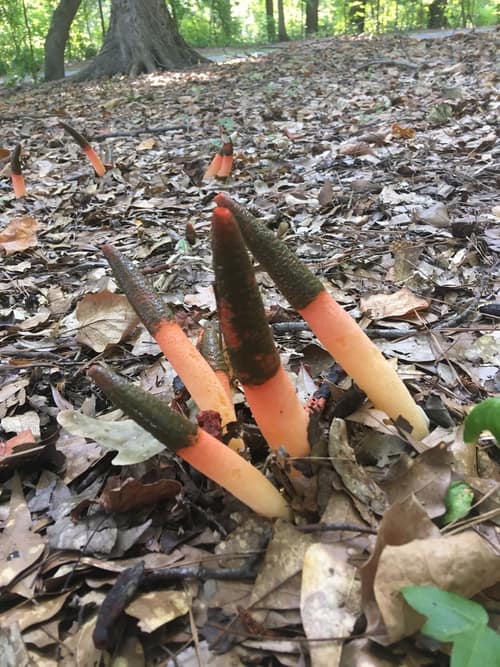
Close Relative (c) Sean Bloom, some rights reserved (CC BY), uploaded by Sean Bloom · cc-by
Close Relative (c) Tina Ellegaard Poulsen, some rights reserved (CC BY), uploaded by Tina Ellegaard Poulsen · cc-by
Same Family Jörg Hempel / CC BY-SA 3.0 de · cc-by-sa
Help improve the field guideSomething wrong?
Checking your Fauna account…Report a name, category, or profile issue for review.