
Bird · GBIF taxon 5232030
Hispaniolan Trogon
Priotelus roseigasterAlso known as Koulouba, Cotorrita de Sierra, Rose-bellied Trogon
Perched motionlessly in the humid canopy of Hispaniolan pine forests, the Hispaniolan trogon advertises its presence with a low, rhythmic call echoing through mountain ravines. Adults feature iridescent green upperparts, a soft grey throat, and a vivid scarlet lower belly offset by barred tail feathers. These solitary canopy dwellers nest in old tree cavities, feeding on caterpillars, small lizards, and fleshy forest fruits.
EndemicMontaneFrugivorous
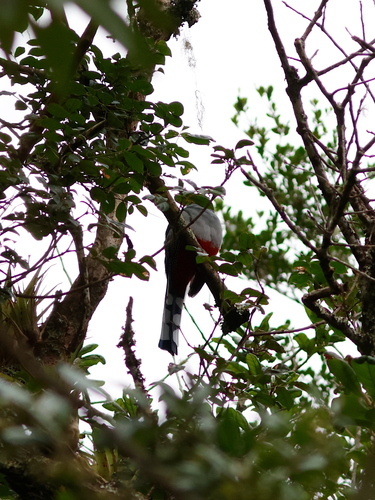
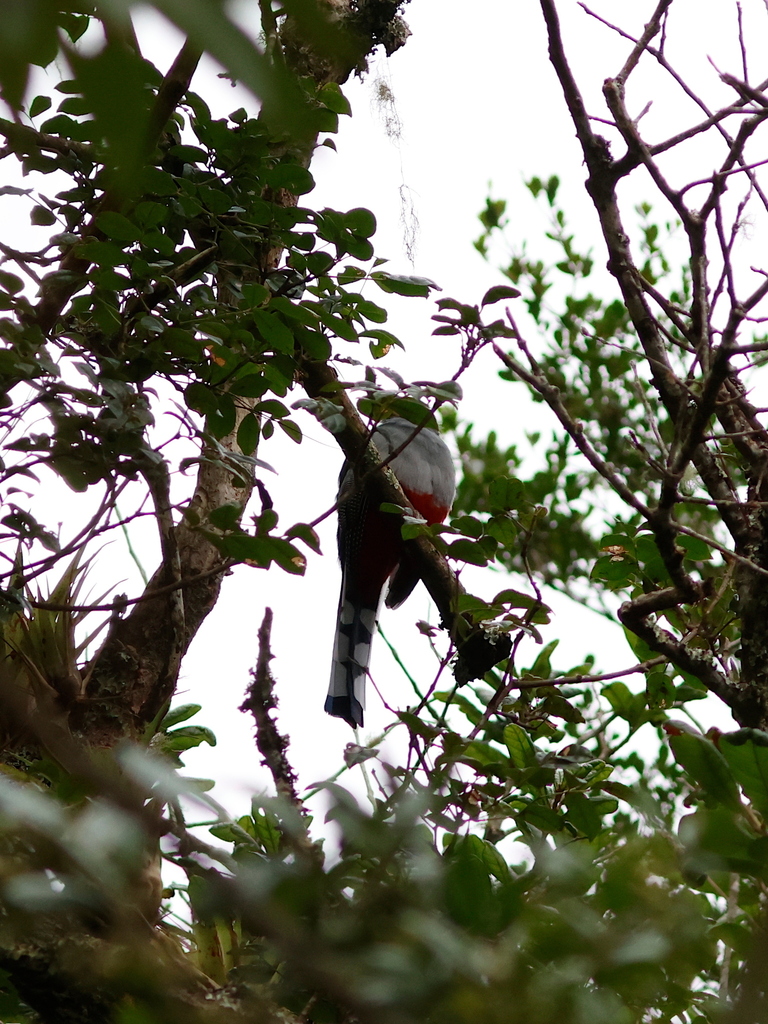
—observations
—countries
—peak records
Near ThreatenedConservation statusIUCN Red List categoriesLCNTVUENCREWEXNear ThreatenedRed List categories, explained →
Diet & prey
- Caterpillars
- Small lizards
- Forest berries
Predators
- Hawks
- Owls
- Introduced Rats
ThreatsDeforestation, forest fragmentation, and habitat loss
HabitatsSubtropical montane forests, humid pine woods, and cloud forests
Life span6–10 years
Size / weightNot available
Classification
- FamilyTrogonidae
- SpeciesPriotelus roseigaster
Range data is not available yet.
Interaction riskLow
- Low
- Moderate
- High
- Very high
- Why interaction risk is low
- Safe to observe at a normal distance.
- What to notice
- Look for glossy green upperparts, a bright red belly, and a square-tipped tail high in montane forest canopies.
- Support conservation
- Observe from established trails and keep audio playback to a minimum to prevent disturbance.
Responsible observation
- Spotting: Listen for their low, rhythmic calls in misty montane pine forests during early morning hours.
- Photography: Search high in the shaded canopy where individuals sit motionless for long stretches.
- Conservation Etiquette: Avoid audio playback near potential cavity nests to protect breeding pairs.
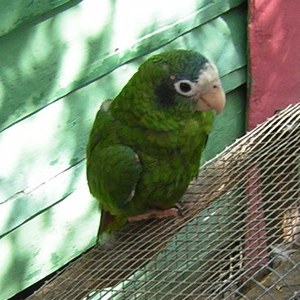
Co-occurring Endemic (c) Snowmanradio, some rights reserved (CC BY) · cc-by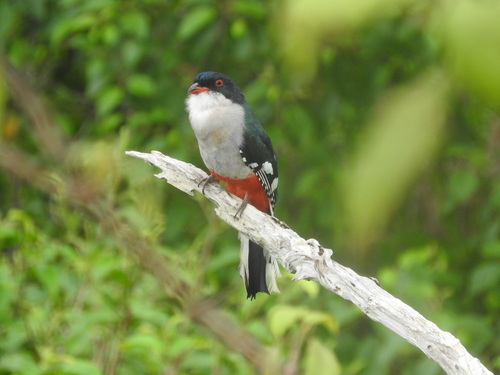
Close Relative no rights reserved · cc0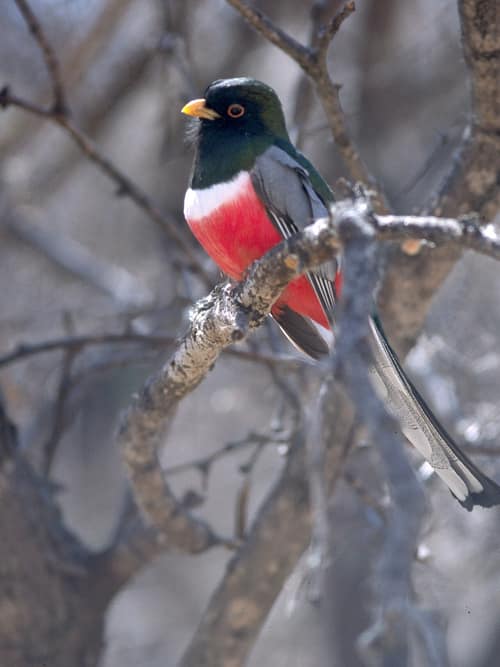
Family Relative dominic sherony / CC BY-SA 2.0 · cc-by-sa
Help improve the field guideSomething wrong?
Checking your Fauna account…Report a name, category, or profile issue for review.