Also known as One-wattled Cassowary, Single-wattled Cassowary, Golden-necked Cassowary
Northern cassowaries stride silently through the dense lowland rainforests of northern New Guinea, where their deep, booming infrasonic rumbles travel over long distances through the understory. Females are noticeably larger and more brightly colored than males, abandoning their clutches after laying so that the male alone must incubate the eggs and rear the chicks for up to nine months. As keystone seed dispersers, they swallow large rainforest fruits whole, distributing viable seeds across vast forest tracts in rich dung piles.
Life span30–40 years in the wild; up to 50 years in captivity
Classification
FamilyCasuariidae
SpeciesCasuarius unappendiculatus
Range & activity
Range data is not available yet.
Safe observation
Interaction riskHigh
Low
Moderate
High
Very high
Why interaction risk is high
Powerful kicks with dagger-like inner claws can inflict fatal wounds; maintain a safe distance and never approach.
Why it is dangerous
Possesses an elongated, dagger-like inner claw measuring up to 10 centimeters that can slash through flesh and cause severe internal lacerations or fatal puncture wounds when kicking defensively.
How to recognize a risky encounter
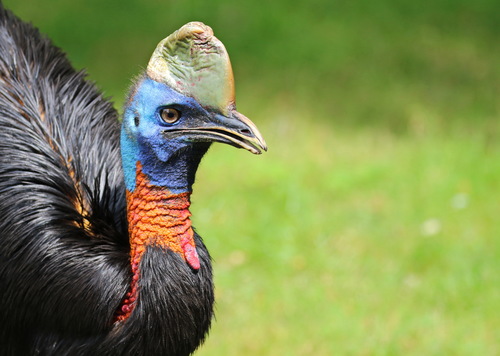
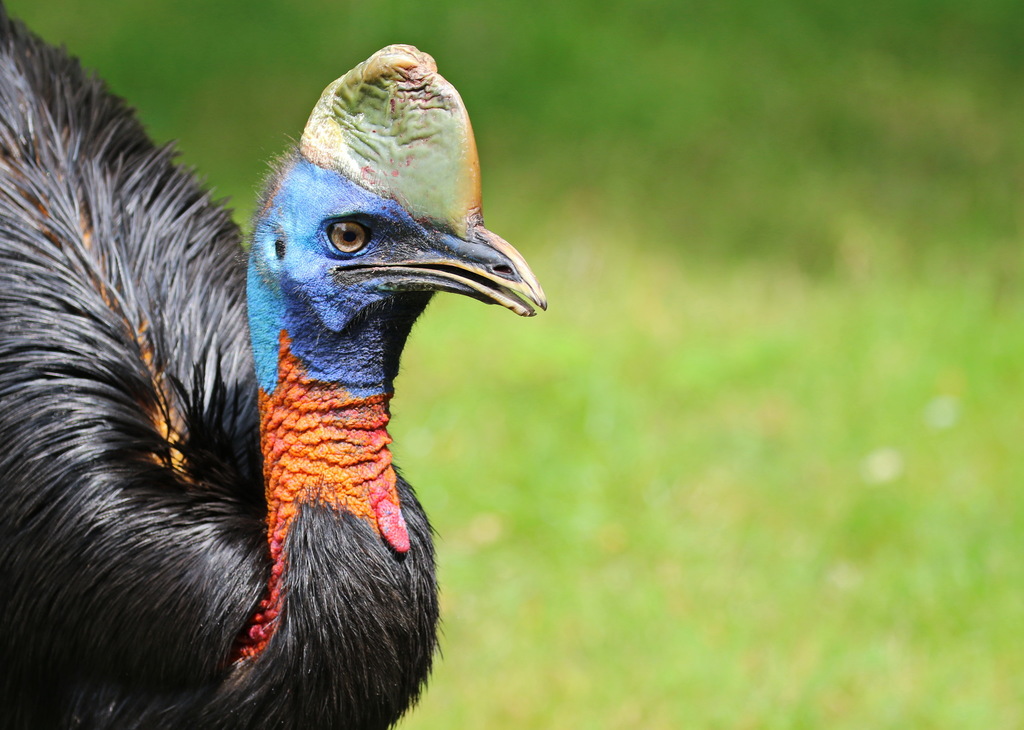
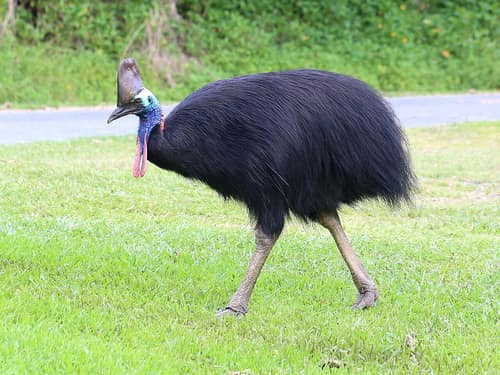
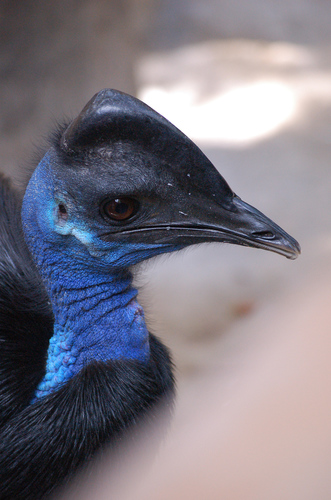
Recognizable by its tall brown casque, bright blue head, golden-yellow neck, and single central neck wattle dangling above a black plumaged body.
What to do
Give a wide berth of at least 30 meters; if approached aggressively, back away slowly while keeping obstacles such as large trees or backpacks between you and the bird.
Responsible observation
Keep distance: Never attempt to approach, corner, or feed wild cassowaries under any circumstances.
Listen carefully: Low-frequency vibrations or deep thumping notes indicate a bird is nearby in dense cover.
Do not run: If confronted, face the bird, hold a pack or branch in front of your chest, and back away slowly.