
Bird · GBIF taxon 5231615
Iiwi
Vestiaria coccineaAlso known as Scarlet Honeycreeper, Hawaiian Scarlet Honeycreeper
ʻIʻiwi flash like living embers through high-elevation native canopy forests, flitting rapidly between blooming ʻōhiʻa blossoms. Their dramatically curved, salmon-colored bills evolved to siphon nectar from deep lobeliad flower tubes, while their creaky, rusty-hinge calls echo through the mountain mist. Now restricted largely to cool forest refuges safe from disease-bearing mosquitoes, these iconic honeycreepers play a critical role in pollinating native Hawaiian flora.
EndemicNectar-FeederVibrant
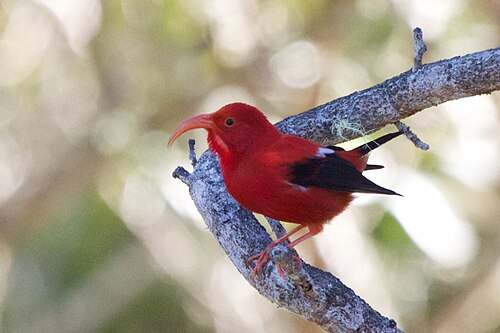
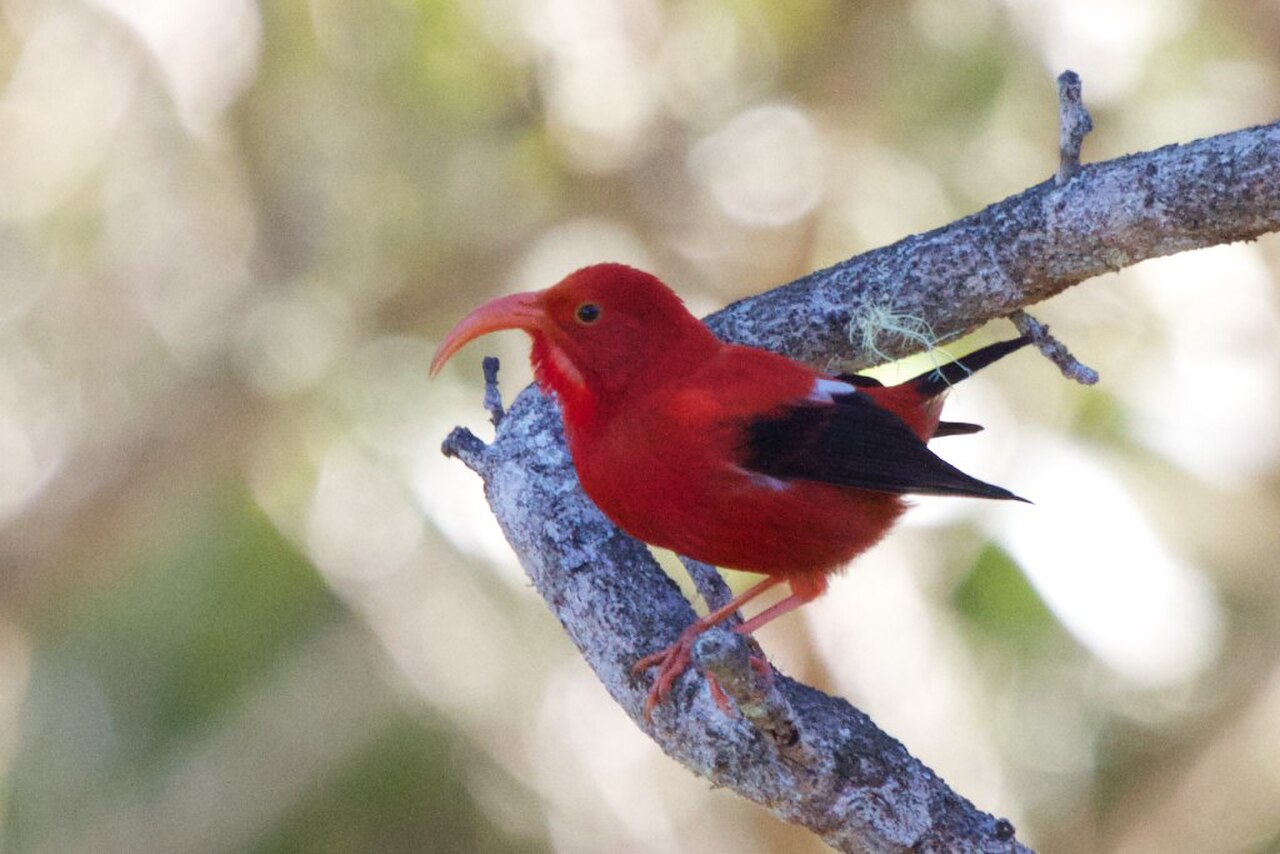
Licensed referenceHarmonyonPlanetEarth / CC BY 2.0 · cc-by
—observations
—countries
—peak records
VulnerableConservation statusIUCN Red List categoriesLCNTVUENCREWEXVulnerableRed List categories, explained →
Diet & prey
- ʻŌhiʻa Nectar
- Lobeliad Nectar
- Caterpillars
Predators
- Introduced Rats
- Feral Cats
- Hawaiian Short-eared Owl
ThreatsAvian malaria, habitat loss, invasive mosquitoes, feral ungulates
HabitatsHigh-elevation native Hawaiian wet and mesic forests
Life span10–12 years
Classification
- FamilyFringillidae
- SpeciesVestiaria coccinea
Range data is not available yet.
Interaction riskLow
- Low
- Moderate
- High
- Very high
- Why interaction risk is low
- Safe to observe at a normal distance.
- What to notice
- Look for brilliant scarlet plumage, black wings, and a long, deeply curved orange bill.
- Support conservation
- Stay on designated forest trails and clean footwear to prevent spreading invasive pathogens.
Responsible observation
- Listen for Calls: Search high in ʻōhiʻa canopies for their distinctive squeaky-hinge vocalizations.
- Use Binoculars: Maintain a respectful distance to avoid causing stress to foraging adults.
- Explore High Trails: Focus searches above 1,300 meters where cool temperatures limit mosquito activity.
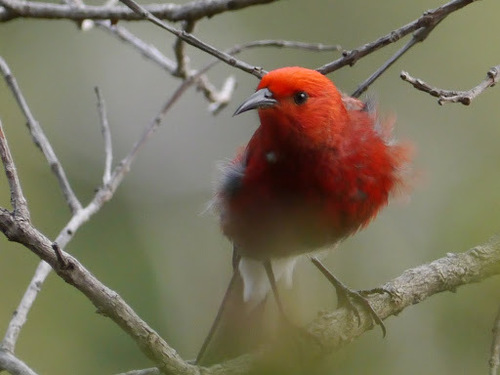
Competitor (c) 116916927065934112165, some rights reserved (CC BY), uploaded by 116916927065934112165 · cc-by Image unavailable
Ecological Peer 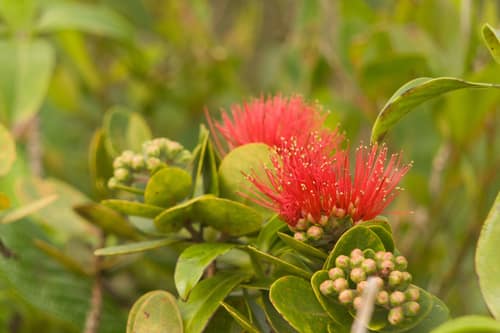
Host Plant (c) Kevin Faccenda, some rights reserved (CC BY), uploaded by Kevin Faccenda · cc-by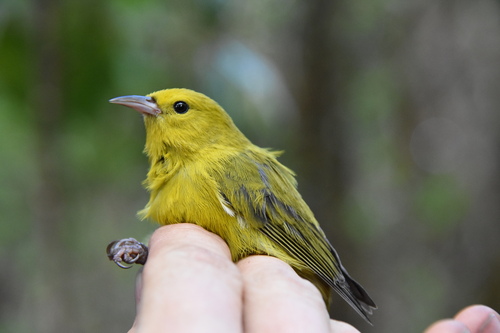
Close Relative (c) Loren Cassin Sackett, some rights reserved (CC BY), uploaded by Loren Cassin Sackett · cc-by
Help improve the field guideSomething wrong?
Checking your Fauna account…Report a name, category, or profile issue for review.