
Bird
Hawaii Mamo
Drepanis pacificaAlso known as Mamo, Hawaiian Mamo, Great Mamo
Hawaiʻi mamos were magnificent forest birds renowned for their velvety jet-black plumage contrasted by vivid golden-yellow rump and thigh feathers. Specialized nectar feeders, they probed deep, tubular lobeliad flowers and ʻōhiʻa blossoms with remarkably long, sickle-curved bills. Revered in traditional Hawaiian culture, their radiant yellow feathers were carefully gathered to adorn royal feather cloaks before habitat loss, avian disease, and invasive predators drove them to extinction around the turn of the twentieth century.
EndemicHoneycreeper
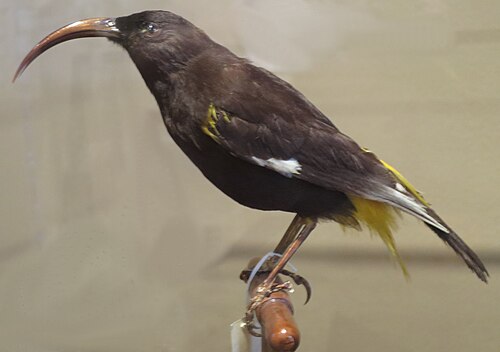
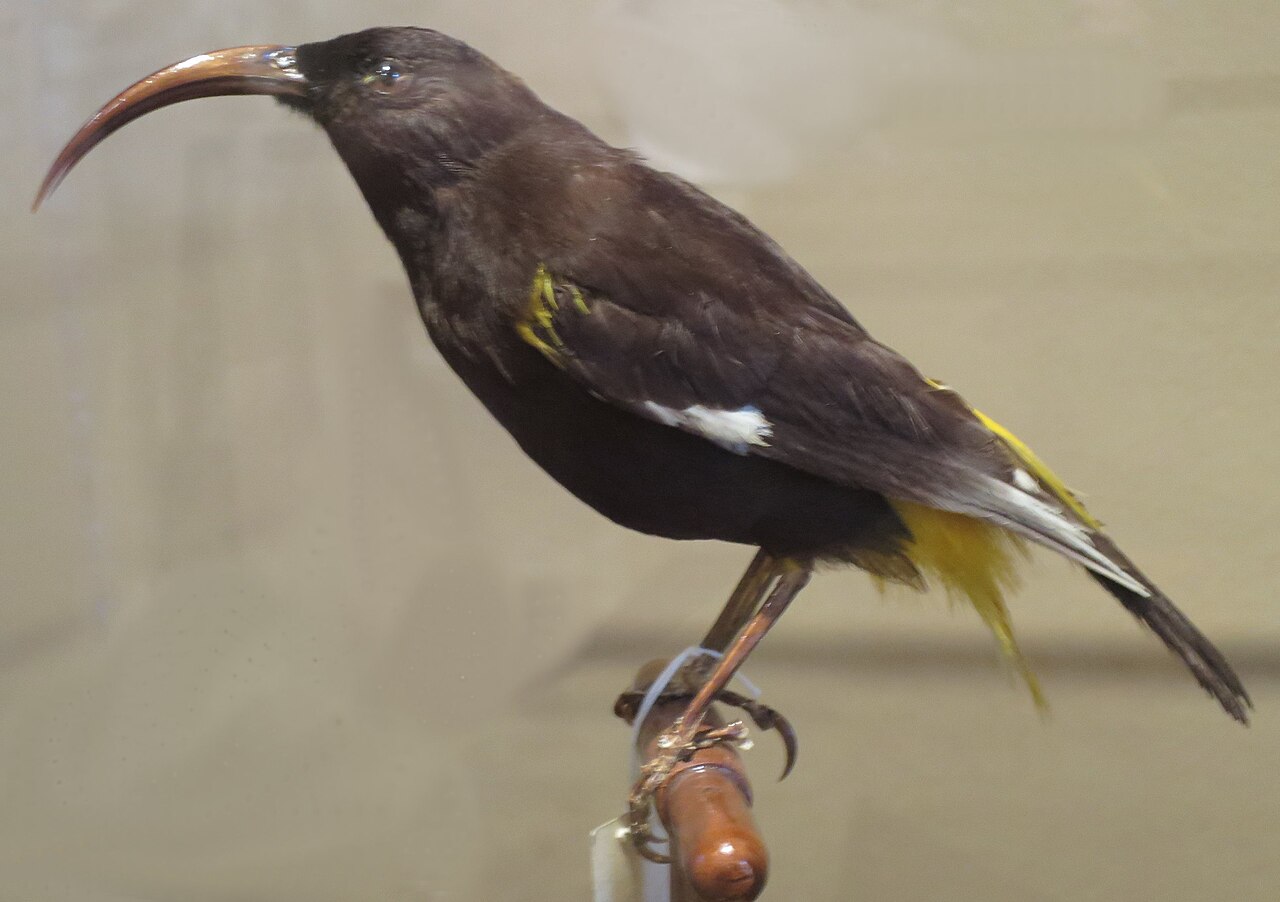
—observations
—countries
—peak records
ExtinctConservation statusIUCN Red List categoriesLCNTVUENCREWEXExtinctRed List categories, explained →
Diet & preyFloral nectar, Spiders, Caterpillars
Predators
- Small Indian mongoose
- Black rat
- Feral cat
ThreatsAvian malaria transmitted by introduced mosquitoes, invasive predators, habitat clearance, and historical plume harvesting
HabitatsMontane rainforests and wet forests of Hawaiʻi Island
Life spanUnknown; estimated 5–10 years based on related Hawaiian honeycreepers
Classification
- FamilyFringillidae
- SpeciesDrepanis pacifica
Range data is not available yet.
Interaction riskLow
- Low
- Moderate
- High
- Very high
- Why interaction risk is low
- Safe to observe at a normal distance; extinct species preserved only in museum collections.
Responsible observation
- Museum Viewing: Study historic study skins and traditional featherwork in natural history collections.
- Habitat Appreciation: Visit intact high-elevation wet forests on Hawaiʻi Island to see surviving native honeycreepers.
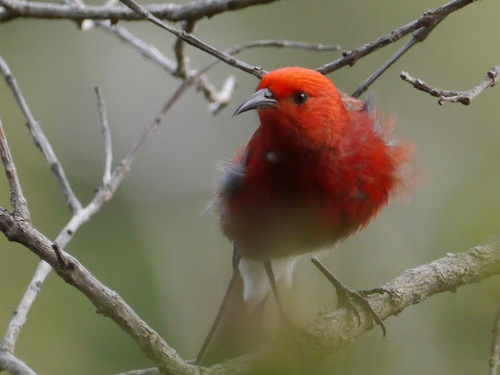
Ecological Competitor (c) 116916927065934112165, some rights reserved (CC BY), uploaded by 116916927065934112165 · cc-by Image unavailable
Host Plant 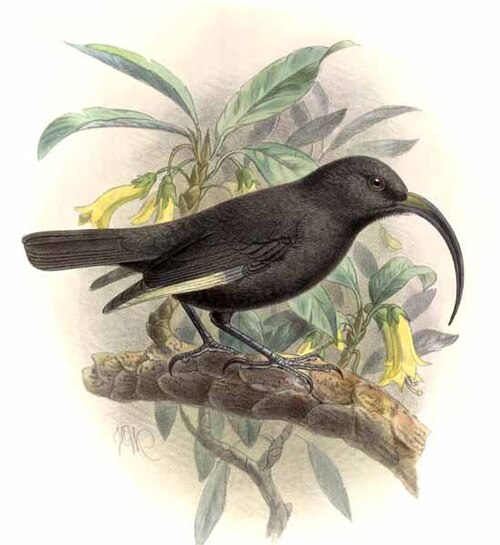
Close Relative Wikimedia Commons / Public domain · cc0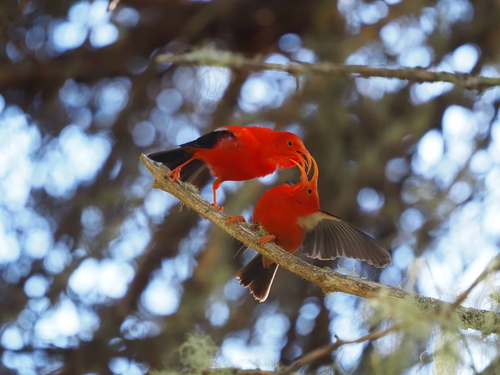
Close Relative (c) Clay Gibbons, some rights reserved (CC BY) · cc-by
Help improve the field guideSomething wrong?
Checking your Fauna account…Report a name, category, or profile issue for review.