
Bird · GBIF taxon 5231253
White-crowned Wheatear
Oenanthe leucopygaAlso known as White-crowned Black Wheatear
White-crowned wheatears bring striking contrast to extreme desert landscapes across North Africa and the Middle East. Fully mature adults display a brilliant white cap set against jet-black body plumage, alongside a pure white rump and tail marked by a dark central line. Perched high on boulders or canyon ledges, these lively songbirds flick their tails continuously while scanning stony ground for insects and small lizards.
Desert DwellerSongbirdInsectivore
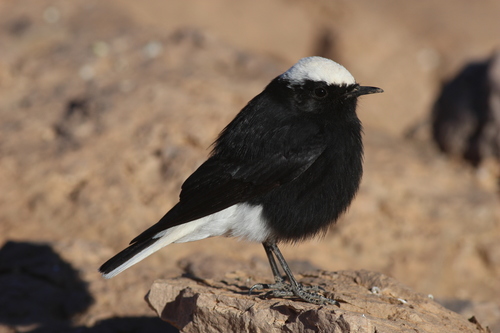
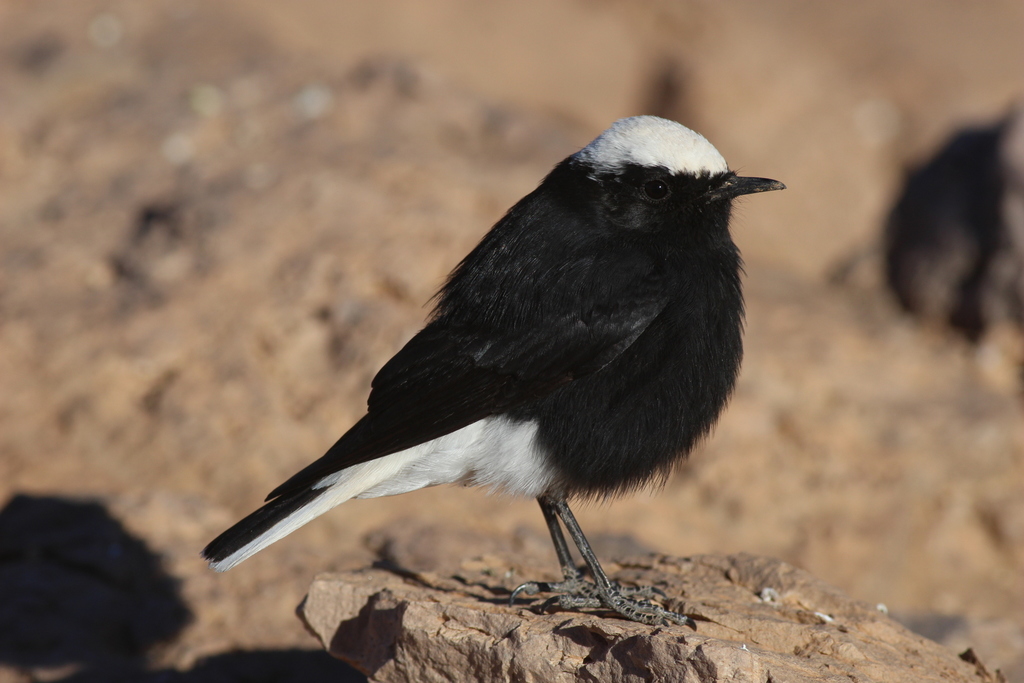
—observations
—countries
—peak records
Least ConcernConservation statusIUCN Red List categoriesLCNTVUENCREWEXLeast ConcernRed List categories, explained →
Diet & prey
- Ants
- Beetles
- Small lizards
Predators
- Desert falcons
- Snakes
- Feral cats
ThreatsSevere habitat disruption and prolonged extreme drought
HabitatsRocky deserts, barren mountains, stone wadis, and gorges
Life span4–7 years
Classification
- OrderPasseriformes
- FamilyMuscicapidae
- GenusOenanthe
- SpeciesOenanthe leucopyga
Range data is not available yet.
Interaction riskLow
- Low
- Moderate
- High
- Very high
- Why interaction risk is low
- Safe to observe at a normal distance.
Responsible observation
- Scan Rock Outcrops: Look for birds perched high on prominent boulders or ridge lines early in the morning.
- Check Head Plumage: Remember that immature individuals lack the white crown and remain entirely black-headed.
- Listen for Song: Pay attention to sweet, mimicry-rich musical songs echoing through rocky canyons.
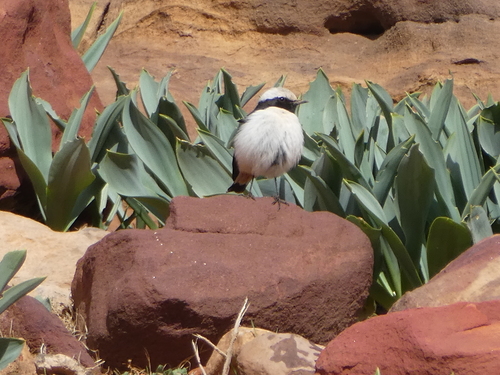
Regional Co-occupant (c) datadan, some rights reserved (CC BY) · cc-by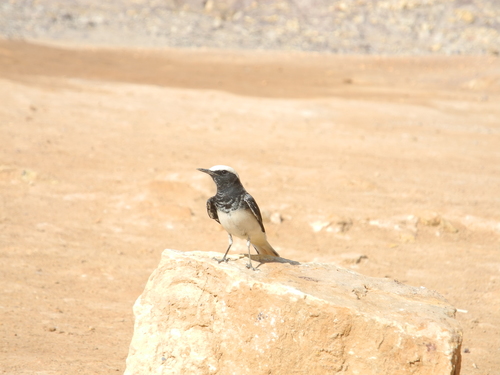
Similar Habitat (c) Dmitry Babin, some rights reserved (CC BY) · cc-by
Close Relative (c) Christoph Moning, some rights reserved (CC BY), uploaded by Christoph Moning · cc-by
Genus Relative Andreas Trepte / CC BY-SA 2.5 · cc-by-sa
Help improve the field guideSomething wrong?
Checking your Fauna account…Report a name, category, or profile issue for review.