
Bird · GBIF taxon 5230471
Western Spinebill
Acanthorhynchus superciliosusWestern spinebills hover gracefully before blooms, probing deep tubular flowers with long, needle-thin curved bills. Males sport striking chestnut-red nape bands and throat patches bordered by bold white stripes, while females display softer olive and gray hues. Native to the biodiverse southwestern corner of Australia, these nimble birds act as vital pollinators for many proteaceous heath shrubs.
NectarivoreEndemicColorful
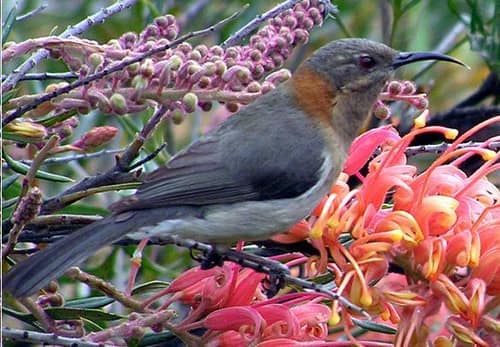
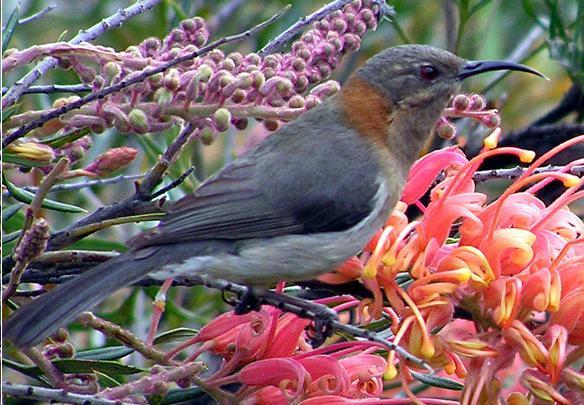
—observations
—countries
—peak records
Least ConcernConservation statusIUCN Red List categoriesLCNTVUENCREWEXLeast ConcernRed List categories, explained →
Diet & prey
- Floral nectar
- Insects
- Spiders
Predators
- Feral cats
- Butcherbirds
- Currawongs
ThreatsHabitat clearing, fire regime changes, and predation by introduced predators
HabitatsCoastal heathland, eucalyptus woodland, jarrah forest, and native gardens
Life span5–8 years
Size / weightNot available
Classification
- FamilyMeliphagidae
- SpeciesAcanthorhynchus superciliosus
Range data is not available yet.
Interaction riskLow
- Low
- Moderate
- High
- Very high
- Why interaction risk is low
- Safe to observe at a normal distance.
Responsible observation
- Watch Flowering Shrubs: Scan low-growing Banksia, Grevillea, and kangaroo paw blooms during early morning.
- Listen for Calls: Listen for rapid, high-pitched piping notes given while flitting between feeding sites.
- Avoid Disturbance: Maintain a respectful distance while watching active nests hidden in dense foliage.
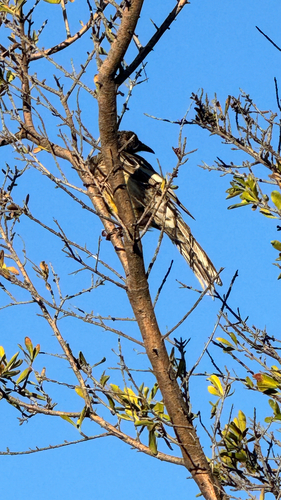
Competitor (c) jraus, some rights reserved (CC BY-SA) · cc-by-sa Image unavailable
Pollination Partner 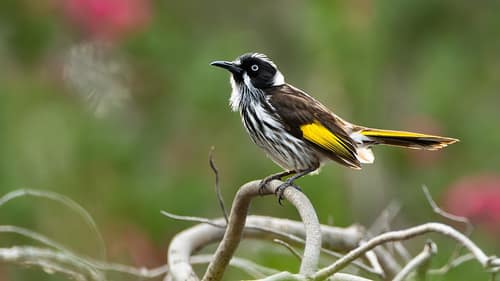
Frequent Companion Photo by: Paulweberphoto - paulweberphoto.com / CC BY 4.0 · cc-by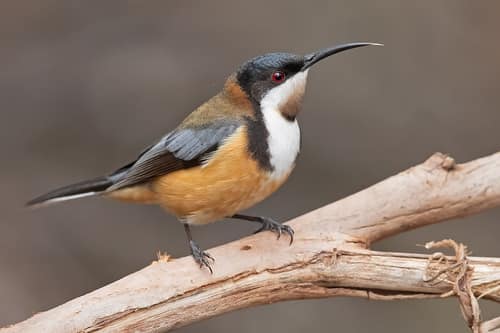
Close Relative JJ Harrison (https://www.jjharrison.com.au/) / CC BY-SA 4.0 · cc-by-sa
Help improve the field guideSomething wrong?
Checking your Fauna account…Report a name, category, or profile issue for review.