
Bird · GBIF taxon 5230374
Andean Cock-of-the-Rock
Rupicola peruvianusAlso known as Tunki, Peruvian Cock-of-the-Rock
Males assemble at communal arenas known as leks, performing elaborate wing-snapping and bobbing dances while emitting loud croaks to attract females. Their disk-like crests obscure the bill entirely during displays, creating a striking silhouette against the mossy dampness of South American cloud forests. Females construct mud nests on sheltered rock faces and raise chicks without male assistance, playing a vital role in dispersing forest seeds.
Cloud ForestDimorphicFrugivore

 1 / 7
1 / 7—observations
—countries
—peak records
Least ConcernConservation statusIUCN Red List categoriesLCNTVUENCREWEXLeast ConcernRed List categories, explained →
Diet & prey
- Lauraceae Fruits
- Palm Berries
- Tree Frogs
Predators
- Harpy Eagle
- Puma
- Ocelot
ThreatsDeforestation, habitat fragmentation, and occasional poaching
HabitatsHumid Andean cloud forests, rocky ravines, and damp river valleys
Life span7–12 years
Size / weightNot available
Classification
- FamilyCotingidae
- SpeciesRupicola peruvianus
Range data is not available yet.
Interaction riskLow
- Low
- Moderate
- High
- Very high
- Why interaction risk is low
- Safe to observe at a normal distance.
Responsible observation
- Lek Etiquette: Maintain quiet distance near display sites to avoid disrupting mating behaviors.
- Binocular Observation: Use optics to observe high canopy fruit feeding without flushing birds.
- Listen for Calls: Locate males early in the morning by listening for loud, pig-like squeals and grunts.
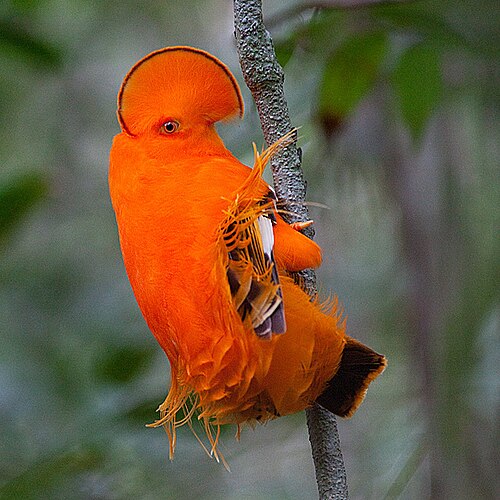
Close Relative Almir Cândido de Almeida / CC BY 2.0 · cc-by Image unavailable
Family Member Family Member
Help improve the field guideSomething wrong?
Checking your Fauna account…Report a name, category, or profile issue for review.