
Bird · GBIF taxon 5229963
Cape Sugarbird
Promerops caferAlso known as Sugarbird, Kaapse Suikervoël
Cape sugarbirds are iconic nectar-feeders endemic to the species-rich fynbos heathlands of South Africa's Cape region. Males boast extraordinarily long, ribbon-like tail feathers that stream behind them during dramatic aerial displays over flowering protea bushes. They play a vital ecological role as primary pollinators for several large protea species while defending rich floral territories with harsh, metallic calls.
EndemicNectarivorePollinator
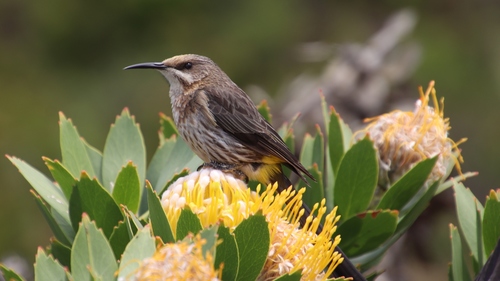
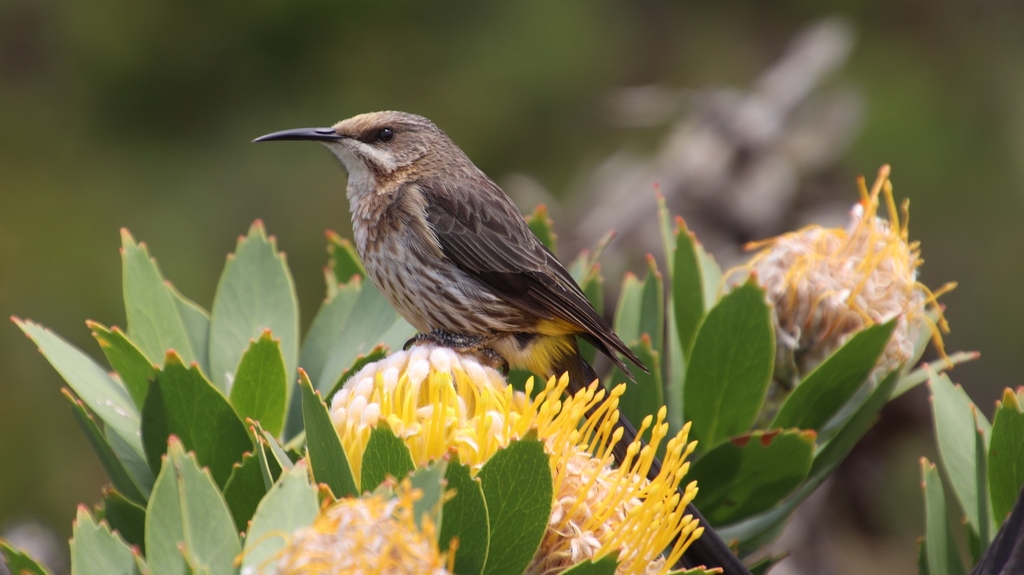 1 / 7
1 / 7—observations
—countries
—peak records
Least ConcernConservation statusIUCN Red List categoriesLCNTVUENCREWEXLeast ConcernRed List categories, explained →
Diet & prey
- Protea nectar
- Spiders
- Small insects
Predators
- Predatory birds
- Snakes
- Domestic cats
ThreatsUrbanization, invasive vegetation, frequent wildfires
HabitatsFynbos heathland, protea stands, montane scrub
Life span5–10 years
Size / weightNot available
Classification
- FamilyPromeropidae
- SpeciesPromerops cafer
Range data is not available yet.
Interaction riskLow
- Low
- Moderate
- High
- Very high
- Why interaction risk is low
- Safe to observe at a normal distance.
Responsible observation
- Optimal Timing: Visit fynbos reserves during autumn and winter when proteas bloom heavily.
- Spotting Males: Look for long-tailed males perched prominently on the highest protea flower heads.
- Keep Distance: Observe nesting pairs from trails to avoid disturbing delicate protea bushes.
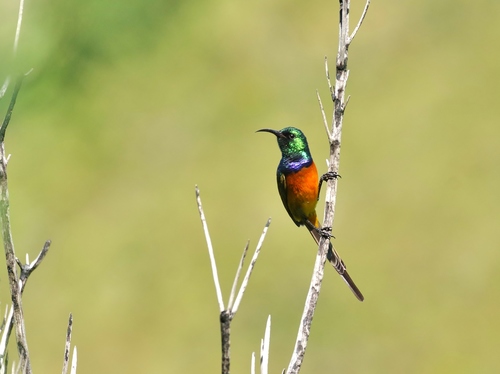
Fynbos Companion (c) Thibaud Aronson, some rights reserved (CC BY-SA), uploaded by Thibaud Aronson · cc-by-sa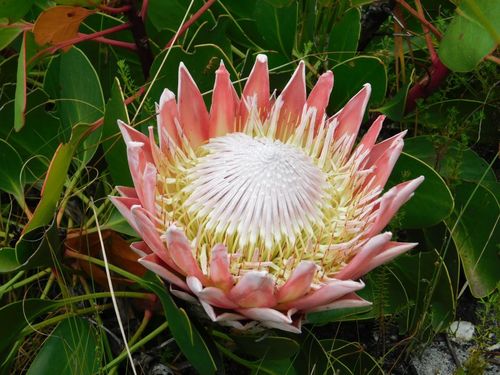
Primary Food Source no rights reserved, uploaded by Klaus Wehrlin · cc0 Image unavailable
Close Relative
Help improve the field guideSomething wrong?
Checking your Fauna account…Report a name, category, or profile issue for review.