
Bird · GBIF taxon 5228417
Stork-billed Kingfisher
Pelargopsis capensisAlso known as Stork-billed Tree Kingfisher
Stork-billed kingfishers are massive, solitary hunters easily recognised by their enormous dagger-like red bills and bright turquoise back feathers. They patrol sluggish tropical rivers and mangrove channels, perching motionless on shaded branches before plunging powerfully into the water for prey. Highly territorial, they defend their feeding stretches with harsh, ringing calls that resonate across forested waterways.
FisherTropicalTerritorial
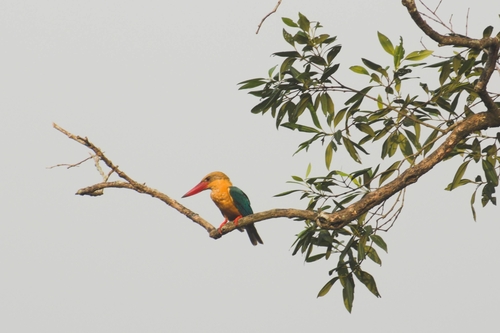
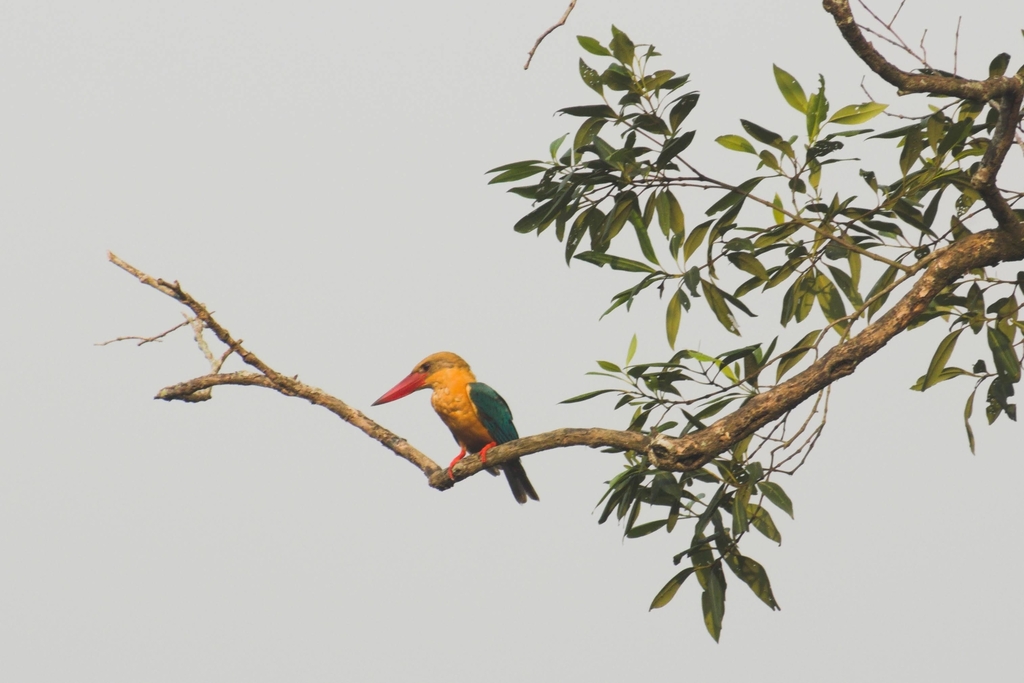
—observations
—countries
—peak records
Least ConcernConservation statusIUCN Red List categoriesLCNTVUENCREWEXLeast ConcernRed List categories, explained →
Diet & prey
- Fish
- Crabs
- Frogs
Predators
- Raptors
- Snakes
- Monitor lizards
ThreatsHabitat loss, wetland degradation, water pollution
HabitatsLowland tropical forests, rivers, lakes, mangroves, coastal streams
Life span10–15 years
Size / weightNot available
Classification
- FamilyAlcedinidae
- SpeciesPelargopsis capensis
Range data is not available yet.
Interaction riskLow
- Low
- Moderate
- High
- Very high
- Why interaction risk is low
- Safe to observe at a normal distance.
Responsible observation
- Listen for calls: Listen for loud, repeating 'peer-peer-peer' alarm calls near shaded riverbanks.
- Scan high perches: Look for bright red bills resting on branches suspended over quiet water.
- Keep distance: Observe quietly from afar to avoid scaring the bird from its fishing branch.

Competitor (c) Шальнов Кирилл, some rights reserved (CC BY) · cc-by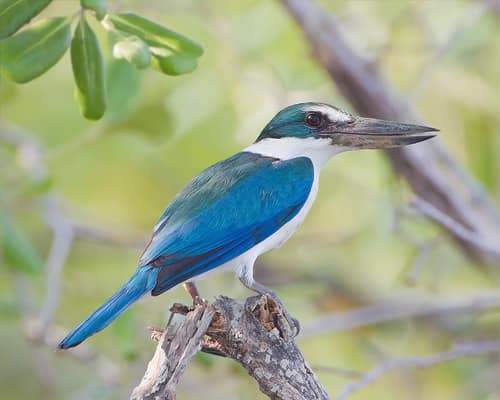
Coastal Neighbor JJ Harrison (https://www.jjharrison.com.au/) / CC BY-SA 3.0 · cc-by-sa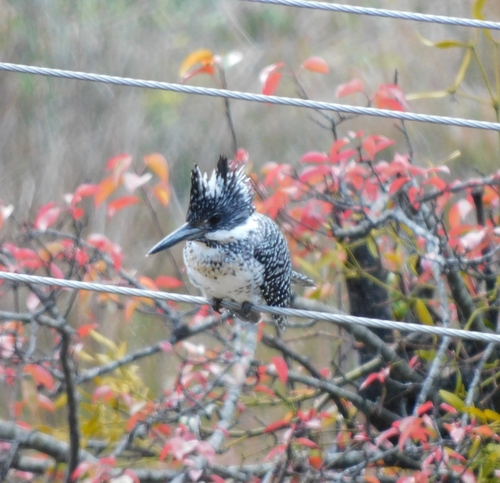
Large Co-tenant (c) Jagdish Singh Negi, some rights reserved (CC BY) · cc-by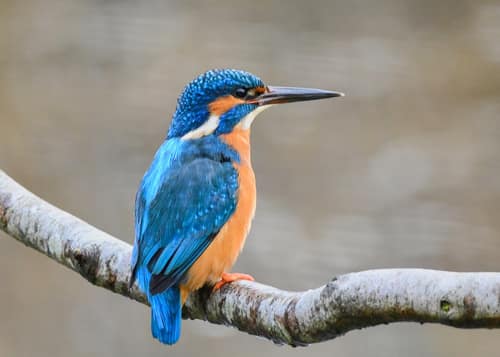
Close Relative (c) Frank Sengpiel, some rights reserved (CC BY), uploaded by Frank Sengpiel · cc-by
Help improve the field guideSomething wrong?
Checking your Fauna account…Report a name, category, or profile issue for review.