
Bird
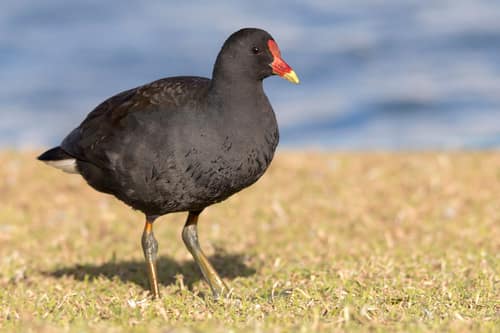
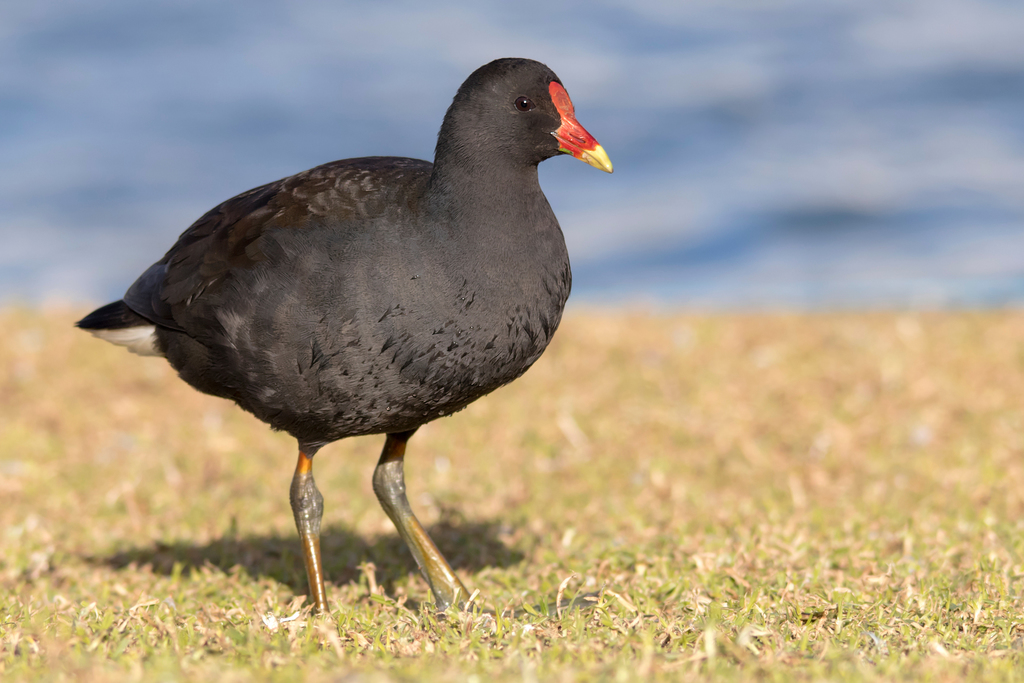
Dusky Moorhen
Gallinula tenebrosaAlso known as Black Gallinule, Black Moorhen
Dusky moorhens frequently forage in cooperative social groups, grazing on grasses along muddy shores or paddling across open water with distinct, rhythmic tail flicks. Breeding groups often include multiple males and females that jointly build floating reed nests and take turns incubating a communal clutch. Unlike many other rails, they lack white stripes along their flanks, displaying a uniform dark slate plumage crowned by a vibrant red frontal shield with an orange-yellow tip.
WaterbirdWetlandSocial
—observations
—countries
—peak records
Least ConcernConservation statusIUCN Red List categoriesLCNTVUENCREWEXLeast ConcernRed List categories, explained →
Diet & preyWaterweeds, Aquatic Insects, Freshwater Snails
Predators
- Swamp Harrier
- Red Fox
- Feral Cat
ThreatsWetland degradation, urban runoff, drought, and predation by introduced predators
HabitatsFreshwater wetlands, marshes, reed-fringed lakes, farm dams, and urban park ponds
Life span8–10 years
Classification
- OrderGruiformes
- FamilyRallidae
- GenusGallinula
- SpeciesGallinula tenebrosa
Range data is not available yet.
Interaction riskLow
- Low
- Moderate
- High
- Very high
- Why interaction risk is low
- Safe to observe at a normal distance.
Responsible observation
- Observation: Watch quiet lake margins and vegetated banks early in the morning when groups graze on open grass.
- Feeding: Avoid tossing bread or scraps into the water, which pollutes urban ponds and causes malnutrition.
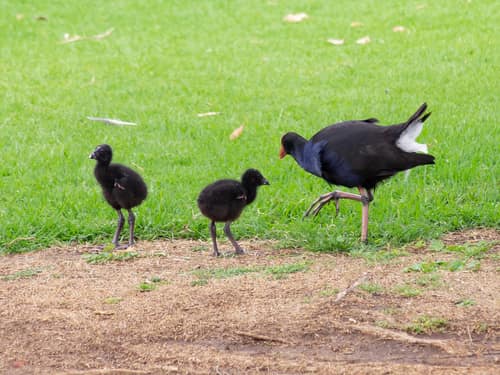
Neighbor (c) Terra Occ, some rights reserved (CC BY), uploaded by Terra Occ · cc-by
Frequent Companion (c) Roger Culos, some rights reserved (CC BY-SA) · cc-by-sa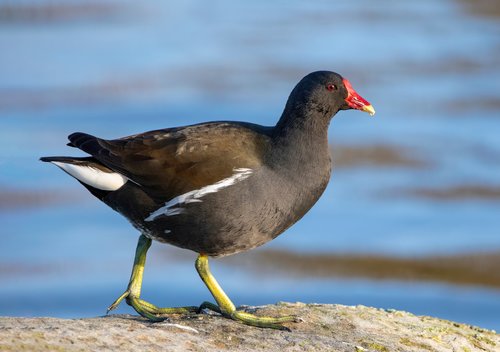
Close Relative (c) Alexis Lours, some rights reserved (CC BY), uploaded by Alexis Lours · cc-by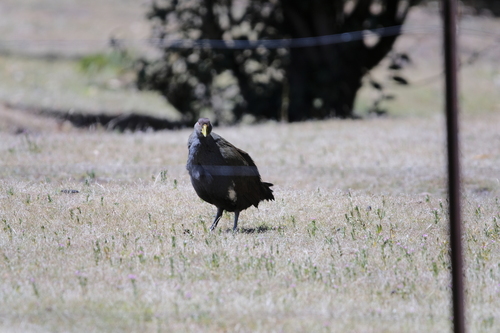
Close Relative (c) quirino, some rights reserved (CC BY) · cc-by
Help improve the field guideSomething wrong?
Checking your Fauna account…Report a name, category, or profile issue for review.