
Reptile · GBIF taxon 5227370
Argentine Black-and-white Tegu
Salvator merianaeAlso known as Argentine Giant Tegu, Black and White Tegu, Blue Tegu, Giant Tegu
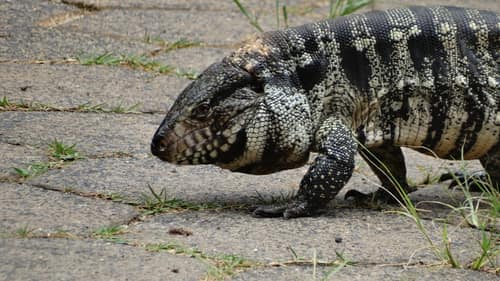
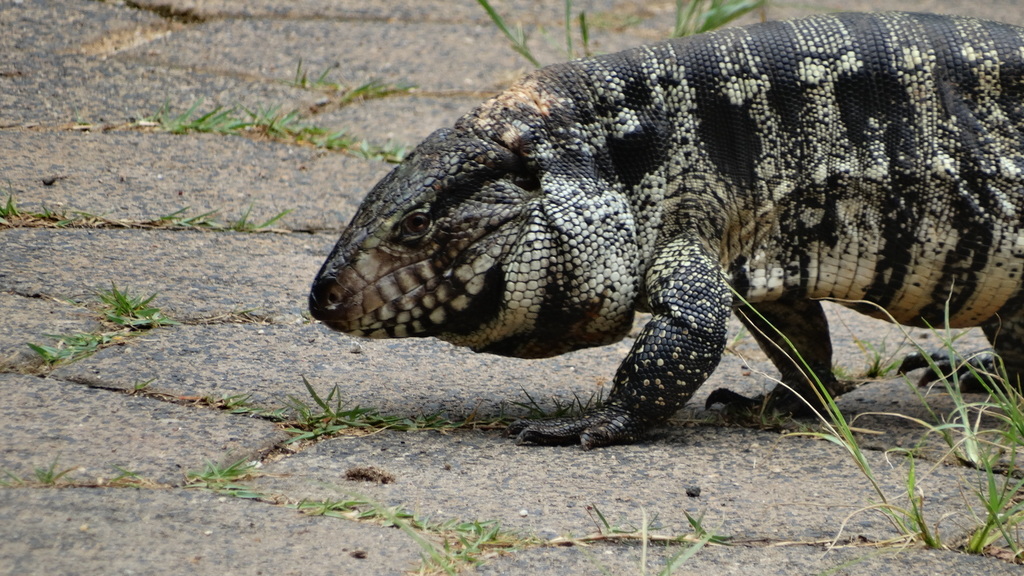
Argentine black-and-white tegus are heavy-bodied lizards famous for their high intelligence, complex burrowing habits, and temporary endothermic warmth during the spring breeding season. They forage actively during warm daylight hours, consuming everything from fruit and bird eggs to small mammals and insects. In non-native ranges across the southeastern United States, their adaptability and high reproductive rate allow them to establish persistent populations.
ReptileOmnivorousLarge Lizard
—observations
—countries
—peak records
Least ConcernConservation statusIUCN Red List categoriesLCNTVUENCREWEXLeast ConcernRed List categories, explained →
Diet & prey
- Bird Eggs
- Insects
- Small Rodents
Predators
- Pumas
- Jaguars
- Large Birds of Prey
ThreatsHabitat conversion, invasive species management, pet trade collection
HabitatsTropical rainforests, savannas, grasslands, semideserts
Life span12–20 years
Classification
- FamilyTeiidae
- GenusSalvator
- SpeciesSalvator merianae
Range data is not available yet.
Interaction riskHigh
- Low
- Moderate
- High
- Very high
- Why interaction risk is high
- Powerful jaws and sharp claws can cause serious injuries; observe from a safe distance.
- Why it is dangerous
- Possesses extraordinarily strong jaw pressure and sharp teeth that cause deep puncture wounds, severe bruising, and lacerations.
- How to recognize a risky encounter
- Look for a heavy-bodied lizard exceeding one meter in length with distinct black and white beaded patterning across its skin.
- What to do
- Maintain at least three meters of distance and never corner, reach into burrows, or attempt to handle wild individuals.
Responsible observation
- Maintain Safe Spacing: Keep a polite distance and avoid cornering wild adults to prevent defensive displays.
- Recognize Warning Signals: Standing high on all four legs and puffing the chest indicates distress or aggression.
- Report Sightings: Document and report observations in non-native areas like Florida or Georgia to local wildlife agencies.
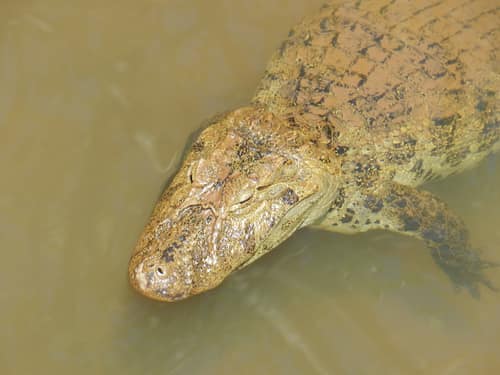
Frequent Companion (c) Leonel Roget, some rights reserved (CC BY), uploaded by Leonel Roget · cc-by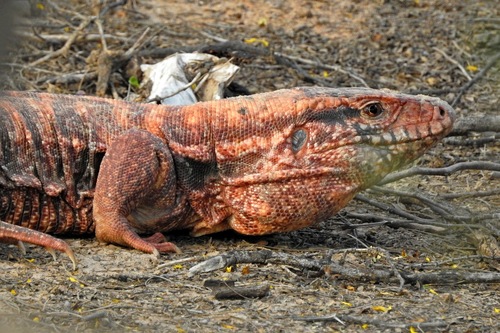
Close Relative no rights reserved, uploaded by Hugo Hulsberg · cc0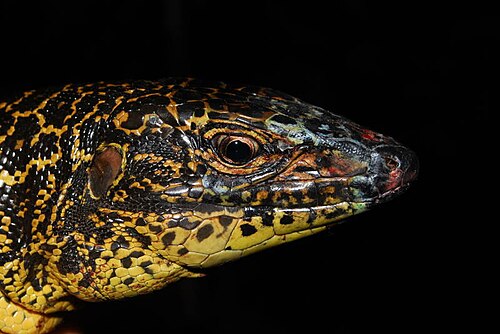
Close Relative Diego Tirira from Quito, Ecuador / CC BY-SA 2.0 · cc-by-sa
Help improve the field guideSomething wrong?
Checking your Fauna account…Report a name, category, or profile issue for review.