
Reptile · GBIF taxon 5227194
Black Girdled Lizard
Cordylus nigerAlso known as Black Lizard, Cape Peninsula Girdled Lizard
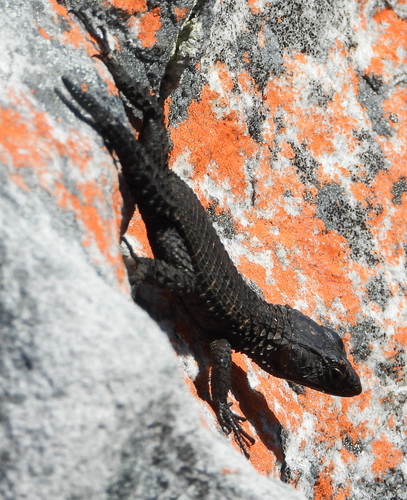
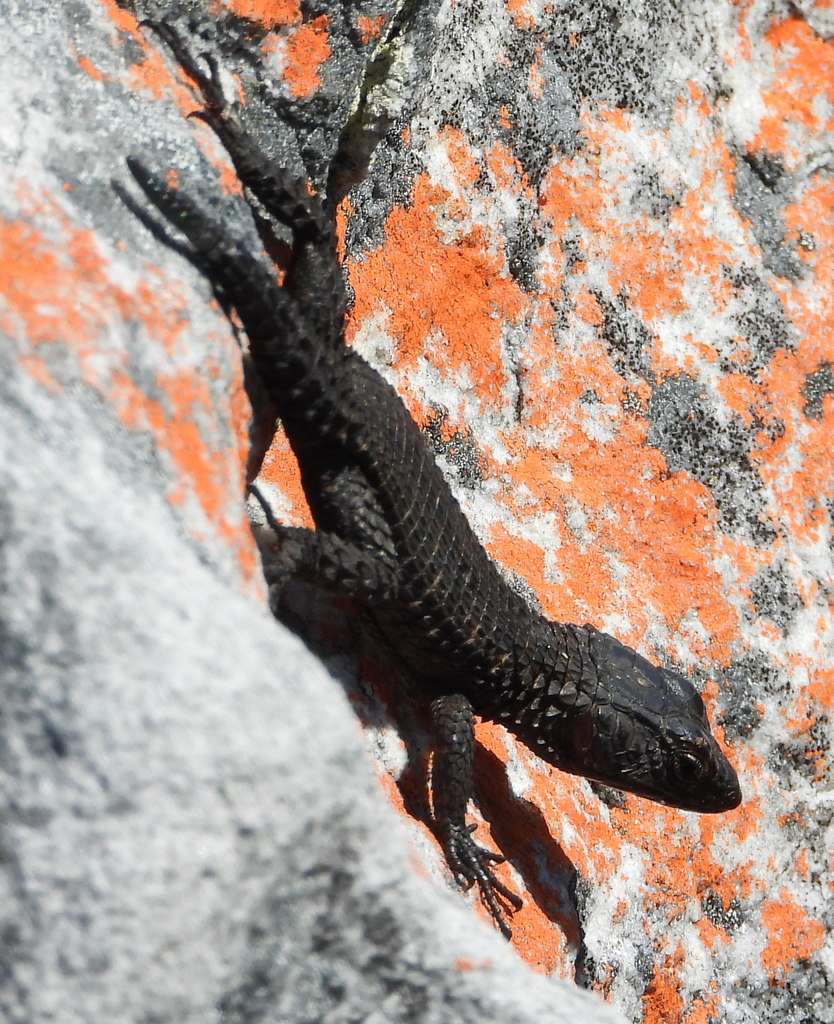
Black girdled lizards feature dense jet-black scales that allow them to rapidly absorb heat from the sun in cool, coastal winds. They spend their days basking on dark sandstone rocks and retreat into narrow rock crevices when threatened, wedging themselves tight with spiky tail whorls. Restricted to fynbos-covered granite and sandstone outcrops, they play a key role as invertebrate predators in fragile coastal ecosystems.
EndemicReptileSun-Loving
—observations
—countries
—peak records
Least ConcernConservation statusIUCN Red List categoriesLCNTVUENCREWEXLeast ConcernRed List categories, explained →
Diet & prey
- Ants
- Beetles
- Termites
Predators
- Kestrels
- Mongoose
- Snakes
ThreatsUrban expansion, invasive plant species, illegal collection, wild fires
HabitatsRocky fynbos outcrops, coastal sandstone boulders, mountain ridges
Life span10–15 years
Size / weightNot available
Classification
- FamilyCordylidae
- SpeciesCordylus niger
Range data is not available yet.
Interaction riskLow
- Low
- Moderate
- High
- Very high
- Why interaction risk is low
- May bite defensively if cornered or handled; observe peacefully from a safe distance.
- What to notice
- Recognized by jet-black armor and spiky tail rings on dark coastal boulders.
- Support conservation
- Observe quietly from trail edges without disturbing or turning over loose rocks.
Responsible observation
- Spotting: Scan dark sandstone rocks on clear, sunny mornings along Table Mountain trails.
- Basking habits: Look for lizards tilting their bodies toward the sun to warm up quickly.
- Trail etiquette: Remain on established paths and avoid shifting or damaging rock crevices.
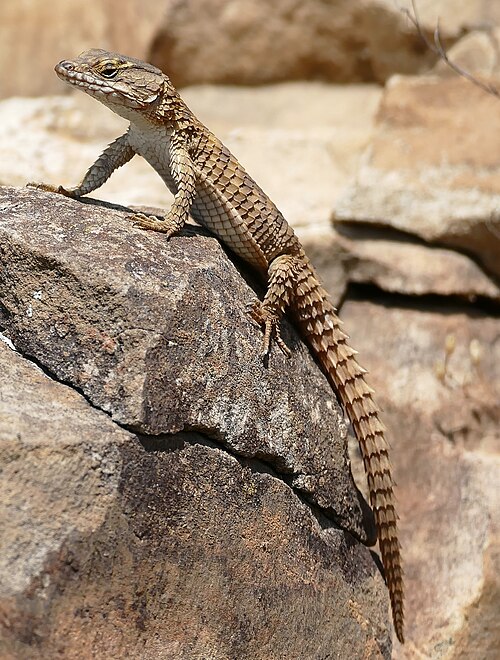
Close Relative Bernard DUPONT from FRANCE / CC BY-SA 2.0 · cc-by-sa Image unavailable
Close Relative Family Member
Help improve the field guideSomething wrong?
Checking your Fauna account…Report a name, category, or profile issue for review.