
Reptile · GBIF taxon 5225889
Sri Lanka Horned Lizard
Ceratophora tennentiiAlso known as Horn-nosed Lizard, Tennent's Leaf-nosed Lizard, Leaf-horned Lizard
High in the cloud-wrapped peaks of Sri Lanka's Knuckles Massif, Tennent's leaf-nosed lizard relies on cryptic mossy camouflage to melt into lichen-covered tree trunks. Males feature a soft, flattened, leaf-shaped appendage on the tip of their snout used in territorial displays and courting rituals. These slow-moving arboreal reptiles spend hours immobile, waiting to ambush passing insects while avoiding detection by predators.
EndemicArborealCamouflaged
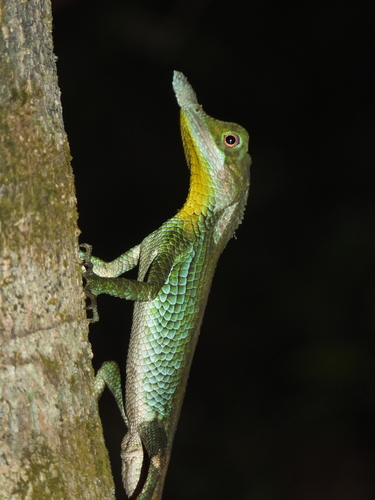
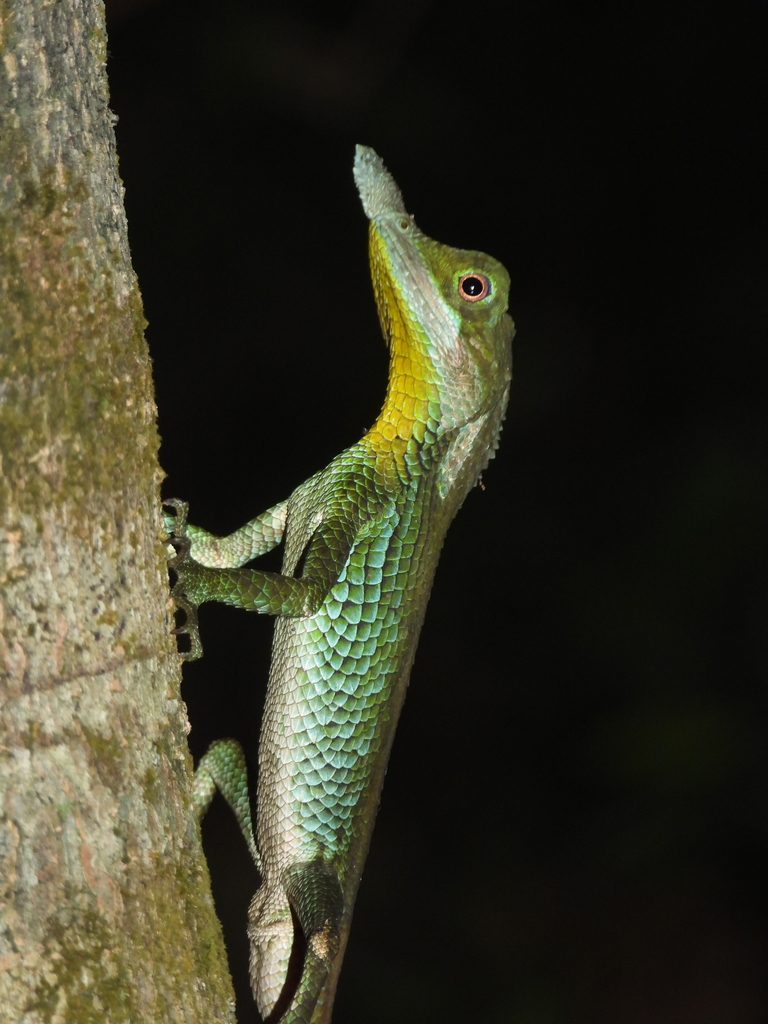
—observations
—countries
—peak records
EndangeredConservation statusIUCN Red List categoriesLCNTVUENCREWEXEndangeredRed List categories, explained →
Diet & prey
- Insects
- Spiders
- Earthworms
Predators
- Birds of prey
- Snakes
- Domestic cats
ThreatsHabitat loss from agriculture, climate change, and illegal pet trade
HabitatsTropical montane cloud forests and cardamom plantations
Life span5–10 years
Size / weightNot available
Classification
- FamilyAgamidae
- SpeciesCeratophora tennentii
Range data is not available yet.
Interaction riskLow
- Low
- Moderate
- High
- Very high
- Why interaction risk is low
- Safe to observe from a respectful distance without handling.
- What to notice
- Look for a prominent leaf-shaped rostral horn on the snout and mottled green camouflage.
- Support conservation
- Observe quietly without touch or habitat disruption, and refrain from sharing exact GPS coordinates.
Responsible observation
- Spotting Technique: Scan mossy tree trunks carefully between one and two meters off the ground.
- Observer Etiquette: Keep a calm distance to prevent stress in this slow-moving species.
- Habitat Protection: Avoid disturbing undergrowth or epiphytes where individuals sleep.
 Image unavailable
Co-occurring Agamid 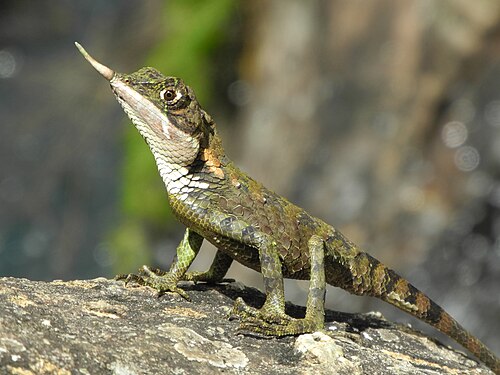
Close Relative Calynn / CC BY-SA 4.0 · cc-by-saClose Relative Close Relative
Help improve the field guideSomething wrong?
Checking your Fauna account…Report a name, category, or profile issue for review.