
Reptile
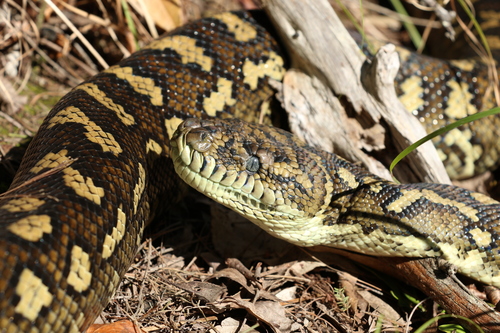
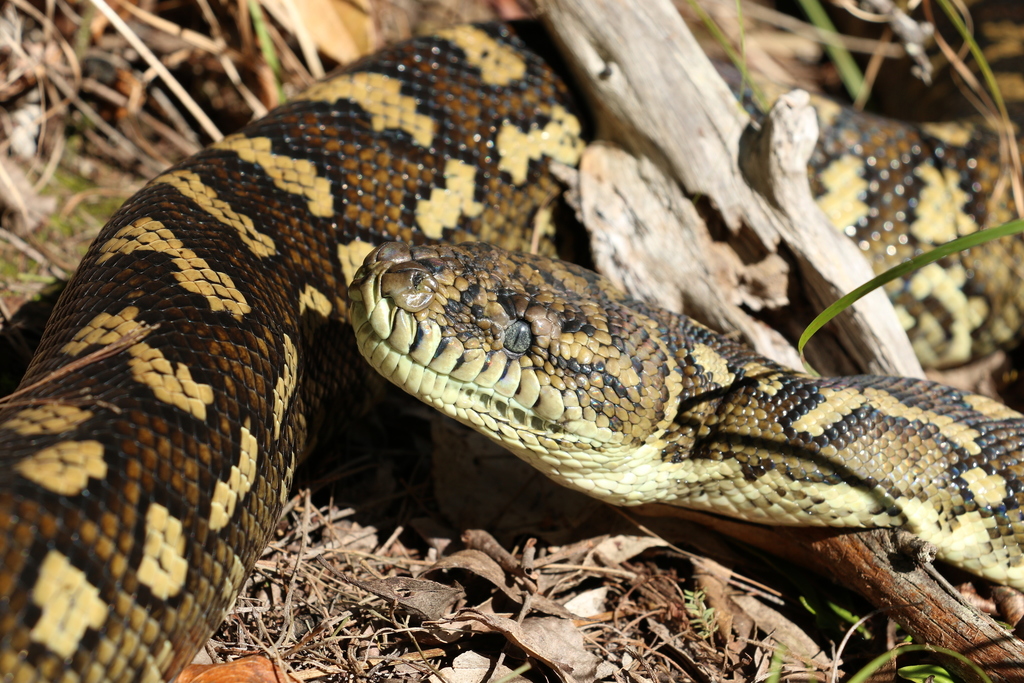
Morelia spilota mcdowelli
Morelia spilota mcdowelliAlso known as Carpet Snake, Diamond Python
Carpet pythons are adaptable semi-arboreal constrictors celebrated for their intricate, camouflage patterns that resemble woven carpets. Primarily active at night or during twilight, they hunt small mammals and birds by ambush, sensing prey via heat-sensitive pits lined along their lower labial scales. Females exhibit maternal care by coiling tightly around their clutches of eggs and rhythmically shivering their muscles to maintain optimal incubation temperatures.
ArborealConstrictorNocturnal
—observations
—countries
—peak records
Least ConcernConservation statusIUCN Red List categoriesLCNTVUENCREWEXLeast ConcernRed List categories, explained →
Diet & preyBrushtail Possum, Flying Fox, Black Rat
Predators
- Lace Monitor
- Dingo
- Wedge-tailed Eagle
ThreatsHabitat clearance, vehicle strikes, predation of juveniles by feral cats and foxes, and cane toad ingestion
HabitatsRainforests, open woodlands, scrublands, rocky outcrops, and suburban roofs
Life span15–20 years in the wild; over 30 years in captivity
Classification
- FamilyPythonidae
- SpeciesMorelia spilota mcdowelli
Range data is not available yet.
Interaction riskLow
- Low
- Moderate
- High
- Very high
- Why interaction risk is low
- Non-venomous but can deliver a painful defensive bite; keep a respectful distance and avoid cornering them.
- Why it is dangerous
- Possesses dozens of sharp, backward-curving teeth that can inflict deep puncture wounds and painful lacerations.
- How to recognize a risky encounter
- Look for a muscular, heavy-bodied snake with variable blotched patterns and distinct sensory pits on the lower lip.
- What to do
- Give the snake plenty of room to move away, and never attempt to handle or pin wild individuals.
Responsible observation
- Observe from distance: Watch quietly without approaching, as pythons prefer to retreat into vegetation when undisturbed.
- Check tree canopies: Scan large horizontal branches and warm tin roofs where they bask during cooler mornings.
- Do not corner: Give ground if encountered on walking tracks to prevent defensive strikes.
Competitor (c) John Tann, some rights reserved (CC BY) · cc-by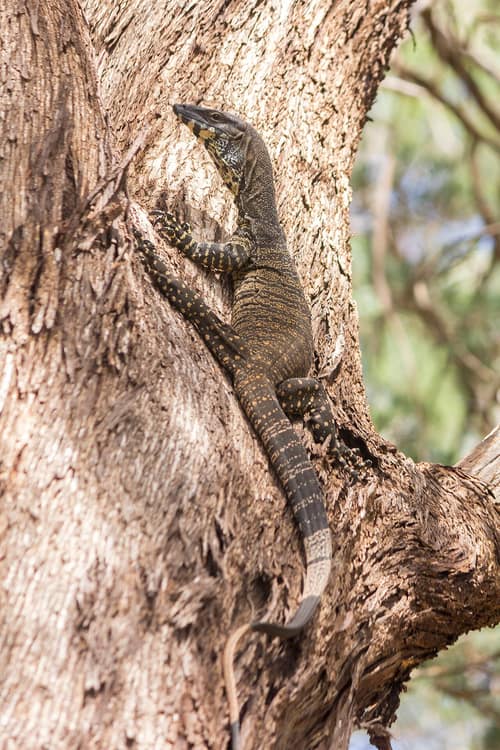
Predator Bidgee / CC BY-SA 3.0 au · cc-by-sa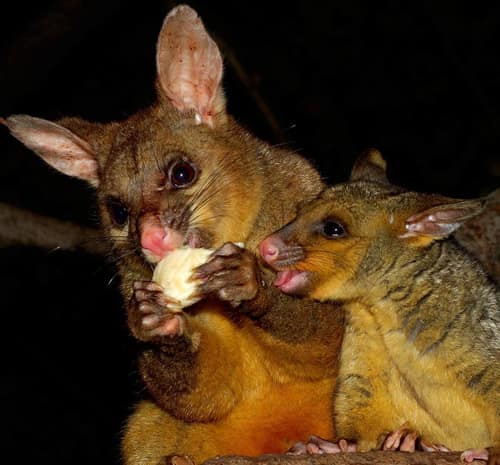
Prey (c) Jes, some rights reserved (CC BY-SA) · cc-by-sa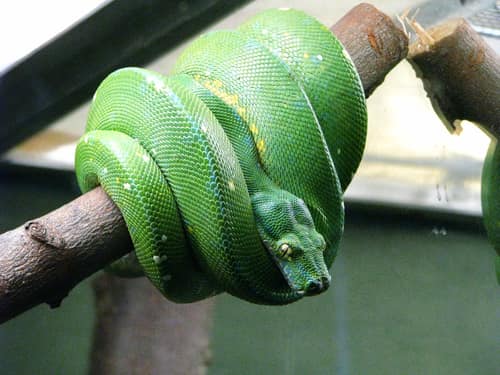
Close Relative "Green Tree Python" by MSVG is licensed under CC BY 2.0. To view a copy of this license, visit https://creativecommons.org/licenses/by/2.0/. · cc-by Image unavailable
Close Relative
Help improve the field guideSomething wrong?
Checking your Fauna account…Report a name, category, or profile issue for review.