
Reptile · GBIF taxon 5224625
Fiji Banded Iguana
Brachylophus fasciatusAlso known as Lau Banded Iguana, South Pacific Banded Iguana
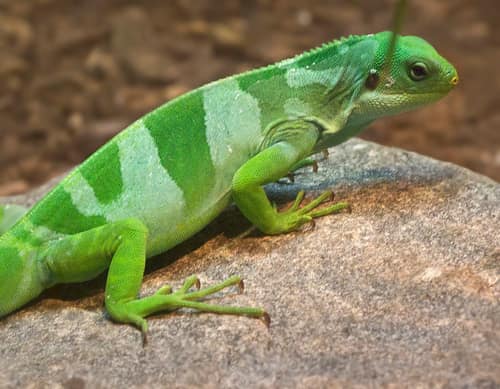
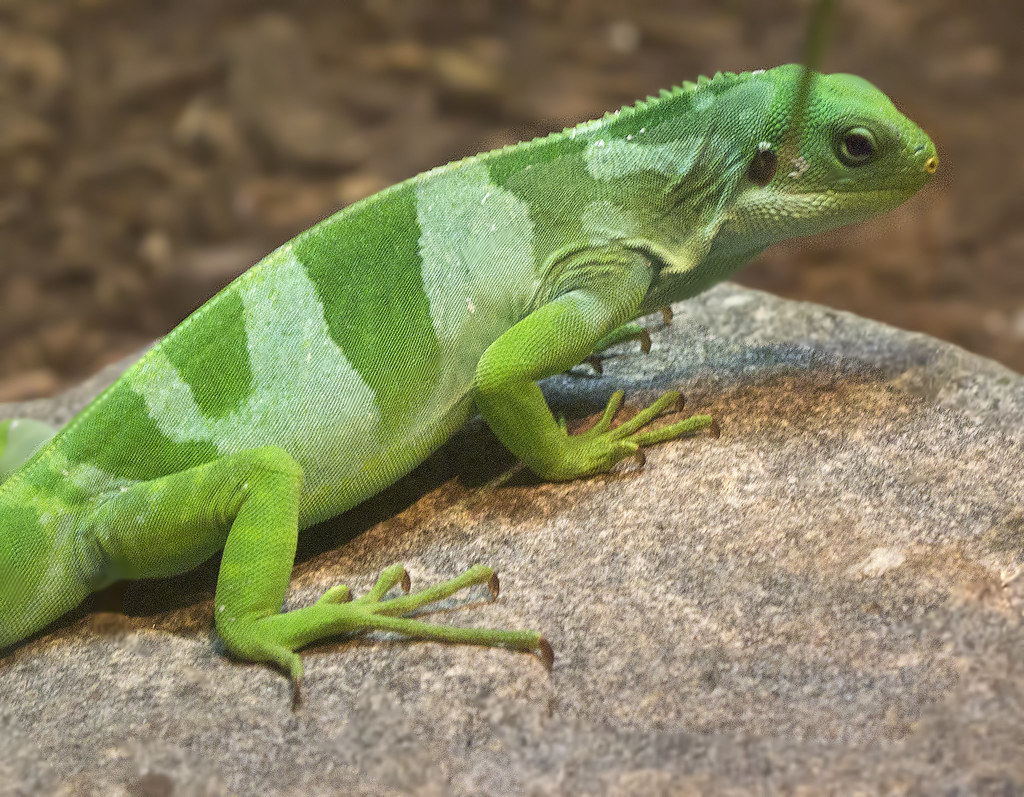
Vivid emerald skin allows Lau banded iguanas to melt seamlessly into the tropical canopy where they spend nearly their entire lives. Males display striking vertical light blue bands across their bodies and darken their skin during territorial displays, while females maintain a solid leaf-green camouflage. These isolated Pacific reptiles feed on flowers, tender leaves, and fruit high above the forest floor.
ArborealColorfulTropical
—observations
—countries
—peak records
EndangeredConservation statusIUCN Red List categoriesLCNTVUENCREWEXEndangeredRed List categories, explained →
Diet & prey
- Hibiscus Flowers
- Beach Morning Glory Leaves
- Wild Figs
Predators
- Feral Cats
- Mongooses
- Birds of Prey
ThreatsIntroduced predators, habitat destruction, illegal trade
HabitatsTropical rainforests, coastal forests
Life span10–15 years in the wild
Classification
- FamilyIguanidae
- SpeciesBrachylophus fasciatus
Range data is not available yet.
Interaction riskLow
- Low
- Moderate
- High
- Very high
- Why interaction risk is low
- Safe to observe at a normal distance.
- What to notice
- Distinctive emerald-green tree iguana with males showing wide light blue vertical body bands.
- Support conservation
- Keep distance, avoid disturbing vegetation near roosting sites, and never buy wild-caught specimens.
Responsible observation
- Canopy Scanning: Look high into sunlit forest branches during early morning hours when iguanas warm themselves.
- Minimize Disturbance: Keep a respectful distance below trees to avoid causing stress or flight responses.
- Observe Coloration: Note the presence of blue bands, which easily distinguish males from all-green females.
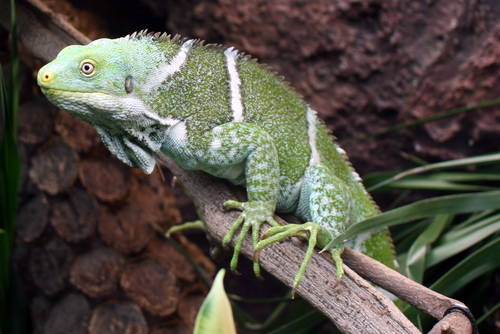
Close Relative (c) Matthias Liffers, some rights reserved (CC BY) · cc-by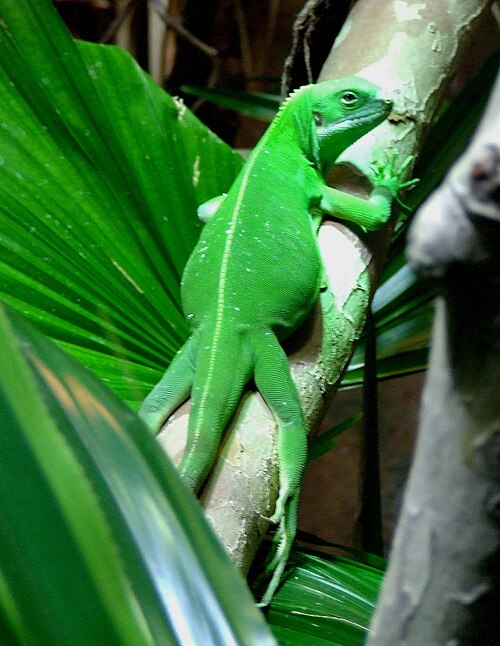
Close Relative TomCatX / CC0 · cc0 Image unavailable
Close Relative
Help improve the field guideSomething wrong?
Checking your Fauna account…Report a name, category, or profile issue for review.