
Reptile · GBIF taxon 5221476
Marlborough Green Gecko
Naultinus manukanusAlso known as Manuka Gecko, Marlborough Sounds Green Gecko
Marlborough green geckos spend their days sun-basking amidst dense foliage in the Marlborough region of New Zealand. Unlike most geckos worldwide, these arboreal reptiles are strictly diurnal and give live birth to twins rather than laying eggs. Their vivid emerald coloration provides exquisite camouflage within mānuka and kānuka canopies, keeping them hidden from aerial predators.
DiurnalEndemicArboreal
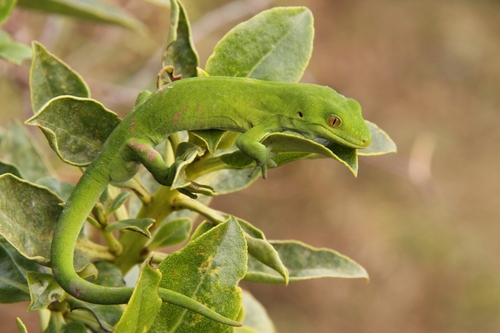
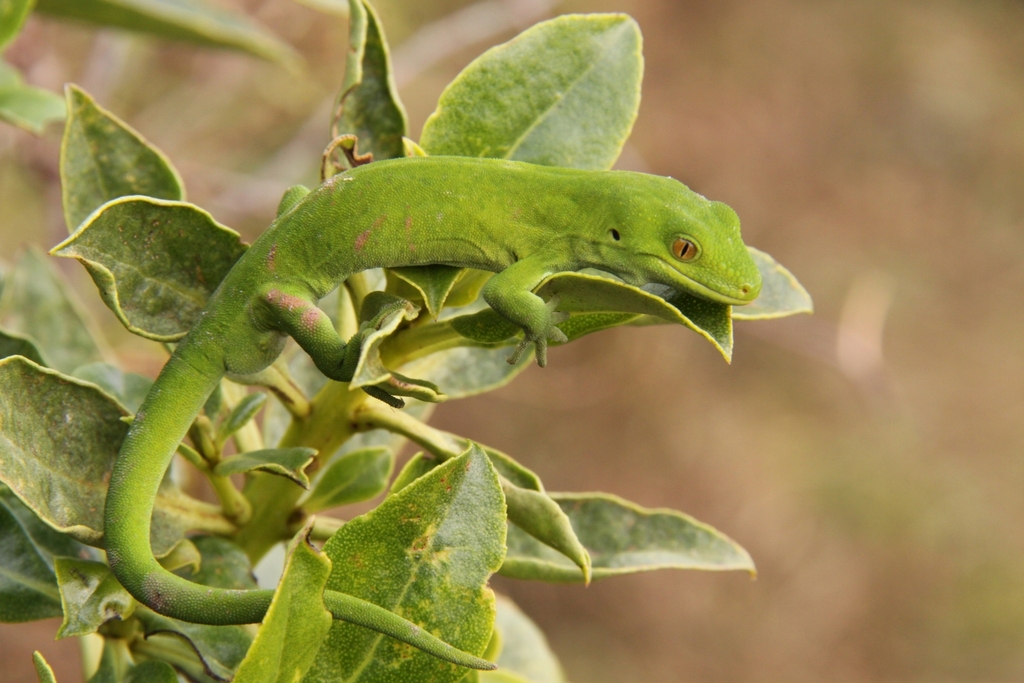
—observations
—countries
—peak records
EndangeredConservation statusIUCN Red List categoriesLCNTVUENCREWEXEndangeredRed List categories, explained →
Diet & prey
- Moths
- Flies
- Spiders
Predators
- Rats
- Stoats
- Feral Cats
ThreatsIntroduced mammalian predators, habitat loss, illegal poaching
HabitatsCoastal scrub, mānuka and kānuka shrublands, native forest canopy
Life span30+ years
Size / weightNot available
Classification
- FamilyDiplodactylidae
- SpeciesNaultinus manukanus
Range data is not available yet.
Interaction riskLow
- Low
- Moderate
- High
- Very high
- Why interaction risk is low
- Safe to observe at a normal distance.
- What to notice
- Bright emerald green gecko with fine pale markings, found high in shrubland foliage in the northern South Island.
- Support conservation
- Observe quietly from a distance without disturbing vegetation, and keep sighting locations strictly private.
Responsible observation
- Visual Search: Scan sunny outer branches of mānuka trees on warm, calm mornings.
- Minimal Disturbance: Keep a respectful distance, as shaking branches stresses the geckos.
- Location Privacy: Never share precise location coordinates online to protect against poaching.
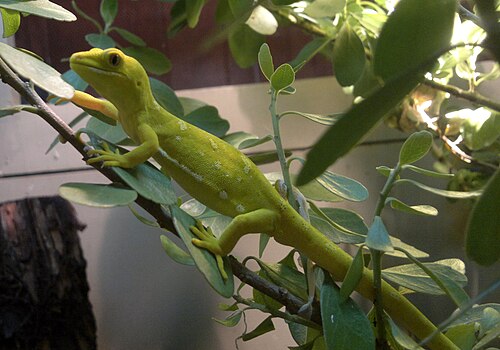
Close Relative Abi Skipp / CC BY 2.0 · cc-by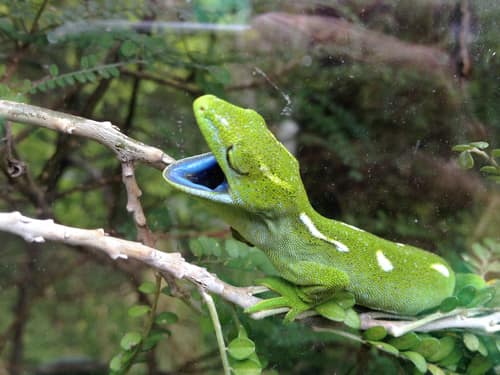
Close Relative (c) Tim Park, some rights reserved (CC BY), uploaded by Tim Park · cc-by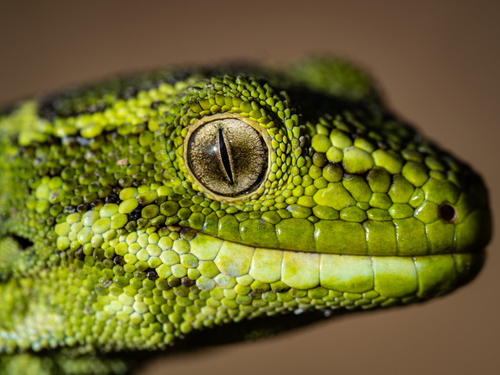
Close Relative no rights reserved · cc0
Help improve the field guideSomething wrong?
Checking your Fauna account…Report a name, category, or profile issue for review.