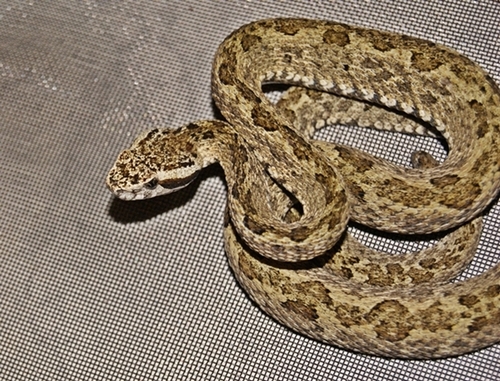
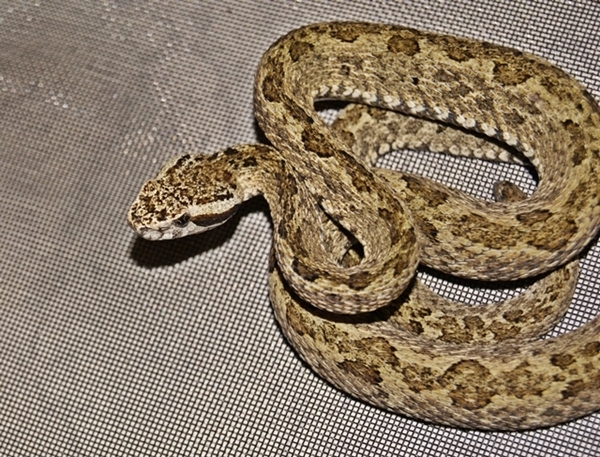
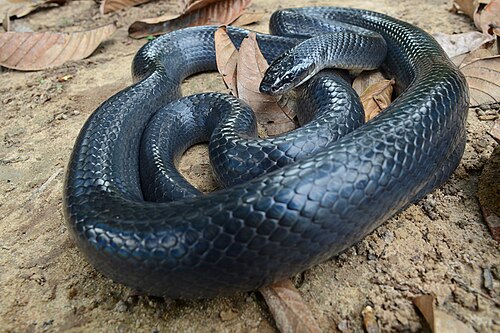
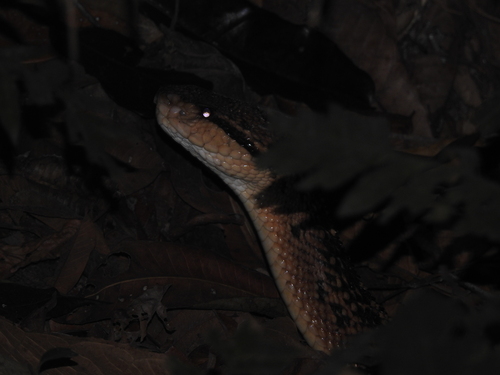
Also known as Venezuelan Lancehead, Venezuelan Pit Viper, Mapanare
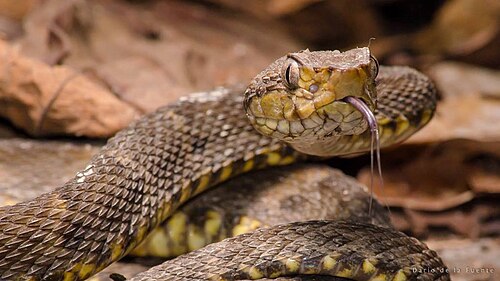
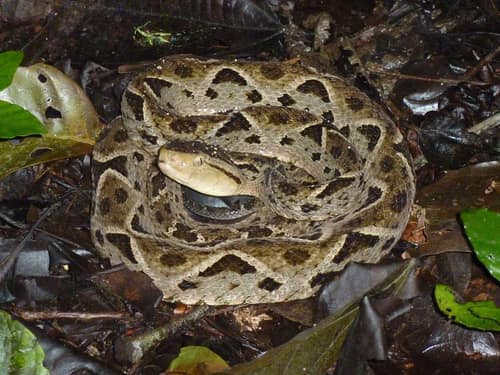
Venezuela lanceheads are highly specialized pit vipers adapted to the cool montane moist forests and cloud forests of northern Venezuela. They rely on cryptically patterned brown and green scales to blend seamlessly into leaf litter and low foliage where they ambush passing prey. Equipped with heat-sensing pit organs between their eyes and nostrils, these nocturnal hunters locate warm-blooded mammals even in complete dark.
Highly venomous pit viper; bites cause severe pain and bleeding. Observe from a safe distance.
Why it is dangerous
Venom contains potent hemotoxins and cytotoxins that cause severe tissue breakdown, severe swelling, excessive bleeding, and potential systemic failure.
How to recognize a risky encounter
Look for a triangular head, heat-sensing pits between eyes and nostrils, and dark geometric blotches on an olive-brown body.
What to do
Maintain a distance of at least two meters and never attempt to handle, poke, or corner this snake.
Responsible observation
Watch Your Step: Step carefully around leaf litter and low branches in cloud forests.
Keep Distance: Maintain several meters of distance when photographing pit vipers.
Use Flashlights: Carry a bright light during nighttime walks to spot active vipers.