
Reptile · GBIF taxon 5220530
Blanding's Turtle
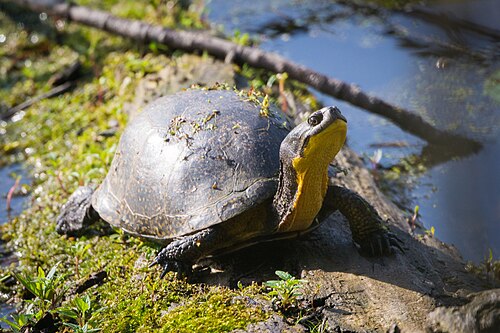
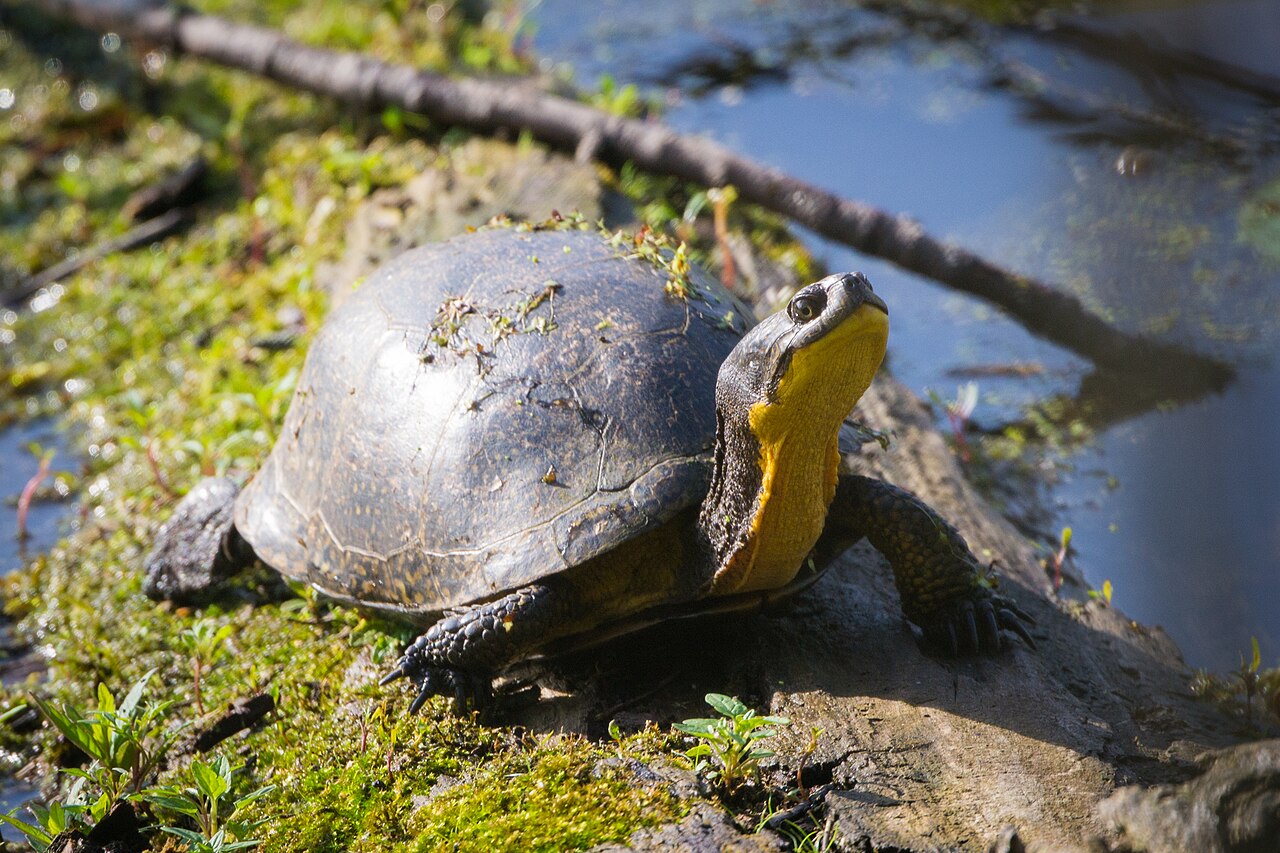
Emys blandingiiBlanding's Turtles are medium-sized semiaquatic turtles with smooth dark shells scattered with pale flecks. A bright yellow chin and throat are distinctive, and the hinged lower shell can close partly when the animal withdraws.
freshwater turtleyellow chinwetland traveler
Licensed referenceAndrew C / CC BY 2.0 · cc-by
—observations
—countries
—peak records
EndangeredConservation statusIUCN Red List categoriesLCNTVUENCREWEXEndangeredRed List categories, explained →
Diet & prey
- crayfish
- snails
- aquatic insects
Predators
- raccoons
- foxes
- large fish
ThreatsWetland loss, road mortality, illegal collection, predators, pollution, and fragmented movement routes
HabitatsShallow marshes, ponds, sedge wetlands, slow water, and connected upland nesting areas
Life spanExceptionally long-lived, with adults commonly surviving for many decades and sometimes beyond seventy years
Size / weightNot available
Classification
- FamilyEmydidae
- SpeciesEmys blandingii
Range data is not available yet.
Interaction riskModerate
- Low
- Moderate
- High
- Very high
- Why interaction risk is moderate
- Wild turtles can bite and carry Salmonella even when they appear healthy; never handle or collect them.
- Why it is dangerous
- Handling may provoke a defensive bite and transfer Salmonella from the turtle or surrounding water.
- How to recognize a risky encounter
- Confirm a yellow chin, smooth dark flecked shell, and hinged lower shell without touching the animal.
- What to do
- Do not handle or collect; after unavoidable emergency contact, wash hands thoroughly with soap and water.
- What to notice
- Document the yellow chin, dark flecked shell, and surrounding habitat from a distance without touching the turtle.
- Support conservation
- Keep exact coordinates private, leave the animal undisturbed, and report road hazards or suspected collection to wildlife authorities.
Responsible observation
- Identify: Look for the bright yellow chin beneath a dark lightly flecked shell.
- Protect: Observe remotely and never reveal exact locations or move a turtle except from immediate road danger.
Help improve the field guideSomething wrong?
Checking your Fauna account…Report a name, category, or profile issue for review.