
Mammal · GBIF taxon 5220183
Greater Kudu
Tragelaphus strepsicerosAlso known as Kudu
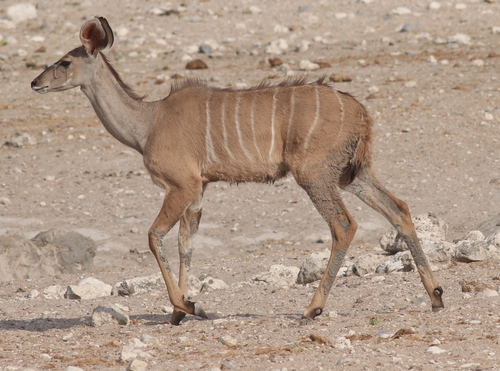
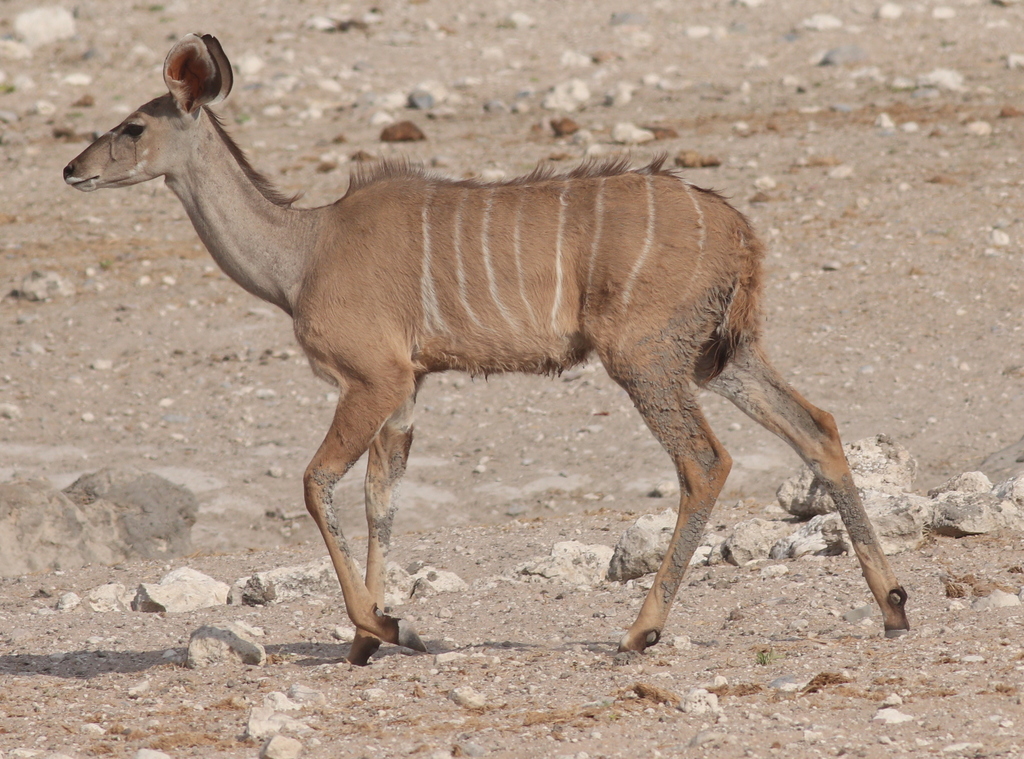
Greater kudus are majestic woodland antelopes renowned for the long, corkscrew horns carried by mature bulls, which can span over a meter along the curve. They rely on cryptically patterned coats with narrow vertical white stripes to vanish into dense thickets, freezing motionless when danger approaches before leaping over tall brush with remarkable agility. Small herds of females and their offspring communicate through quiet barks and tail flashes, while older bulls tend to remain solitary or form loose bachelor groups outside the breeding season.
AntelopeHerbivoreWoodland
—observations
—countries
—peak records
Least ConcernConservation statusIUCN Red List categoriesLCNTVUENCREWEXLeast ConcernRed List categories, explained →
Diet & prey
- Acacia leaves
- Wild fruits
- Fallen pods
Predators
- Lion
- Leopard
- Spotted Hyena
ThreatsHabitat fragmentation, bushmeat poaching, trophy hunting pressure, and rinderpest outbreaks
HabitatsDense brush, miombo woodlands, rocky hillsides, and riverine thickets
Life span15–20 years in the wild
Size / weightNot available
Classification
- OrderArtiodactyla
- FamilyBovidae
- GenusTragelaphus
- SpeciesTragelaphus strepsiceros
Range data is not available yet.
Interaction riskHigh
- Low
- Moderate
- High
- Very high
- Why interaction risk is high
- Large, powerful antelope that may charge if cornered; observe from a respectful distance.
- Why it is dangerous
- Massive body weight and sharp, spiraled horns exceeding one meter can cause severe or fatal puncture wounds and blunt-force trauma if a bull charges.
- How to recognize a risky encounter
- Recognizable by the tall stature, large ears, grey-brown coat with thin white vertical stripes, and long spiral horns on males.
- What to do
- Give them ample space to retreat; never corner an animal against a fence line or attempt to approach on foot.
Responsible observation
- Field Observation: Scan shaded thickets during early morning and late afternoon when they browse along forest margins.
- Safe Distance: Remain inside a safari vehicle or maintain at least 30 meters distance on foot to avoid alarming them.
- Road Safety: Drive slowly through rural reserves at dusk, as kudus frequently leap across roads directly into vehicle paths.
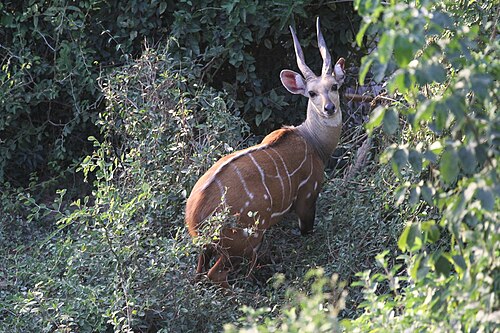
Same Genus Lucy Keith-Diagne / CC BY 4.0 · cc-by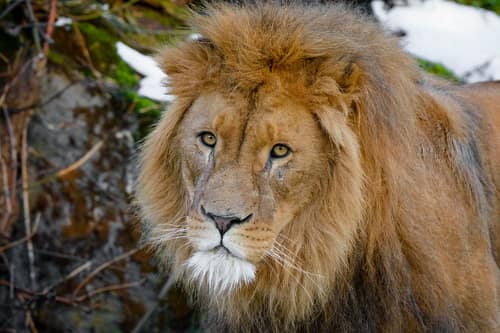
Predator "African Lion" by Mathias Appel is marked with CC0 1.0. To view the terms, visit https://creativecommons.org/publicdomain/zero/1.0/. · cc0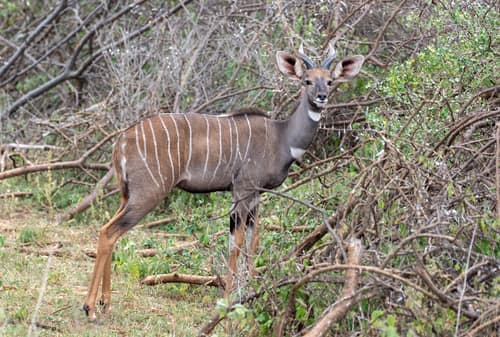
Close Relative (c) Forest Botial-Jarvis, einige Rechte vorbehalten (CC BY), hochgeladen von Forest Botial-Jarvis · cc-by Image unavailable
Close Relative
Help improve the field guideSomething wrong?
Checking your Fauna account…Report a name, category, or profile issue for review.