
Mammal · GBIF taxon 5219858
Muskrat
Ondatra zibethicusAlso known as Common Muskrat
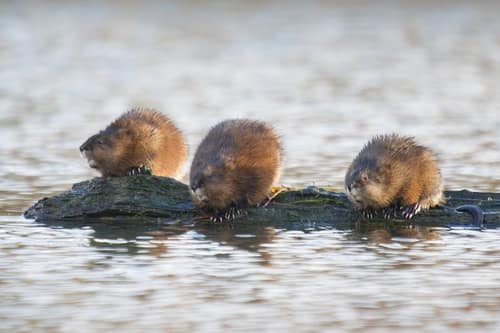
Muskrats are semiaquatic rodents with dense brown fur, small ears, and a narrow tail flattened from side to side. They build bank burrows or vegetation lodges and often leave cut stems near feeding platforms.
semiaquatic rodentwetlandlodge builder
 1 / 7
1 / 7—observations
—countries
—peak records
Least ConcernConservation statusIUCN Red List categoriesLCNTVUENCREWEXLeast ConcernRed List categories, explained →
Diet & prey
- freshwater mussels
- crayfish
- snails
Predators
- mink
- coyotes
- large owls
ThreatsWetland loss, trapping, water pollution, drought, and predation
HabitatsMarshes, ponds, slow streams, canals, and lake margins with abundant vegetation
Life spanUsually about three to four years in the wild
Size / weightNot available
Classification
- OrderRodentia
- FamilyCricetidae
- GenusOndatra
- SpeciesOndatra zibethicus
Native Introduced
Native range in olive; established introduced range in rust.
Interaction riskModerate
- Low
- Moderate
- High
- Very high
- Why interaction risk is moderate
- Cornered muskrats can bite, and contact with wildlife or contaminated water can transmit infection.
- Why it is dangerous
- A frightened muskrat can deliver a deep bite, while wildlife contact may expose people to pathogens.
- How to recognize a risky encounter
- Note the compact brown body and vertically flattened narrow tail, unlike a beaver's broad paddle.
- What to do
- Never touch, feed, corner, or capture one; keep pets back and seek care after any bite.
Responsible observation
- Watch: Observe quietly from shore and never block an animal's path to water.
- Track: Look for narrow slides, cut plant stems, and low vegetation lodges.
Help improve the field guideSomething wrong?
Checking your Fauna account…Report a name, category, or profile issue for review.