
Mammal · GBIF taxon 5219696
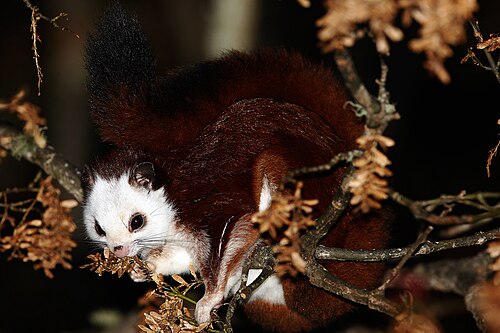
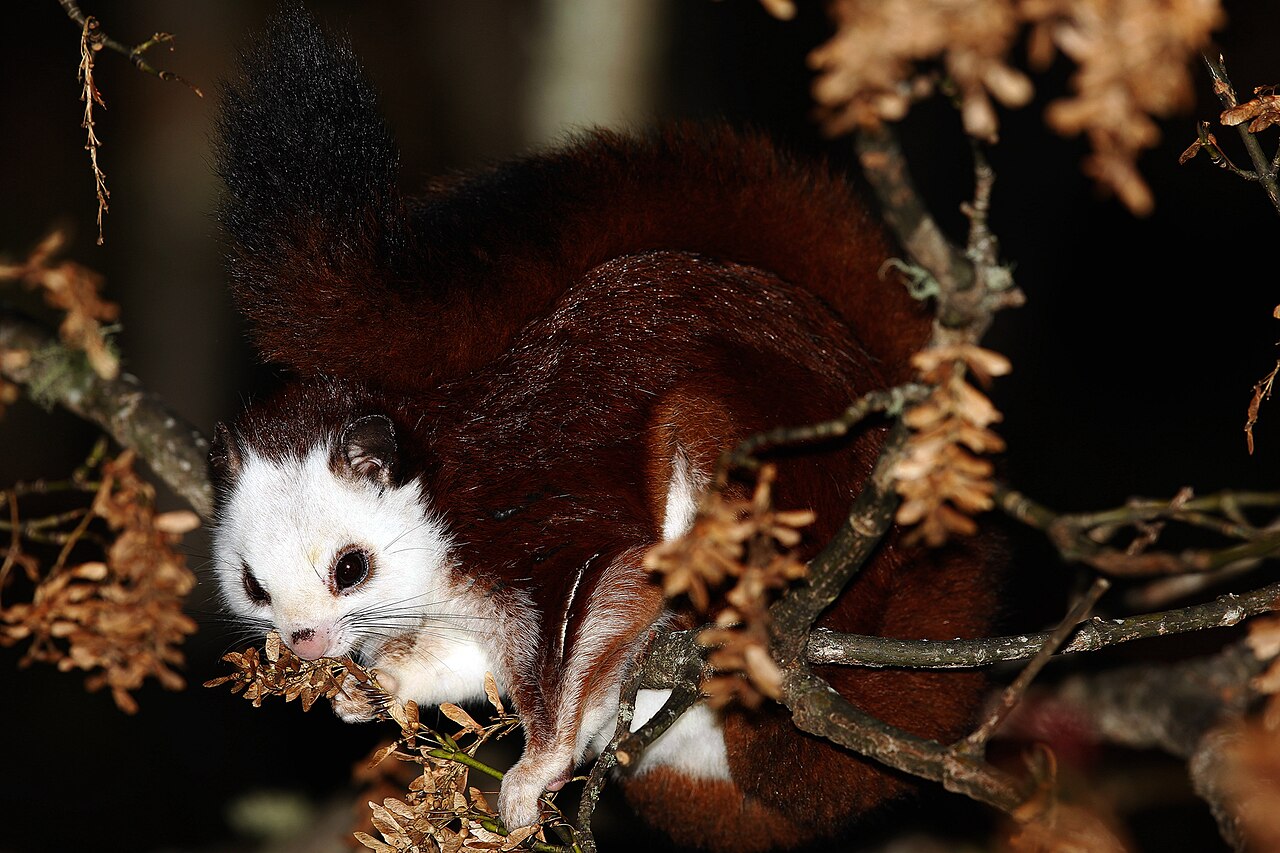
Red and White Giant Flying Squirrel
Petaurista alborufusAlso known as White-and-red Giant Flying Squirrel
Red and white giant flying squirrels spend their lives high in montane canopy forests, emerging at dusk to glide remarkable distances between towering trees using an expansive, furred membrane. They shelter inside hollow trunks or high tree cavities by day, using loud, piercing calls to communicate across steep mountain ravines after dark. Their diet shifts with the seasons, relying heavily on hard mast, tender buds, and conifer cones to survive cold montane winters.
NocturnalArborealGliding
—observations
—countries
—peak records
Least ConcernConservation statusIUCN Red List categoriesLCNTVUENCREWEXLeast ConcernRed List categories, explained →
Diet & prey
- Acorns
- Tree buds
- Wild fruits
Predators
- Yellow-throated marten
- Clouded leopard
- Eurasian eagle-owl
ThreatsDeforestation, forest fragmentation, and localized hunting
HabitatsMontane broadleaf, mixed, and coniferous forests
Life span10–15 years
Size / weightNot available
Classification
- FamilySciuridae
- SpeciesPetaurista alborufus
Range data is not available yet.
Interaction riskLow
- Low
- Moderate
- High
- Very high
- Why interaction risk is low
- Safe to observe at a normal distance.
Responsible observation
- Night Spotting: Use a red-filtered flashlight to scan the upper canopy for eye-shine without blinding them.
- Listening: Listen around dusk for high-pitched, echoing vocalizations across steep mountain valleys.
- Quiet Observation: Keep silent and avoid sudden movement beneath roost trees to prevent scaring them into hiding.
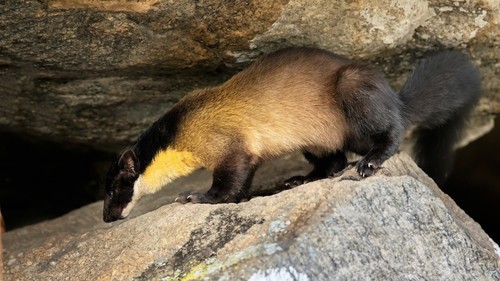
Predator (c) Pramod CL, some rights reserved (CC BY), uploaded by Pramod CL · cc-by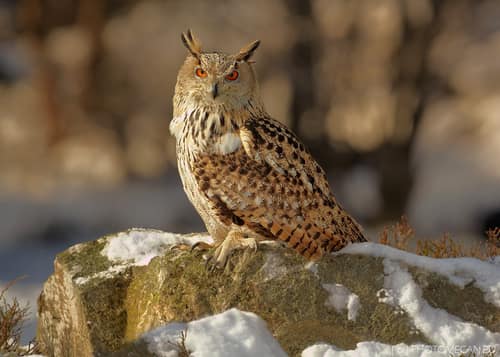
Predator Martin Mecnarowski (http://www.photomecan.eu/) / CC BY-SA 3.0 · cc-by-sa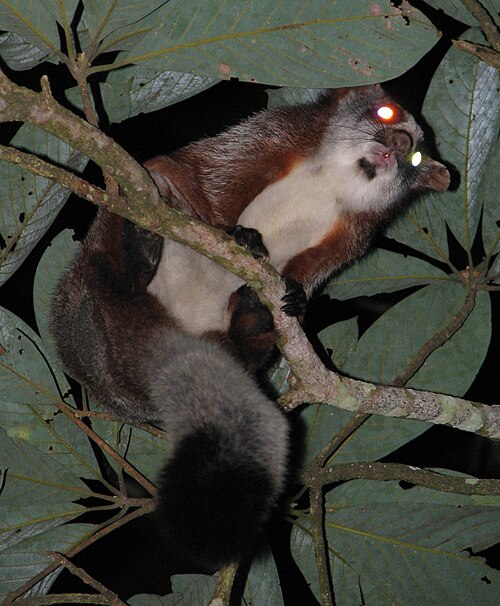
Close Relative Prashanthns / CC BY-SA 3.0 · cc-by-sa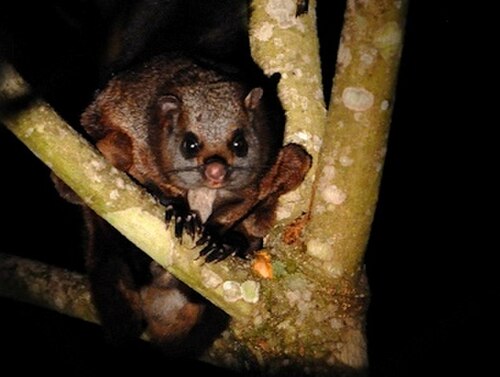
Close Relative Wikimedia Commons / CC BY-SA 4.0 · cc-by-sa
Help improve the field guideSomething wrong?
Checking your Fauna account…Report a name, category, or profile issue for review.