
Mammal
Aye-aye
Daubentonia madagascariensisAlso known as Madagascar Aye-Aye
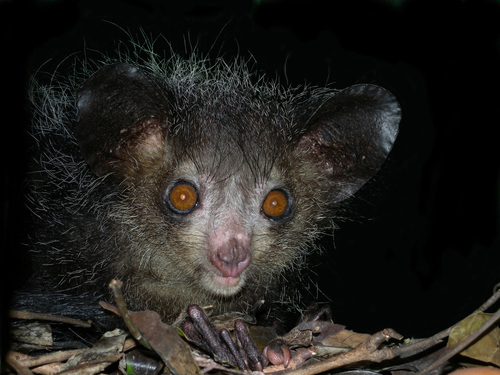
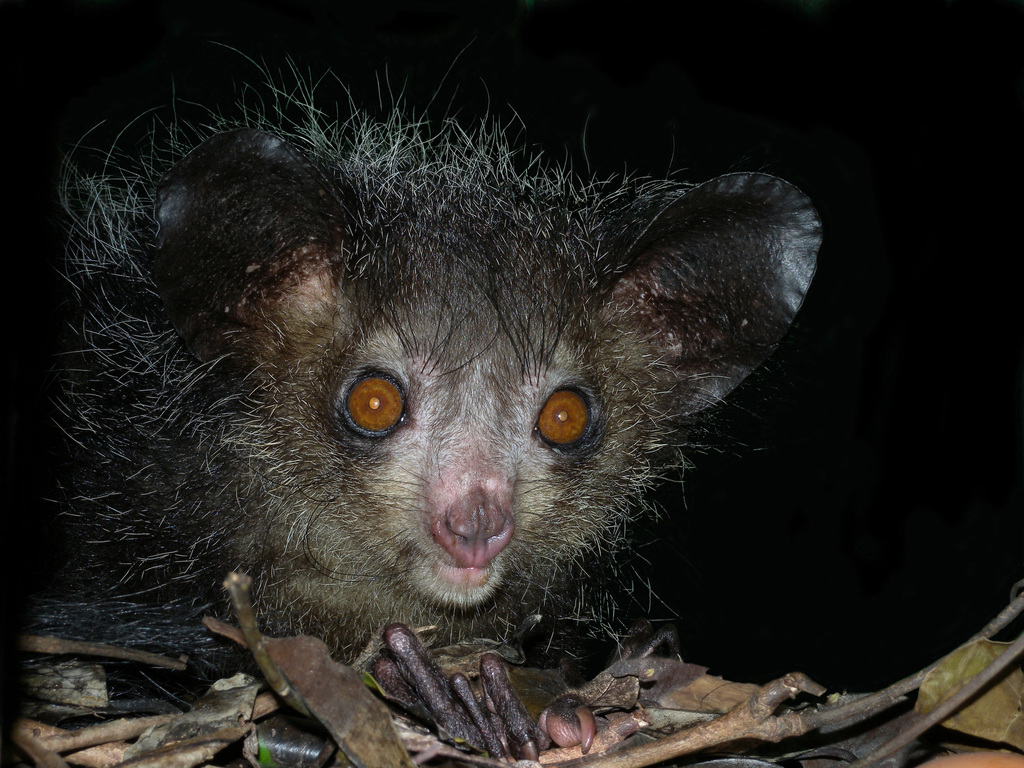
Aye-ayes are nocturnal, tree-dwelling lemurs famous for their remarkable tap-foraging ecological niche. Using an elongated, highly flexible middle finger, they tap rapidly along tree trunks at up to eight times per second to detect hollow channels and extract wood-boring larvae. Their continuously growing incisors and large radar-like ears make them one of the most unusual and specialized primates on Earth.
NocturnalArborealEndemic
—observations
—countries
—peak records
EndangeredConservation statusIUCN Red List categoriesLCNTVUENCREWEXEndangeredRed List categories, explained →
Diet & preyBeetle Larva, Canarium Nut, Fungus
Predators
- Fossa
- Malagasy Tree Boa
- Harrier Hawk
ThreatsDeforestation, habitat fragmentation, and local hunting due to traditional omens
HabitatsTropical rainforests, deciduous forests, and coastal woodlands of Madagascar
Life span20–25 years
Classification
- OrderPrimates
- FamilyDaubentoniidae
- GenusDaubentonia
- SpeciesDaubentonia madagascariensis
Range data is not available yet.
Interaction riskLow
- Low
- Moderate
- High
- Very high
- Why interaction risk is low
- Timid nocturnal animal; observe quietly from a distance without using bright white lights.
- What to notice
- Distinguished by coarse dark fur, pale face, oversized ears, bushy tail, and elongated middle fingers.
- Support conservation
- Keep a distance of at least ten meters and refrain from flash photography during nocturnal searches.
Responsible observation
- Night Spotting: Use red light flashlights to avoid disturbing these light-sensitive nocturnal primates.
- Listen Carefully: Listen for their fast wood-tapping sounds echoing through the forest canopy at night.
- Maintain Distance: Avoid approaching nesting hollows or spherical leaf nests built high in tree forks.
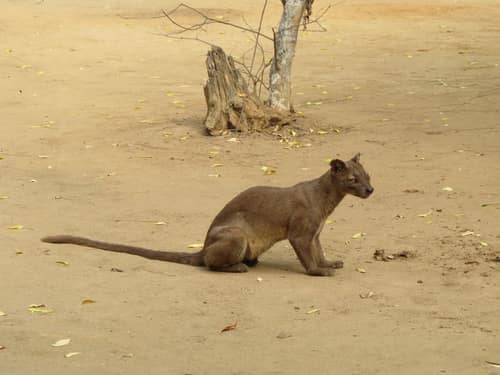
Predator (c) Micha Baum, some rights reserved (CC BY-SA), uploaded by Micha Baum · cc-by-sa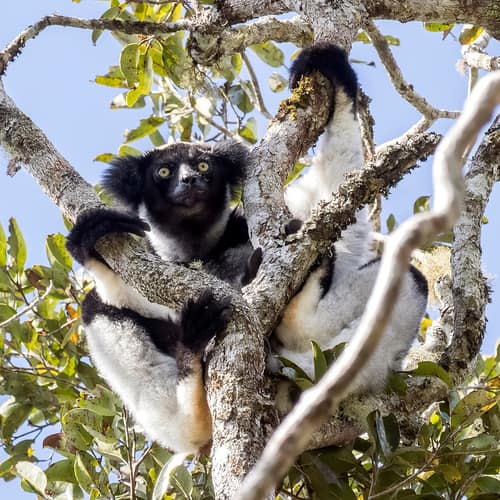
Close Relative Charles J. Sharp / CC BY-SA 4.0 · cc-by-sa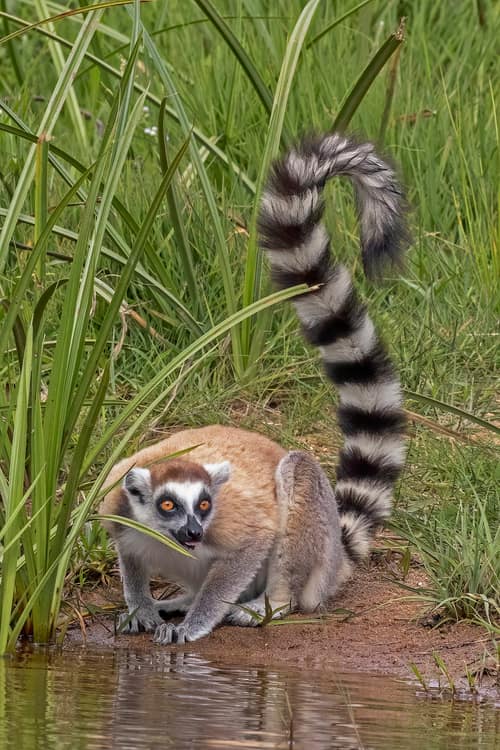
Close Relative Charles J. Sharp / CC BY-SA 4.0 · cc-by-sa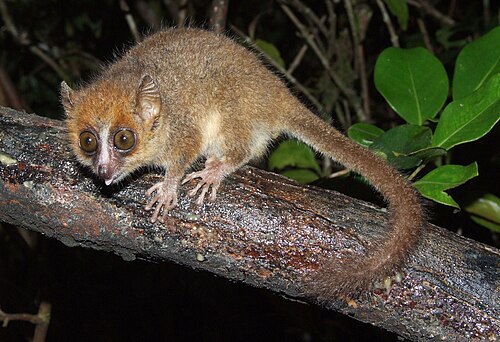
Close Relative Original: Bikeadventure at German Wikipedia Modifications: Cornischong at Luxembourgish Wikipedia / Public domain · cc0
Help improve the field guideSomething wrong?
Checking your Fauna account…Report a name, category, or profile issue for review.