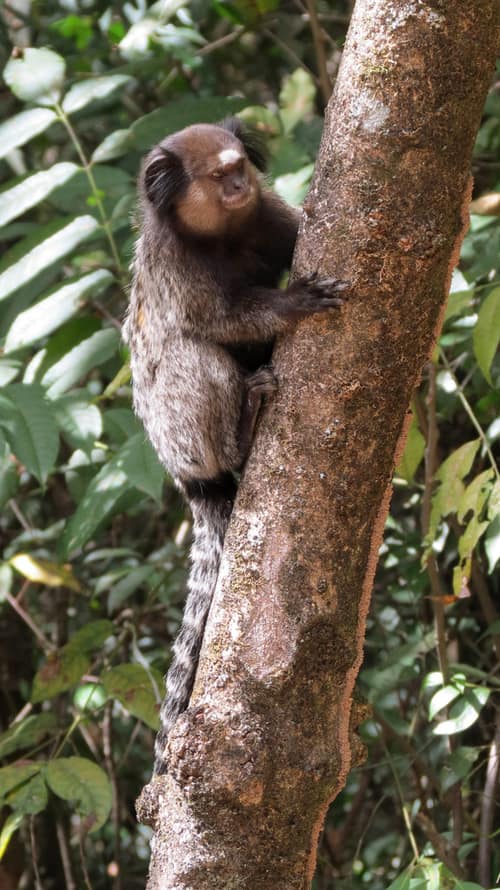
Also known as White-tufted Marmoset, White-tufted-ear Marmoset
Common marmosets are nimble arboreal primates renowned for their prominent white ear tufts and striking social structure. They live in tight-knit family troops of up to fifteen individuals, where only the dominant breeding pair reproduces while older siblings share infant-carrying duties. Specialized chisel-like incisors allow them to gnaw deep grooves into tree bark to feed on exudates like gum, sap, and resin.
ThreatsPet trade collection and habitat fragmentation within their native range
HabitatsTropical dry forests, scrublands (caatinga), coastal secondary forests, and urban parks
Life span10–16 years
Classification
FamilyCallitrichidae
SpeciesCallithrix jacchus
Range & activity
Range data is not available yet.
Safe observation
Interaction riskModerate
Low
Moderate
High
Very high
Why interaction risk is moderate
May deliver sharp defensive bites and transmit pathogens such as rabies; observe from a respectful distance.
Why it is dangerous
Marmosets possess sharp incisors and claws capable of inflicting deep lacerations, and they can harbor transmissible zoonotic diseases including rabies, yellow fever, and herpes simplex variants.
How to recognize a risky encounter
Look for a mottled grey-brown coat, striped tail, and prominent fluffy white tufts fanning out from both ears.
What to do
Never attempt to touch, feed, or corner a marmoset; keep a distance of at least five meters.
Responsible observation
Binocular viewing: Scan middle-story tree trunks in early morning when troops gather to gouge bark.
Do not feed: Offering food spreads human pathogens and encourages aggressive begging behavior.
Listen for chirps: Troops maintain contact with high-pitched trills and twittering vocalizations.



 Image unavailable