
Mammal
Western Barred Bandicoot
Perameles bougainvilleAlso known as Shark Bay Bandicoot, Marl, Barred Bandicoot
Western barred bandicoots emerge after dusk to forage across sandy soils, leaving distinctive conical digging pits as they unearth subterranean insects, roots, and fungal fruiting bodies. During the day, they shelter in shallow scrapes concealed beneath dense shrubs or inside grass hummocks, carefully lined with twigs and leaf litter for thermal insulation. Once widespread across mainland arid scrublands, their survival now relies heavily on offshore island sanctuaries and predator-free fenced reintroduction havens.
NocturnalMarsupialFossorial
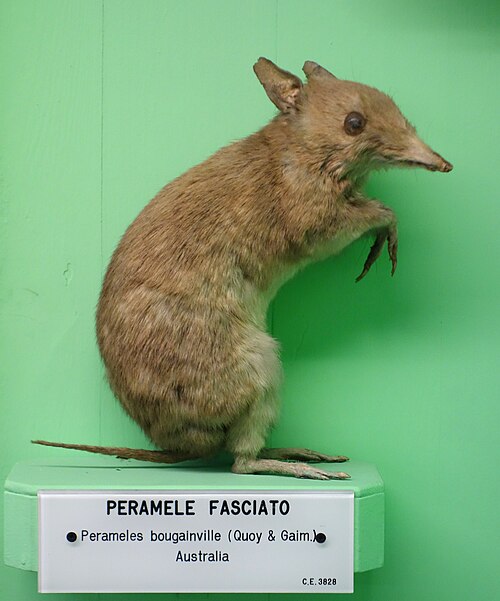
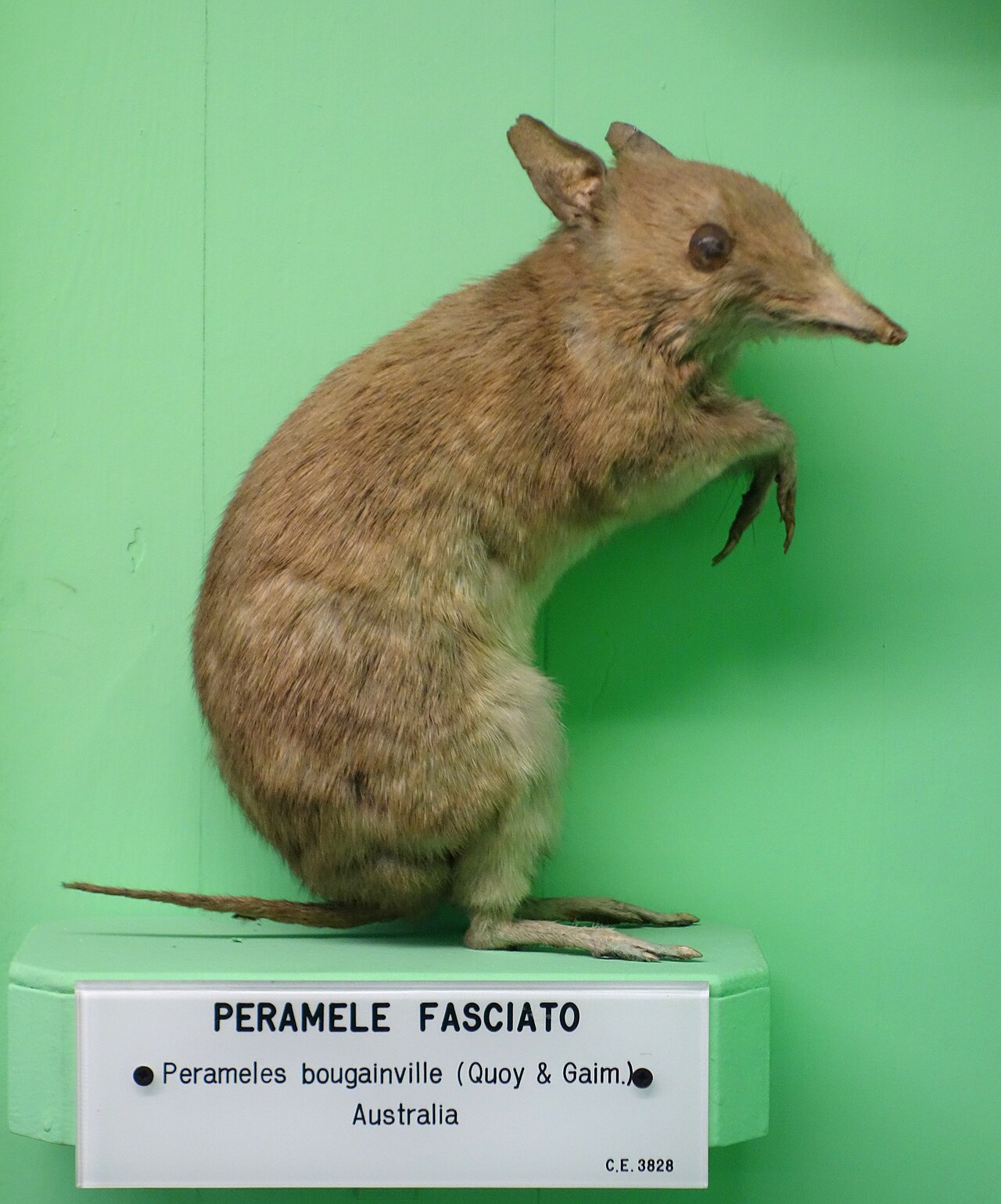
—observations
—countries
—peak records
VulnerableConservation statusIUCN Red List categoriesLCNTVUENCREWEXVulnerableRed List categories, explained →
Diet & preyBeetle Larvae, Earthworms, Plant Tubers
Predators
- Feral Cat
- Red Fox
- Barn Owl
ThreatsPredation by feral cats and foxes, habitat degradation
HabitatsSemi-arid scrub, coastal dunes, sandplains
Life span2–4 years
Classification
- OrderPeramelemorphia
- FamilyPeramelidae
- GenusPerameles
- SpeciesPerameles bougainville
Range data is not available yet.
Interaction riskLow
- Low
- Moderate
- High
- Very high
- Why interaction risk is low
- May deliver a sharp bite or claw scratch if cornered; observe quietly from a respectful distance.
- Why it is dangerous
- Possesses sharp incisors and stout foreclaws designed for rapid digging that can puncture skin if physically grasped.
- How to recognize a risky encounter
- Look for a tiny, rabbit-sized marsupial with prominent dark bars across its rump and a pointed snout.
- What to do
- Never attempt to catch or corner an individual; view from several meters away without blocking escape routes.
- What to notice
- Distinguished by pale grayish-brown fur marked with dark vertical stripes on the posterior body and rump.
- Support conservation
- Maintain silent observation, never use bright white lights, and respect all sanctuary biosecurity protocols.
Responsible observation
- Observation Timing: Scan sandy clearings using a red-filtered spotlight during the first few hours after nightfall.
- Sanctuary Etiquette: Stick strictly to designated tracks in fenced conservation reserves to avoid crushing nest scrapes.
- Detection Clues: Search ground surfaces in the morning for freshly dug, cone-shaped foraging hollows.
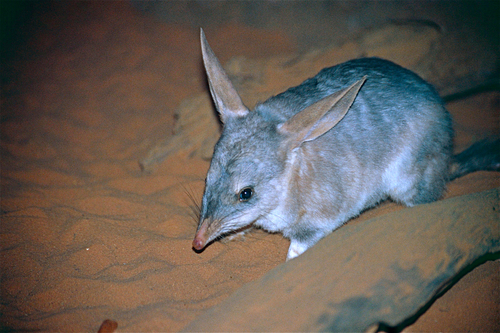
Competitor (c) Bernard DUPONT, some rights reserved (CC BY-SA) · cc-by-sa
Predator "Red Fox" by Mike's Birds is licensed under CC BY-SA 2.0. To view a copy of this license, visit https://creativecommons.org/licenses/by-sa/2.0/. · cc-by-sa
Predator (c) chloe ⋆˚꩜。, some rights reserved (CC BY-SA) · cc-by-sa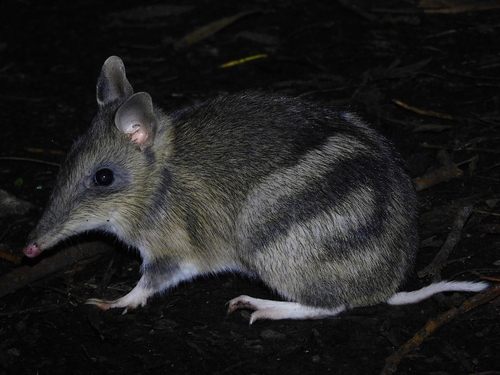
Close Relative no rights reserved · cc0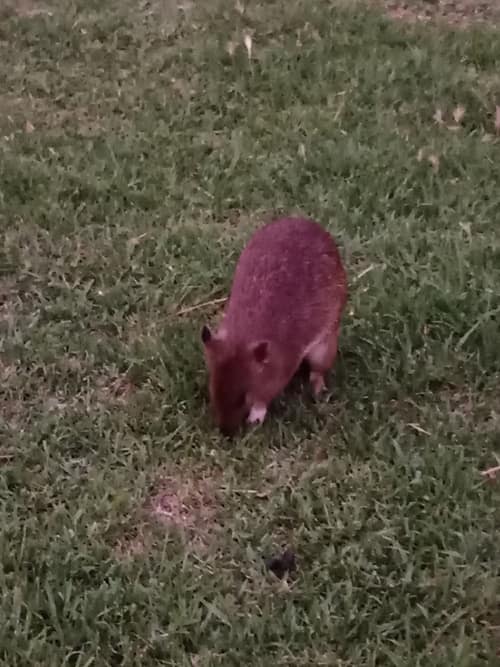
Same Family (c) Patrick Connolly, some rights reserved (CC BY) · cc-by
Help improve the field guideSomething wrong?
Checking your Fauna account…Report a name, category, or profile issue for review.