
Mammal · GBIF taxon 5219456
Desert Bandicoot
Perameles eremianaAlso known as Orange-backed Bandicoot, Walilya
Desert bandicoots were small, solitary marsupials uniquely adapted to survive across the vast sandplains and dunefields of central Australia. During daylight hours they sheltered inside shallow nests lined with grass and dry leaves concealed under spinifex hummocks or inside burrows. At night, they emerged to probe the sandy soil with their pointed snouts in search of subterranean invertebrates and succulent tubers.
NocturnalMarsupial
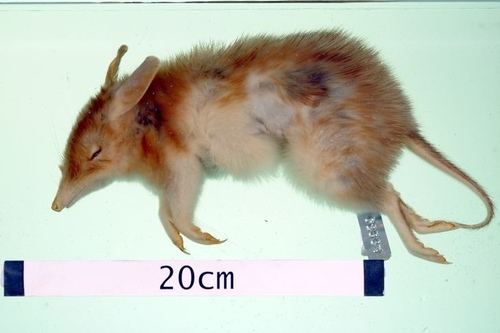
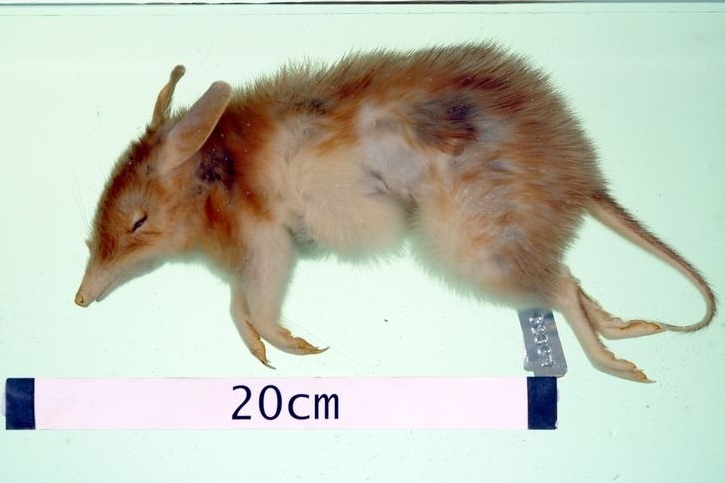
Licensed reference(с)
David Staples, некоторые права защищены (CC BY) · cc-by
—observations
—countries
—peak records
ExtinctConservation statusIUCN Red List categoriesLCNTVUENCREWEXExtinctRed List categories, explained →
Diet & prey
- Termites
- Beetle larvae
- Wild plant tubers
Predators
- Feral Cat
- Red Fox
- Dingo
ThreatsPredation by introduced feral cats and red foxes, alongside altered fire regimes
HabitatsArid sandplains, sand dunes dominated by spinifex hummocks, and acacia shrublands
Life span2–4 years
Classification
- FamilyPeramelidae
- SpeciesPerameles eremiana
Range data is not available yet.
Interaction riskLow
- Low
- Moderate
- High
- Very high
- Why interaction risk is low
- Extinct species; safe to observe historical museum specimens.
Responsible observation
- Historical observation: Documented records exist solely as museum skins, subfossil bone deposits, and Indigenous oral histories.
- Report sightings: Any potential live sighting in remote desert areas should be reported immediately to wildlife conservation authorities.
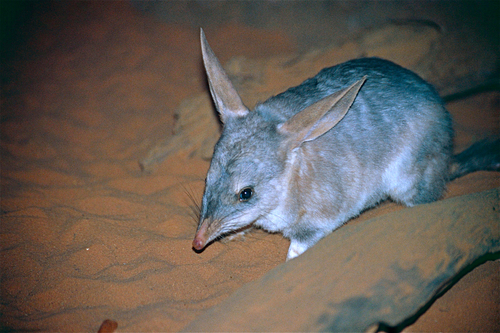
Ecological Neighbor (c) Bernard DUPONT, some rights reserved (CC BY-SA) · cc-by-sa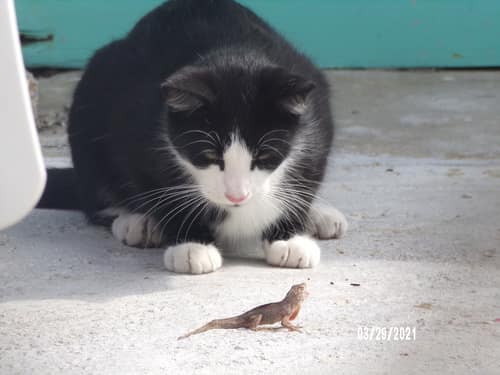
Invasive Predator (c) chloe ⋆˚꩜。, some rights reserved (CC BY-SA) · cc-by-sa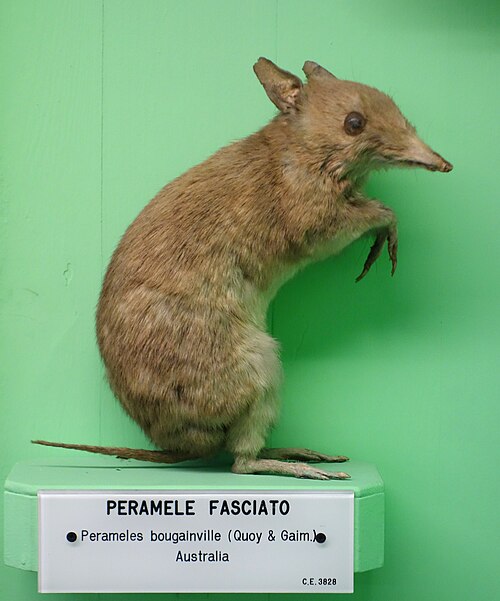
Close Relative Daderot / CC0 · cc0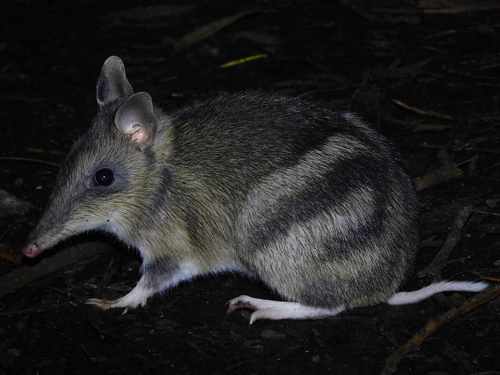
Close Relative no rights reserved · cc0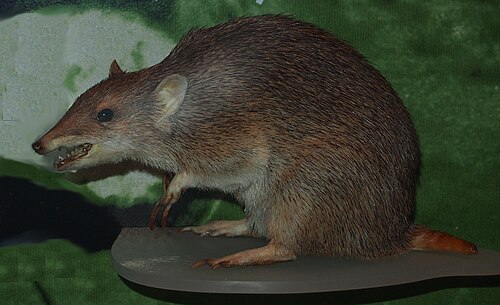
Same Family Mark Marathon / CC BY-SA 4.0 · cc-by-sa
Help improve the field guideSomething wrong?
Checking your Fauna account…Report a name, category, or profile issue for review.