
Mammal
Indian Leopard
Panthera pardus fuscaAlso known as Common Leopard, Indian Panther
Indian leopards are highly adaptable, solitary predators that navigate both dense forests and the fringes of bustling human settlements with remarkable stealth. They are exceptional climbers, frequently hauling heavy prey up into the branches of trees to keep it safe from ground-dwelling competitors. Their beautiful rosetted coats provide perfect camouflage in the dappled light of the subcontinent's diverse woodlands.
NocturnalSolitaryApex Predator
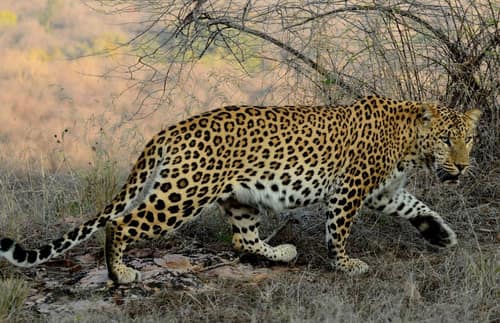
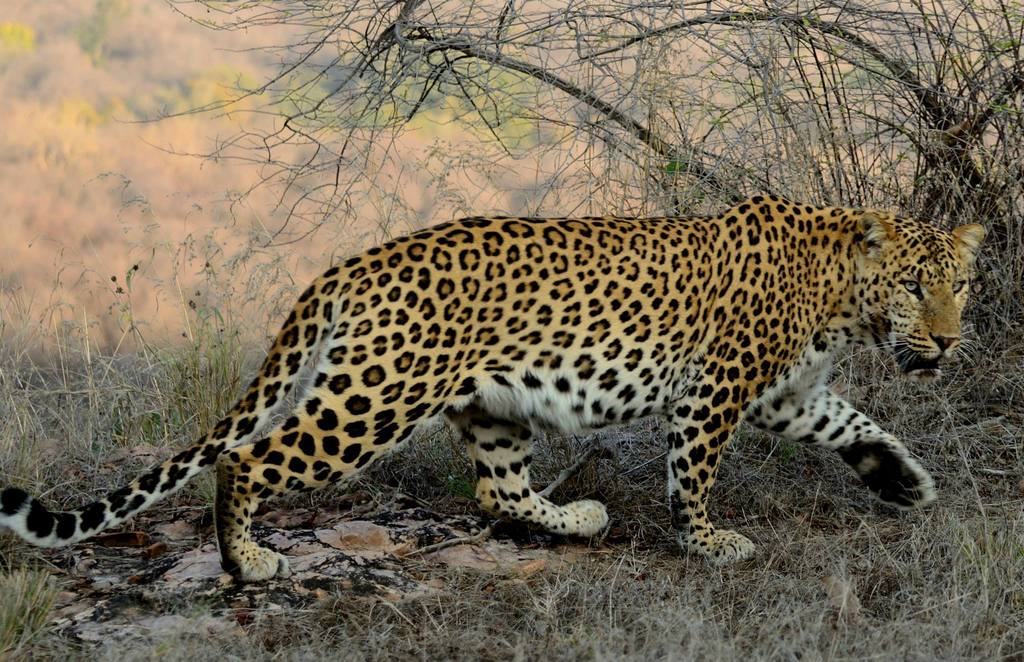
—observations
—countries
—peak records
VulnerableConservation statusIUCN Red List categoriesLCNTVUENCREWEXVulnerableRed List categories, explained →
Diet & preyChital, Sambar Deer, Wild Boar
Predators
- Bengal Tiger
- Dhole
- Humans
ThreatsPoaching for illegal trade, habitat loss, and retaliatory killing due to human-wildlife conflict
HabitatsTropical rainforests, deciduous forests, temperate coniferous forests, grasslands, and shrublands
Life span12 to 15 years in the wild
Classification
- FamilyFelidae
- SpeciesPanthera pardus fusca
Range data is not available yet.
Interaction riskHigh
- Low
- Moderate
- High
- Very high
- Why interaction risk is high
- A powerful apex predator that can attack if cornered; maintain a safe distance and never walk alone at night.
- Why it is dangerous
- Possesses immense physical strength, sharp claws, and a powerful bite capable of causing fatal injuries.
- How to recognize a risky encounter
- Look for a muscular, golden-yellow body covered in dark rosettes, much smaller and more slender than a tiger.
- What to do
- Never approach a leopard, especially one with cubs or near a kill; retreat slowly to a safe vehicle or building.
- What to notice
- Recognized by its rosette patterns, long tail, and graceful, low-slung movement through forest undergrowth.
- Support conservation
- Report sightings to local forest departments and support community-based conservation initiatives.
Responsible observation
- Avoid night walks: Stay indoors or inside secure vehicles after dark in known leopard territories.
- Secure livestock: Keep domestic animals in sturdy, predator-proof shelters overnight.
- Do not run: If you encounter a leopard, stand tall, make noise, and back away slowly without turning your back.
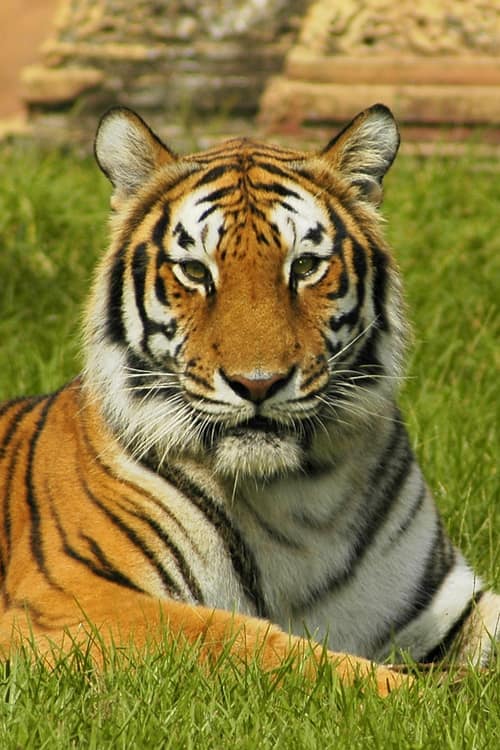
Competitor "Bengal Tiger" by ucumari photography is licensed under CC BY-SA 2.0. To view a copy of this license, visit https://creativecommons.org/licenses/by-sa/2.0/. · cc-by-sa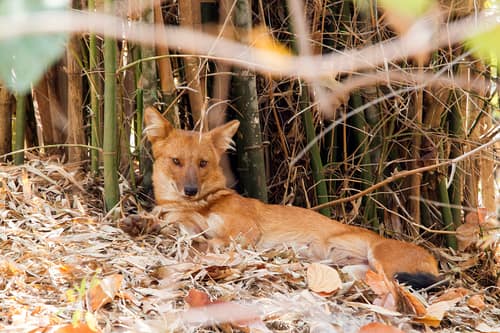
Competitor (c) Ramesh Shenai Jr., some rights reserved (CC BY), uploaded by Ramesh Shenai Jr. · cc-by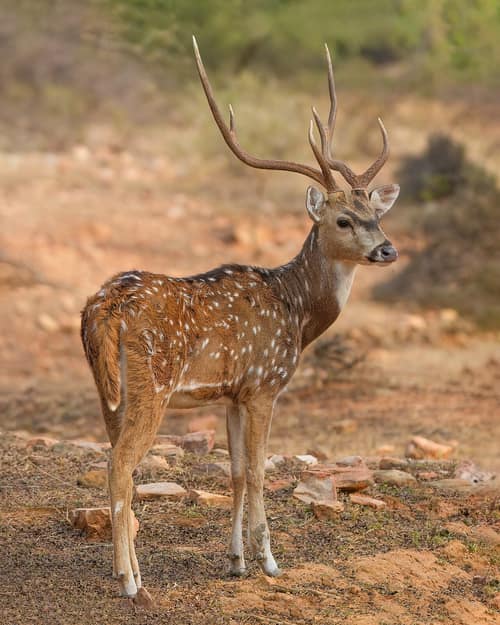
Prey Giles Laurent / CC BY-SA 4.0 · cc-by-sa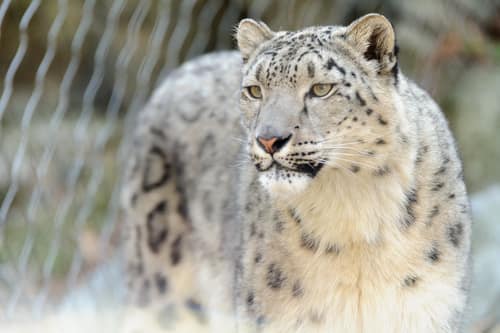
Close Relative "Snow Leopard from the Side" by Eric Kilby is licensed under CC BY-SA 2.0. To view a copy of this license, visit https://creativecommons.org/licenses/by-sa/2.0/. · cc-by-sa
Help improve the field guideSomething wrong?
Checking your Fauna account…Report a name, category, or profile issue for review.