
Mammal · GBIF taxon 5219317
African Wild Dog
Lycaon pictusAlso known as Painted Dog, Cape Hunting Dog, Painted Wolf, African Hunting Dog
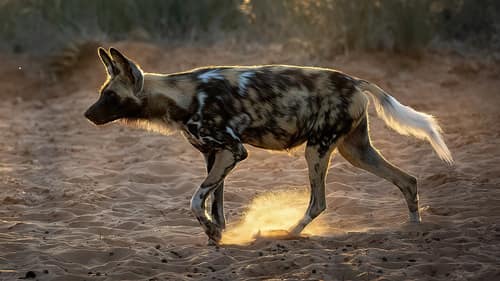
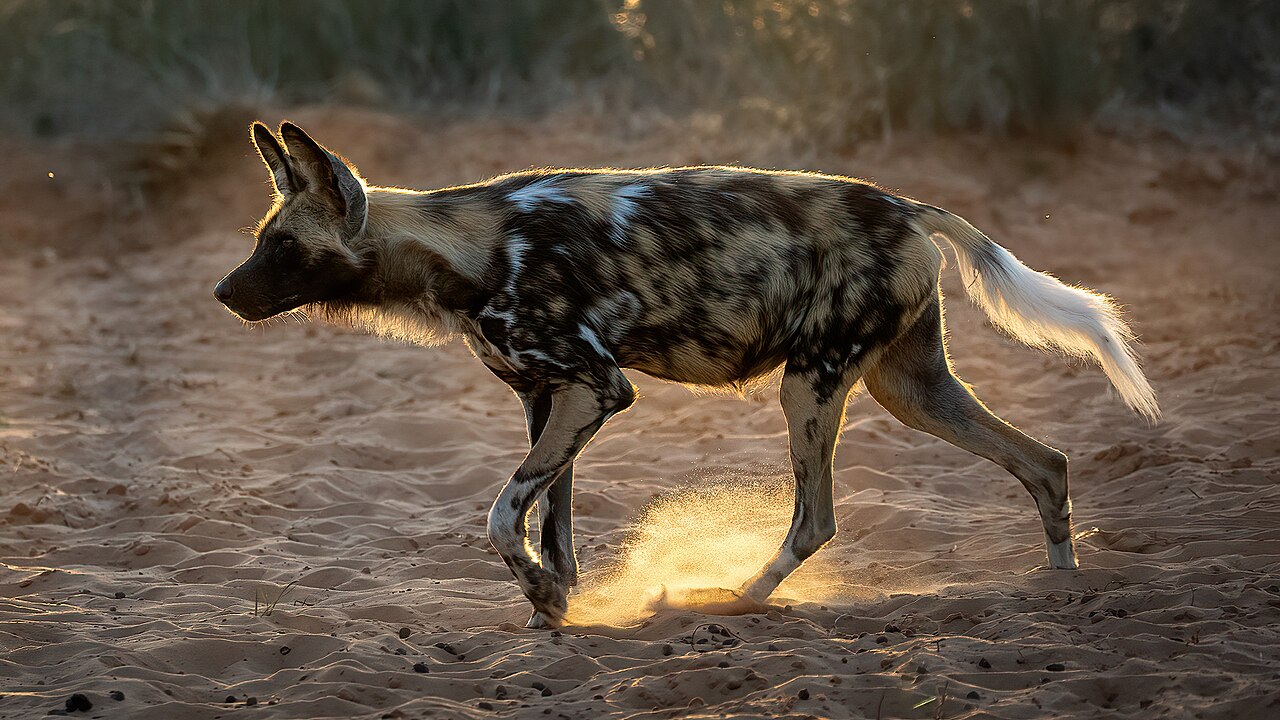
African wild dogs live in tightly knit packs bound by elaborate vocalizations, touch, and collective decision making through sneezes. Highly efficient endurance hunters, these spotted carnivores work in coordinated teams to run down prey across vast territories. Pack members prioritize feeding pups and injured individuals before taking their own shares.
Pack HunterSocial
—observations
—countries
—peak records
EndangeredConservation statusIUCN Red List categoriesLCNTVUENCREWEXEndangeredRed List categories, explained →
Diet & prey
- Impala
- Kudu
- Thomson's Gazelle
Predators
- Lion
- Spotted Hyena
ThreatsHabitat fragmentation, wire snares, infectious diseases, human conflict
HabitatsSavannas, woodlands, and arid scrublands
Life span10–13 years
Classification
- OrderCarnivora
- FamilyCanidae
- GenusLycaon
- SpeciesLycaon pictus
Range data is not available yet.
Interaction riskHigh
- Low
- Moderate
- High
- Very high
- Why interaction risk is high
- Potentially dangerous apex predators; always observe from the safety of a closed vehicle.
- Why it is dangerous
- Equipped with powerful jaws and sharp dentition designed to shear flesh, wild dogs hunt in packs that easily overpower large animals.
- How to recognize a risky encounter
- Recognized by large rounded ears, dark facial masks, white-tipped bushy tails, and mottled patches of black, brown, and white fur.
- What to do
- Never approach on foot; stay inside safari vehicles and maintain at least 50 meters distance.
- What to notice
- Look for distinctive, unique patch patterns on each individual and large bat-like ears.
- Support conservation
- Avoid disclosing exact GPS coordinates of active dens on public social media platforms.
Responsible observation
- Safari Viewing: Remain inside your vehicle at all times and avoid loud noises during hunts.
- Den Site Etiquette: Never approach active dens, as human disturbance causes packs to move vulnerable pups.
- Support Conservation: Back field projects that deploy anti-poaching units to clear snare traps.
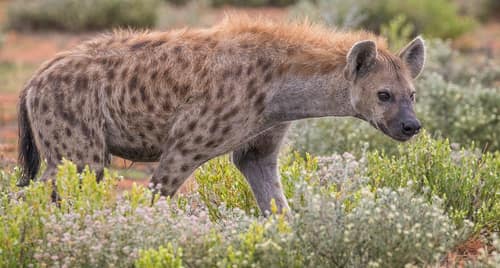
Competitor Charles J. Sharp / CC BY-SA 4.0 · cc-by-sa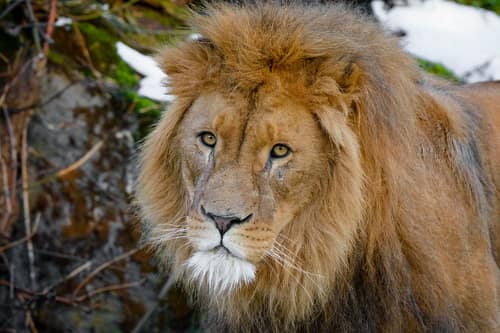
Predator "African Lion" by Mathias Appel is marked with CC0 1.0. To view the terms, visit https://creativecommons.org/publicdomain/zero/1.0/. · cc0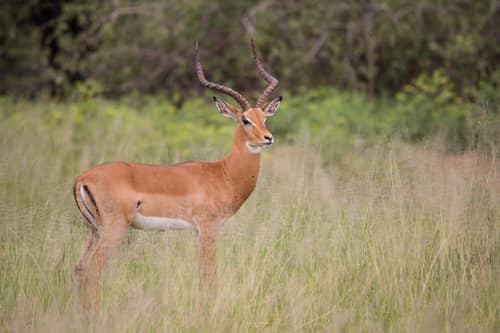
Prey (c) Diogo Luiz, some rights reserved (CC BY), uploaded by Diogo Luiz · cc-by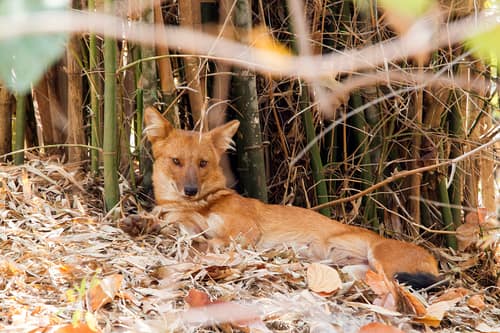
Ecological Counterpart (c) Ramesh Shenai Jr., some rights reserved (CC BY), uploaded by Ramesh Shenai Jr. · cc-by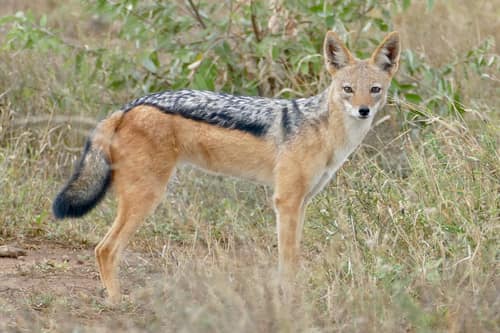
Scavenger (c) Bernard DUPONT, some rights reserved (CC BY-SA) · cc-by-sa
Help improve the field guideSomething wrong?
Checking your Fauna account…Report a name, category, or profile issue for review.