
Mammal · GBIF taxon 5219297
Rüppell's Sand Fox
Vulpes rueppelliiAlso known as Rüppell's Fox, Sand Fox
Rüppell's sand foxes navigate hyper-arid environments by sheltering in underground dens during the heat of the day and emerging at dusk to hunt. Their extra-large ears radiate heat and pinpoint prey beneath the sand, while dense fur coats their paw pads to protect against scorching ground temperatures. Although solitary hunters, monogamous pairs maintain large territories that overlap to protect scarce desert resources.
NocturnalDesertMammal
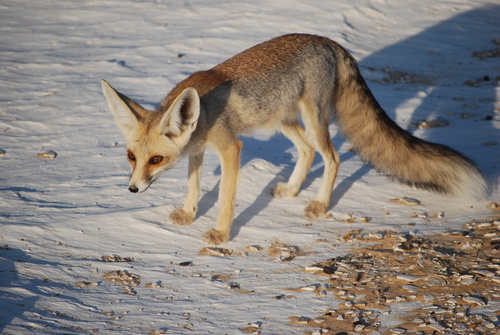

Licensed reference(c) HelmutBoehm, some rights reserved (CC BY-SA) · cc-by-sa
—observations
—countries
—peak records
Least ConcernConservation statusIUCN Red List categoriesLCNTVUENCREWEXLeast ConcernRed List categories, explained →
Diet & prey
- Gerbils
- Lizards
- Locusts
Predators
- Eagles
- Eagle owls
- Golden jackals
ThreatsPoisoning targeted at jackals, habitat degradation, competition with red foxes
HabitatsArid deserts, sand dunes, gravel plains, rocky hills
Life span6–12 years in the wild
Size / weightNot available
Classification
- FamilyCanidae
- SpeciesVulpes rueppellii
Range data is not available yet.
Interaction riskModerate
- Low
- Moderate
- High
- Very high
- Why interaction risk is moderate
- Capable of biting if cornered or handled; observe from a respectful distance.
Responsible observation
- Night spotting: Scan dry riverbeds and dune edges with a red light after dark.
- Track reading: Look for indistinct pad prints caused by dense hair covering their paw soles.
- Burrow respect: Avoid approaching occupied dens during the spring breeding period.
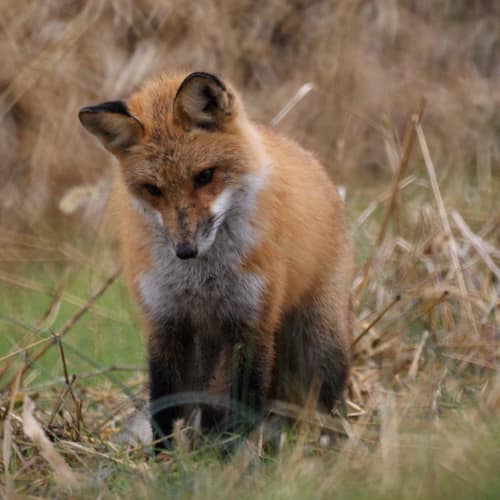
Competitor "Red Fox" by Mike's Birds is licensed under CC BY-SA 2.0. To view a copy of this license, visit https://creativecommons.org/licenses/by-sa/2.0/. · cc-by-sa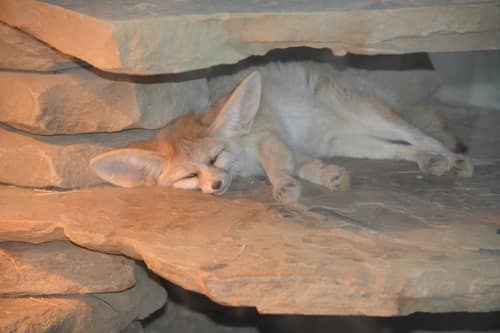
Close Relative (c) Stacey Robert Greenstein, some rights reserved (CC BY-SA), uploaded by Stacey Robert Greenstein · cc-by-sa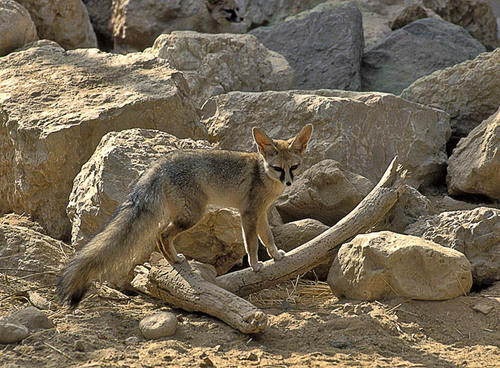
Close Relative (c) Eyal Bartov, some rights reserved (CC BY-SA) · cc-by-sa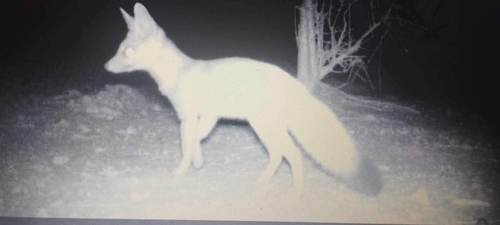
Close Relative (c) Mourad Harzallah, some rights reserved (CC BY) · cc-by
Help improve the field guideSomething wrong?
Checking your Fauna account…Report a name, category, or profile issue for review.