
Mammal
Brown Hyena
Hyaena brunneaAlso known as Strandwolf
Brown hyenas are predominantly nocturnal scavengers that roam solitary territories across harsh deserts and coastal shorelines, relying on an exceptional sense of smell to locate carrion miles away. Along the Skeleton Coast, they comb beaches for seal carcasses and marine refuse, earning their traditional Afrikaans name strandwolf. Despite their solitary foraging habits, related individuals share communal dens and maintain intricate clan territories through scent marking with paste from anal glands.
NocturnalScavengerDesert Dweller
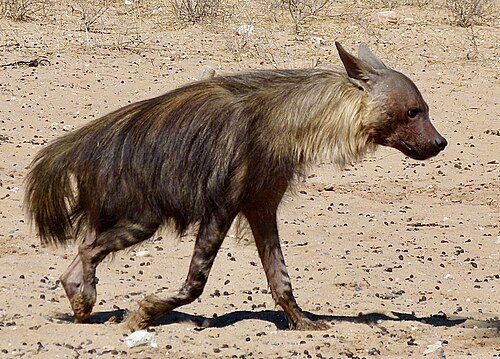
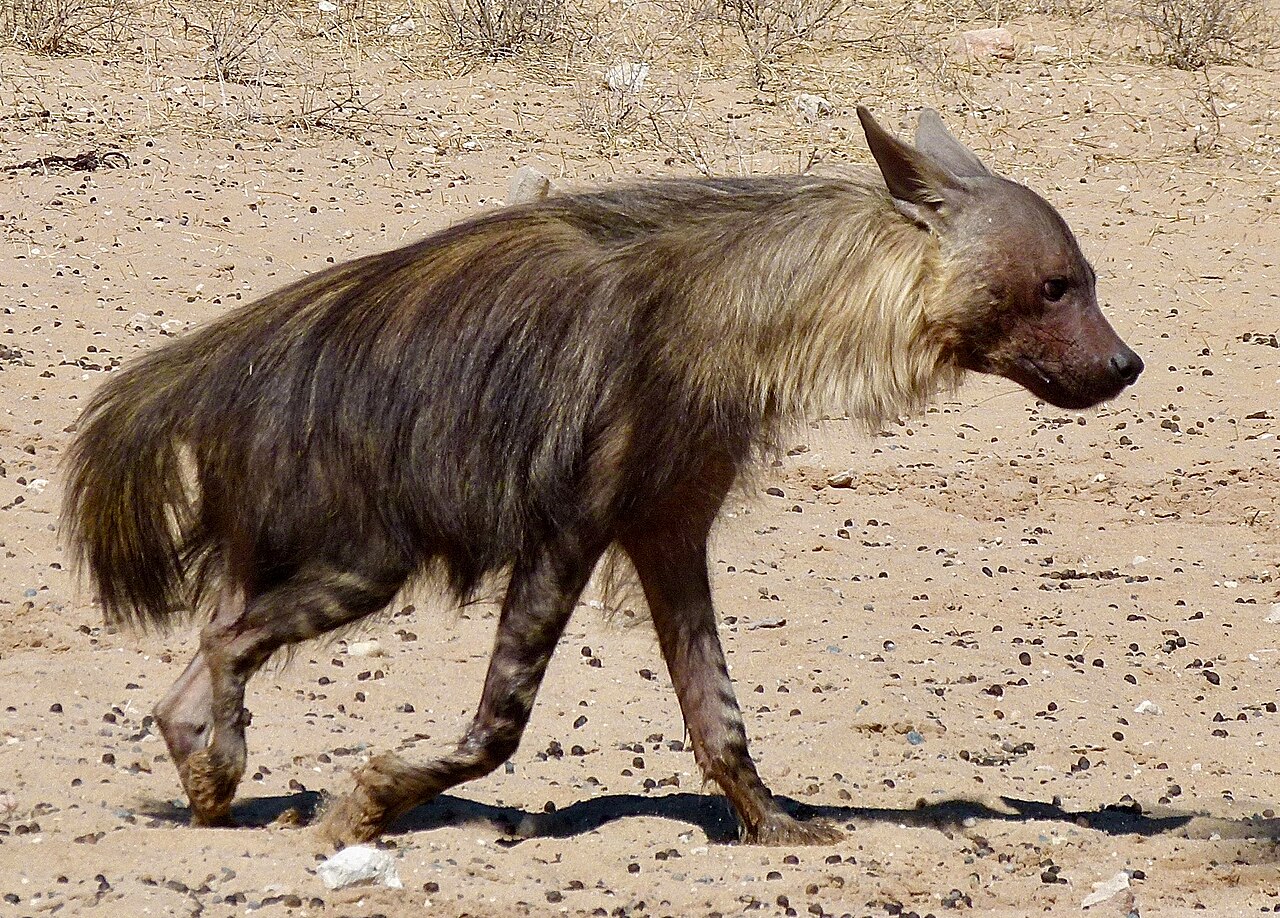
—observations
—countries
—peak records
Near ThreatenedConservation statusIUCN Red List categoriesLCNTVUENCREWEXNear ThreatenedRed List categories, explained →
Diet & preyCape fur seal, Springbok, Tsamma melon
Predators
- Lion
- Spotted hyena
ThreatsPersecution by livestock farmers, retaliatory poisoning, vehicle collisions, and habitat loss
HabitatsArid deserts, coastal dunes, semi-desert scrublands, and open savanna woodlands
Life span12–15 years in the wild; up to 24 years in captivity
Classification
- FamilyHyaenidae
- SpeciesHyaena brunnea
Range data is not available yet.
Interaction riskHigh
- Low
- Moderate
- High
- Very high
- Why interaction risk is high
- Powerful bone-crushing jaws make close contact hazardous; observe from the safety of a vehicle.
- Why it is dangerous
- Equipped with massive jaw muscles and robust premolars capable of splintering large bones, capable of inflicting severe crush injuries if cornered.
- How to recognize a risky encounter
- Look for a shaggy dark-brown mantle of long hair, striped legs, pointed ears, and a sloping back with elevated shoulders.
- What to do
- Never approach on foot, especially near active dens or fresh feeding sites, and back away slowly if encountered unexpectedly.
- What to notice
- Easily recognized by its shaggy dark coat and nocturnal, cautious foraging behavior across southern African arid zones.
- Support conservation
- Keep den locations strictly confidential and maintain a respectful distance to avoid driving parents to abandon cubs.
Responsible observation
- Vehicle Viewing: Stay inside safari vehicles when watching hyenas near waterholes or carcasses.
- Nocturnal Drives: Use red-filtered spotlights during night drives to avoid disturbing their foraging.
- Track Identification: Look for distinctive tracks with large front paw prints tapering to smaller rear paws.
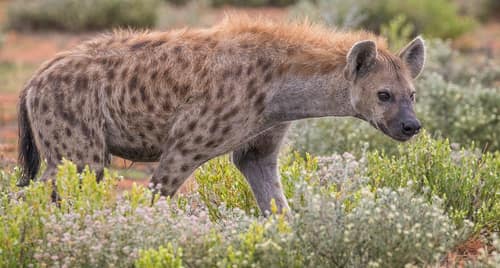
Competitor Charles J. Sharp / CC BY-SA 4.0 · cc-by-sa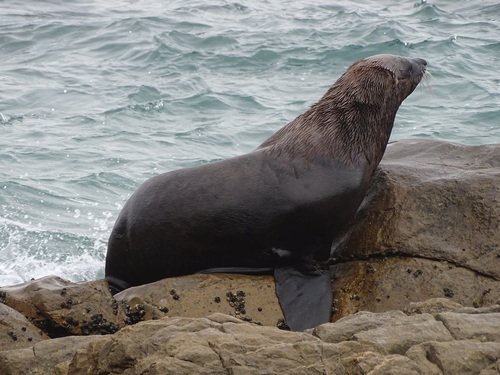
Prey (c) Shaun Swanepoel, some rights reserved (CC BY), uploaded by Shaun Swanepoel · cc-by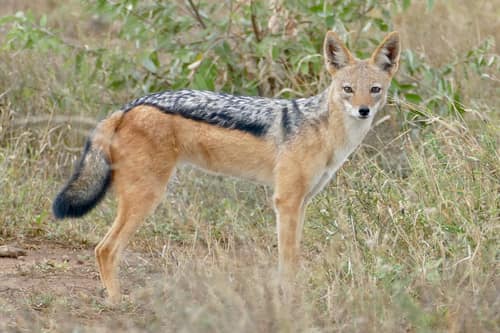
Competitor (c) Bernard DUPONT, some rights reserved (CC BY-SA) · cc-by-sa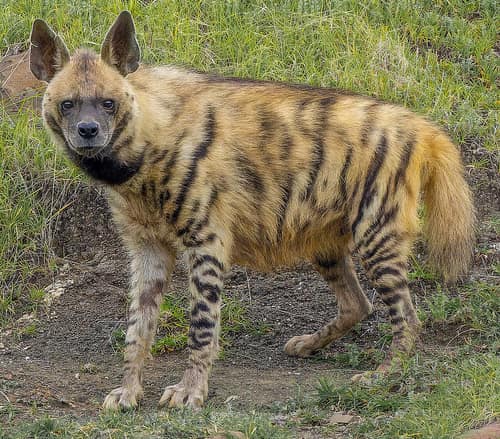
Close Relative Tisha Mukherjee / CC BY-SA 4.0 · cc-by-sa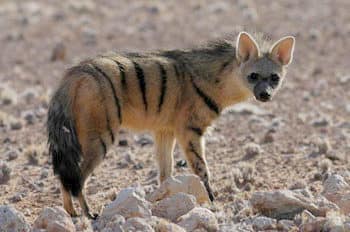
Family Member no rights reserved, uploaded by Dave Brown · cc0
Help improve the field guideSomething wrong?
Checking your Fauna account…Report a name, category, or profile issue for review.