
Amphibian
Texas Blind Salamander
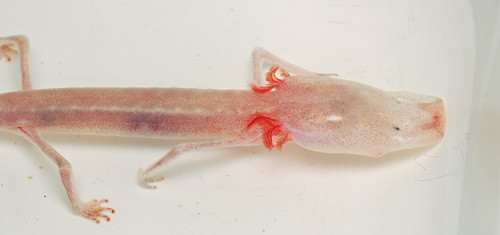
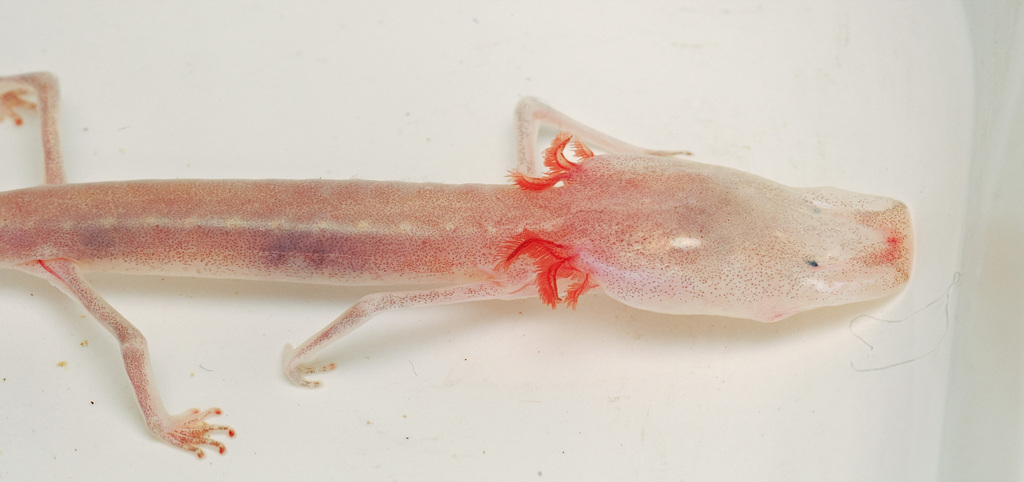
Eurycea rathbuniAdapted to absolute darkness in deep water-filled limestone caverns, Texas blind salamanders navigate entirely by chemical cues and sensitive skin receptors that register water movement. They remain permanently aquatic in a larval form throughout life, retaining bushy, blood-red external gills used to extract sparse oxygen from subterranean aquifers. As top predators of their sunless ecosystem, they stalk blind amphipods and isopods by moving their flattened, shovel-shaped snouts across cavern floors.
TroglobiteSubterraneanAquatic
—observations
—countries
—peak records
VulnerableConservation statusIUCN Red List categoriesLCNTVUENCREWEXVulnerableRed List categories, explained →
Diet & preySubterranean amphipods, Blind cave shrimp, Aquatic isopods
Predators
- Cannibalistic adult salamanders
ThreatsAquifer overdraft, groundwater pollution, and rapid urban development
HabitatsSubterranean water-filled limestone caverns and deep aquifer fissures
Life span10–15 years
Classification
- FamilyPlethodontidae
- SpeciesEurycea rathbuni
Range data is not available yet.
Interaction riskLow
- Low
- Moderate
- High
- Very high
- Why interaction risk is low
- Harmless and fragile; poses no danger to humans.
- What to notice
- Look for a pale translucent-white body, flattened snout, tiny vestigial eyes, and bright red external gills.
- Support conservation
- Do not capture, handle, or disturb individuals; admire from a distance and leave cave waters pristine.
Responsible observation
- Observation: Most commonly observed via specialized nets placed over artesian well outflows.
- Habitat Care: Avoid polluting local groundwater and conserve water to preserve subterranean flows.
- Reporting: Notify wildlife authorities immediately if found outside managed aquifer facilities.
 Image unavailable
Look-alike 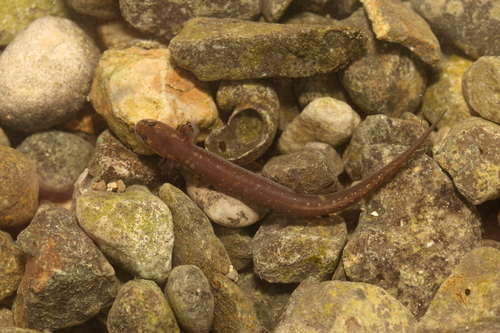
Close Relative (c) Reid Hardin, some rights reserved (CC BY), uploaded by Reid Hardin · cc-by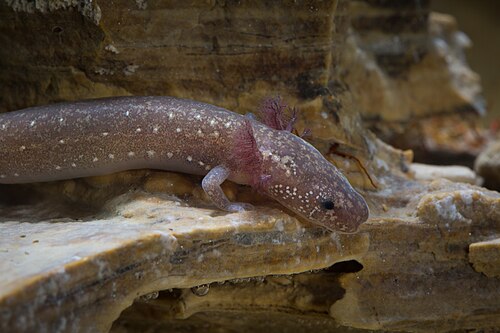
Close Relative Ryan Hagerty/USFWS / Public domain · cc0Close Relative
Help improve the field guideSomething wrong?
Checking your Fauna account…Report a name, category, or profile issue for review.