
Amphibian · GBIF taxon 5218022
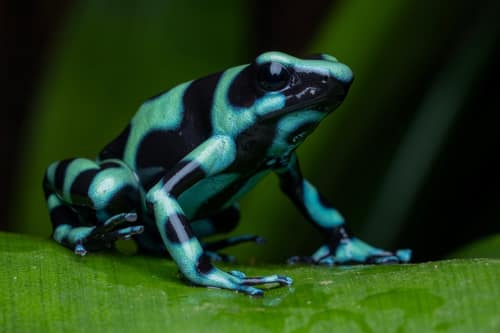
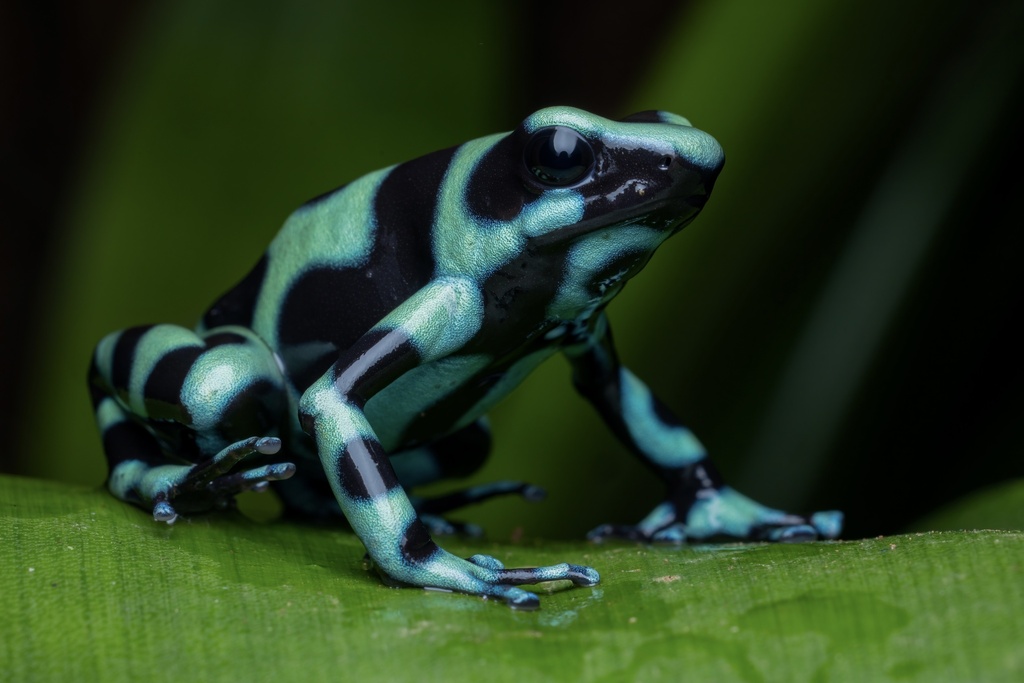
Green-and-black Poison Dart Frog
Dendrobates auratusAlso known as Green-and-black Poison Frog
Green-and-black Poison Dart Frogs are small daytime frogs with highly variable green, turquoise, or blue markings over a dark background. Adults move across humid forest floors, and parents transport newly hatched tadpoles to small water bodies.
poison frogdiurnalrainforest floor
 1 / 7
1 / 7—observations
—countries
—peak records
Least ConcernConservation statusIUCN Red List categoriesLCNTVUENCREWEXLeast ConcernRed List categories, explained →
Diet & prey
- ants
- mites
- tiny beetles
Predators
- snakes
- birds
- large arthropods
ThreatsForest loss, illegal collection, disease, pesticides, and drying microclimates
HabitatsHumid lowland forest, shaded stream edges, wet leaf litter, and dense secondary growth
Life spanOften five to eight years, with some protected individuals living longer
Size / weightNot available
Classification
- OrderAnura
- FamilyDendrobatidae
- GenusDendrobates
- SpeciesDendrobates auratus
Range data is not available yet.
Interaction riskHigh
- Low
- Moderate
- High
- Very high
- Why interaction risk is high
- Wild skin secretions may contain alkaloid toxins; never touch or allow contact with the mouth, eyes, or cuts.
- Why it is dangerous
- Wild frogs can carry defensive alkaloids acquired from prey, and contact may transfer toxins to vulnerable tissue.
- How to recognize a risky encounter
- Confirm a small poison frog with variable bright green or blue patterning over black skin.
- What to do
- Do not touch, capture, or mouth-contact the frog; wash exposed skin and seek help after significant exposure.
Responsible observation
- Observe: Use distant optics and keep hands away from frogs and their resting surfaces.
- Identify: Note the irregular bright pattern, compact body, and daytime forest-floor activity.
Help improve the field guideSomething wrong?
Checking your Fauna account…Report a name, category, or profile issue for review.