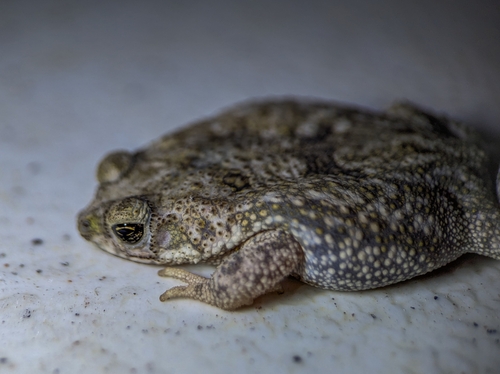
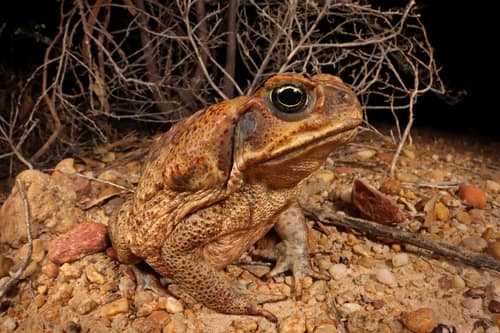
Yellow Cururu toads are robust, terrestrial amphibians that emerge at dusk to forage across leaf litter and open clearings in the Atlantic Forest. Breeding males gather around permanent streams and quiet ponds, filling the night air with a distinctive, melodious trill to attract larger females. During the day, they shelter beneath fallen logs, rock crevices, or thick vegetation to maintain skin moisture and avoid daytime predators.
ThreatsHabitat loss from deforestation, road mortality, and water pollution
HabitatsSubtropical moist forests, gallery woodlands, agricultural areas, and suburban gardens
Life span10–15 years
Size / weightNot available
Classification
FamilyBufonidae
SpeciesRhinella icterica
Range & activity
Range data is not available yet.
Safe observation
Interaction riskHigh
Low
Moderate
High
Very high
Why interaction risk is high
Parotoid glands secrete toxic bufadienolides; do not handle and keep pets away.
Why it is dangerous
Large parotoid glands behind the eyes produce bufotoxins and bufadienolides that trigger cardiac arrhythmia, severe salivation, and seizures if chewed or swallowed by pets.
How to recognize a risky encounter
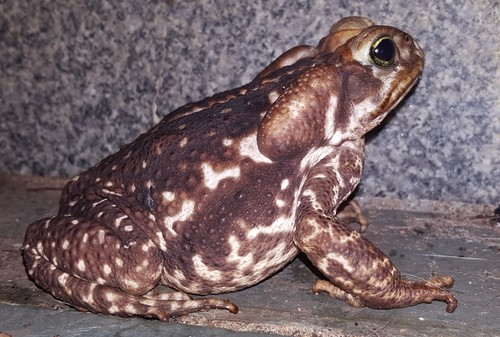
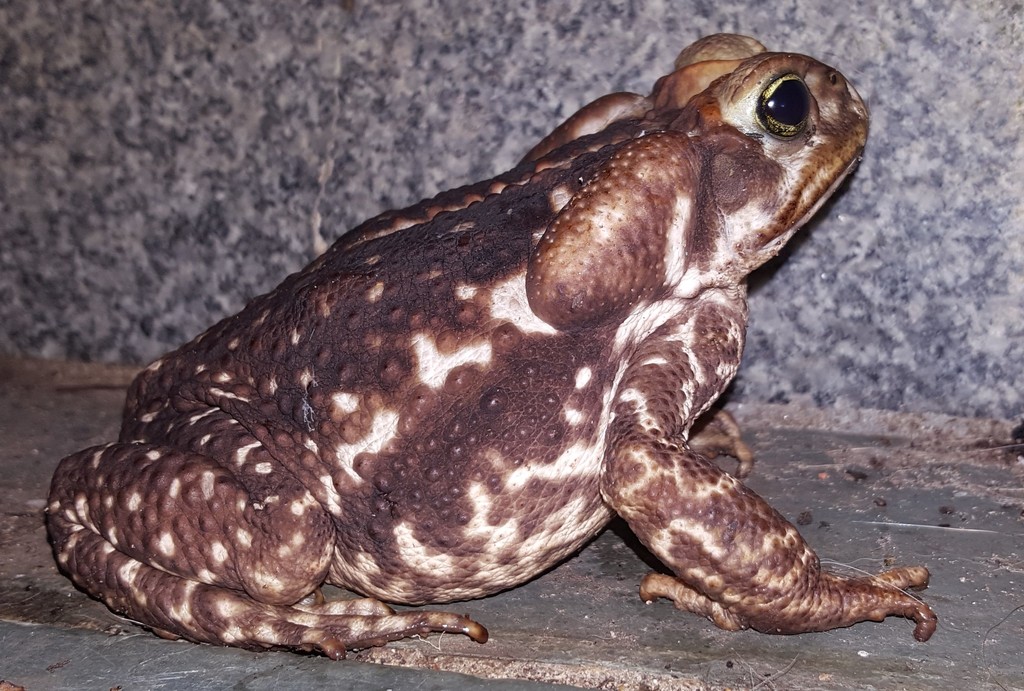
Recognized by its large size, warty yellow-brown skin, and prominent swollen oval glands directly behind each eye.
What to do
Do not touch or pick up, and immediately rinse your pet's mouth with running water if contact occurs.
Responsible observation
Night Spotting: Walk along forest edges or suburban clearings with a headlamp after heavy summer rains.
Pet Safety: Prevent curious dogs from mouthing or biting toads, as skin secretions cause severe poisoning.
Gentle Observation: Watch their slow, deliberate foraging gait from a respectful distance without touching.

 1 / 7
1 / 7