
Amphibian · GBIF taxon 5216933
Cane Toad
Rhinella marinaAlso known as Marine Toad, Giant Neotropical Toad
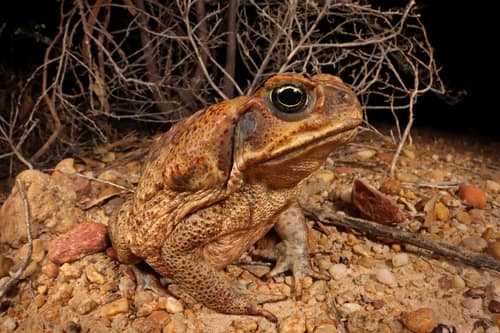
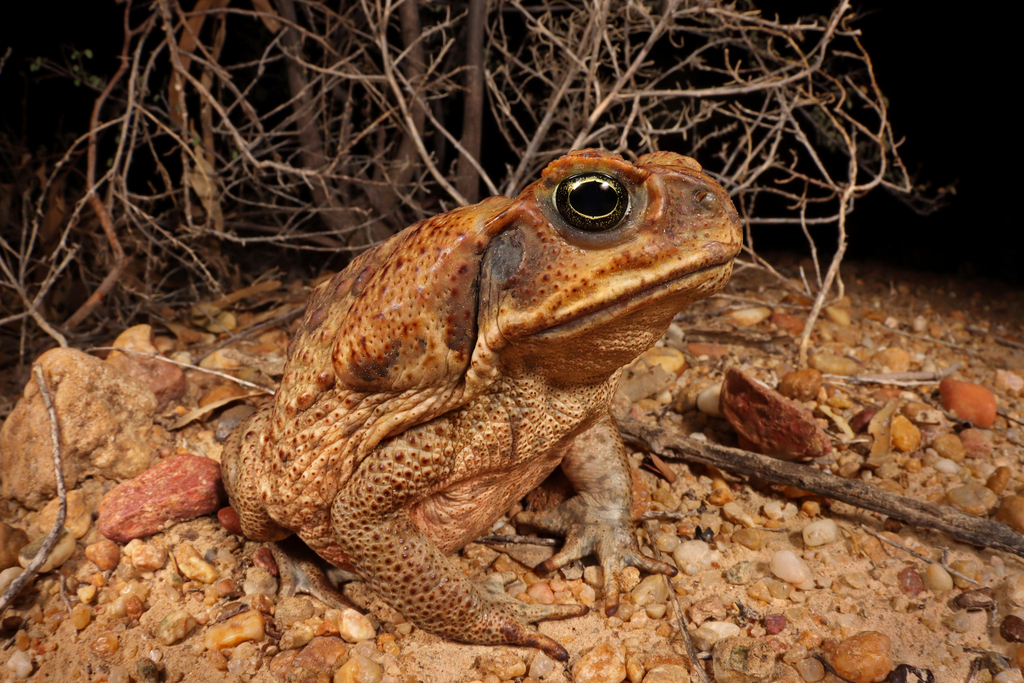
The Cane Toad is a very large, warty terrestrial toad with strong bony head ridges and prominent poison glands behind the eyes. It forages mostly at night and adapts readily to farms, gardens, roadsides, and other disturbed ground.
Large ToadNight ForagerParotoid Glands
 1 / 7
1 / 7—observations
—countries
—peak records
Least ConcernConservation statusIUCN Red List categoriesLCNTVUENCREWEXLeast ConcernRed List categories, explained →
Diet & prey
- Beetles
- Roaches
- Small vertebrates
Predators
- Large snakes
- Crocodilians
- Specialist birds
ThreatsRoad mortality, drought, persecution, pollution, and habitat loss within its native range
HabitatsTropical forest edge, savanna, farmland, gardens, towns, wetlands, and disturbed ground
Life spanOften 10 to 15 years, with longer lives possible
Size / weightNot available
Classification
- OrderAnura
- FamilyBufonidae
- GenusRhinella
- SpeciesRhinella marina
Range data is not available yet.
Interaction riskHigh
- Low
- Moderate
- High
- Very high
- Why interaction risk is high
- Milky gland secretions irritate mucous membranes and can rapidly poison pets that mouth the toad.
- Why it is dangerous
- Potent bufotoxins can cause drooling, seizures, dangerous heart rhythms, or death when a pet mouths the toad.
- How to recognize a risky encounter
- Look for immense parotoid glands behind the eyes, dry warty skin, bony head ridges, and large size.
- What to do
- Do not touch with bare hands; prevent pet contact and wash exposed skin before touching eyes or mouth.
Responsible observation
- Distance: Observe without touching, chasing, or blocking the toad.
- Pets: Keep dogs and cats leashed and away from all toads.
- Emergency: After pet exposure, rinse the mouth outward and seek veterinary care immediately.
Help improve the field guideSomething wrong?
Checking your Fauna account…Report a name, category, or profile issue for review.