
Amphibian · GBIF taxon 5216573
Tomato Frog
Dyscophus antongiliiAlso known as Madagascar Tomato Frog
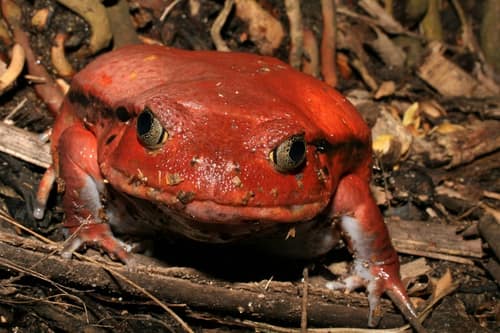
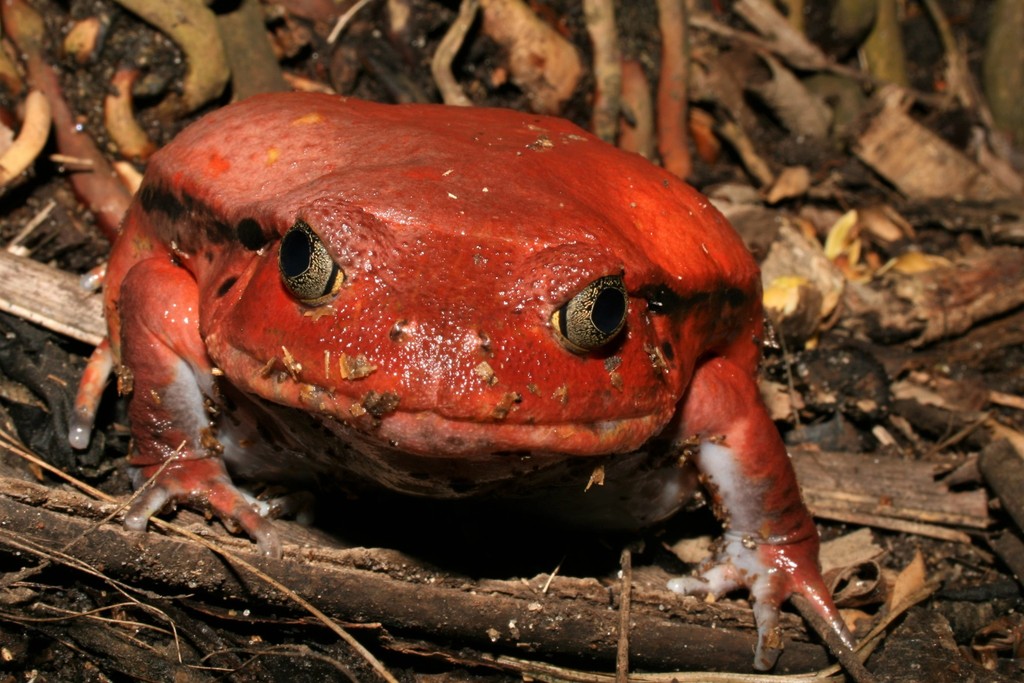
Tomato frogs are striking, brightly colored amphibians endemic to the rainforests and coastal lowlands of northeastern Madagascar. When threatened, females inflate their plump bodies into a bright red-orange sphere and secrete a sticky white mucus that numbs predators' mouths. They spend much of their time burrowed in moist leaf litter or mud, emerging mainly at night and after heavy rainfall to hunt.
AmphibianColorfulNocturnal
—observations
—countries
—peak records
Least ConcernConservation statusIUCN Red List categoriesLCNTVUENCREWEXLeast ConcernRed List categories, explained →
Diet & prey
- Insects
- Spiders
- Worms
Predators
- Snakes
- Birds of prey
ThreatsHabitat destruction, water pollution, and historic overcollection for trade
HabitatsTropical lowland rainforests, swamps, and sluggish streams
Life span10–12 years
Size / weightNot available
Classification
- FamilyMicrohylidae
- SpeciesDyscophus antongilii
Range data is not available yet.
Interaction riskLow
- Low
- Moderate
- High
- Very high
- Why interaction risk is low
- Secretes a sticky skin latex that causes irritation and numbness; avoid direct handling.
- Why it is dangerous
- Secretes a milky, sticky skin latex containing toxins that cause temporary localized numbness, swelling, and eye irritation.
- How to recognize a risky encounter
- Recognizable by its broad body and brilliant red to orange skin, resembling a ripe tomato.
- What to do
- Observe without touching, and wash hands thoroughly if accidental contact occurs.
- What to notice
- Look for large, bright red female frogs resting in moist leaf litter or shallow muddy pools.
- Support conservation
- Keep a respectful distance and avoid altering or polluting fragile wetland habitats.
Responsible observation
- Observe from a distance: Watch for their distinctive inflated stance when active on warm, wet nights.
- Avoid skin contact: Their defensive milky skin secretion causes skin numbness and eye irritation.
- Listen after rain: Males produce low, musical croaks from flooded pools following heavy rainfall.
 Image unavailable
Close Relative Close Relative
Help improve the field guideSomething wrong?
Checking your Fauna account…Report a name, category, or profile issue for review.