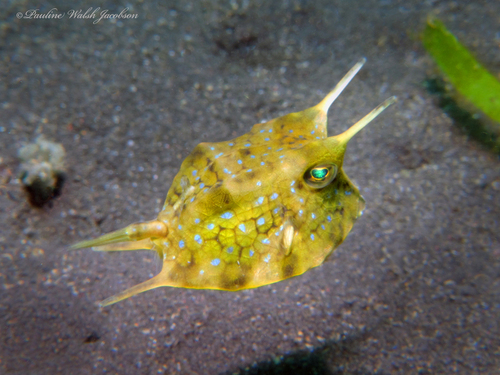
Also known as Polka-Dot Boxfish, Cube Boxfish, Yellow Trunkfish
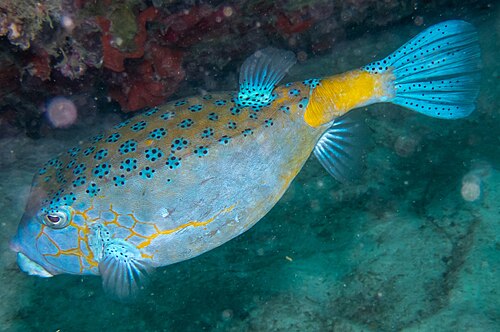
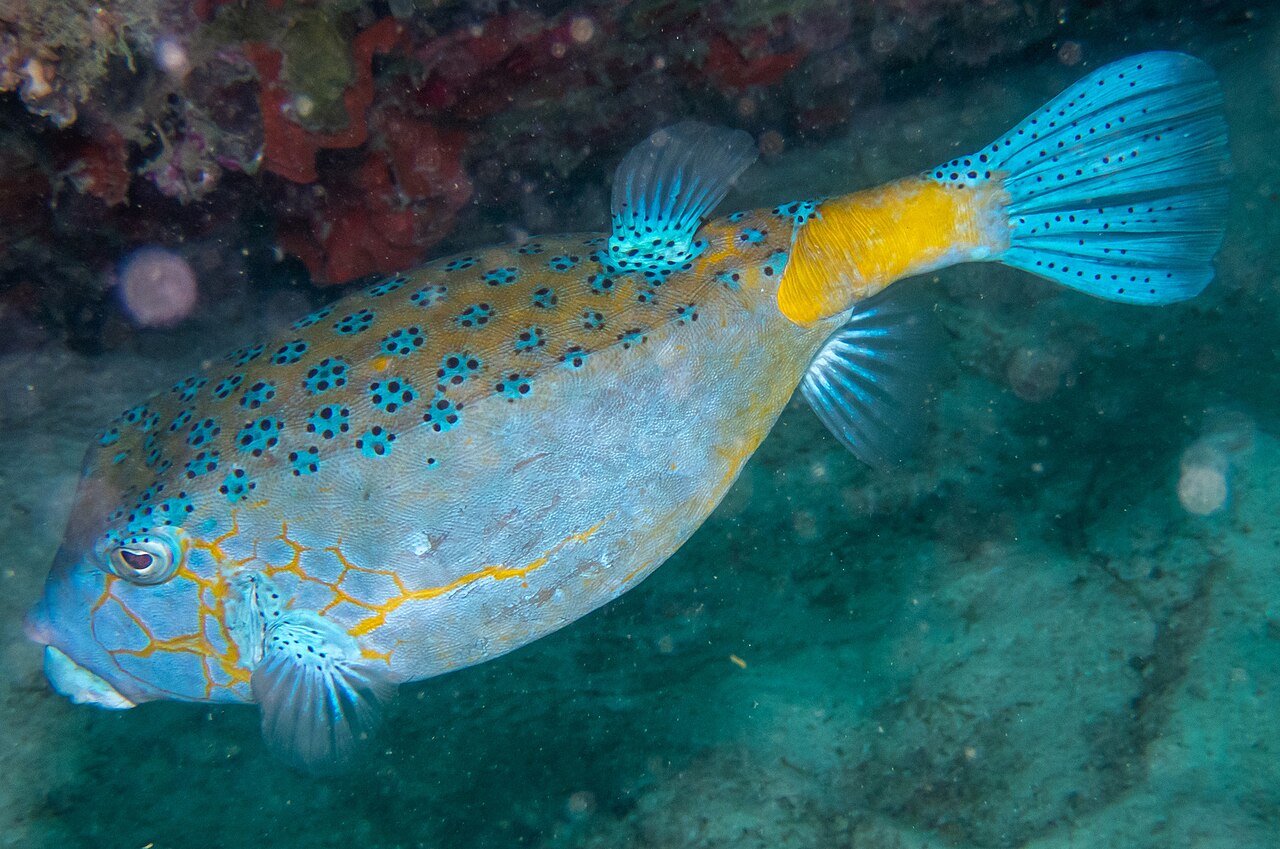
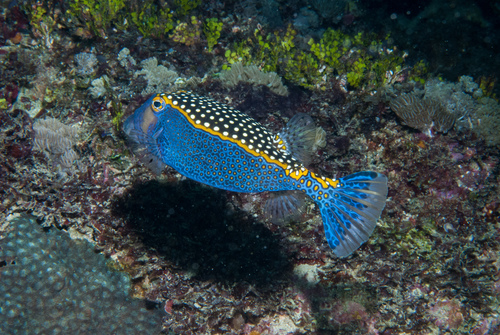
Yellow boxfish are solitary reef dwellers instantly recognized by their rigid, carapace-encased cuboid bodies and distinctive synchronous fin sculling. Juveniles flaunt bright yellow skin peppered with stark black polka dots, but adults transition to a muted mustard or metallic blue-grey with faint rings. When stressed or attacked, they can exude ostracitoxin from their skin mucus, a hemolytic poison capable of killing surrounding marine life in enclosed spaces.
Not EvaluatedConservation statusIUCN Red List categoriesLCNTVUENCREWEXNot Evaluated — not placed on the risk ladderRed List categories, explained →
Key facts
Diet & preyBenthic algae, Small crustaceans, Marine sponges
Predators
Tiger shark
Giant grouper
Large moray eel
ThreatsCoral reef degradation, warming ocean waters, and aquarium trade harvesting
HabitatsCoral reefs, rocky coastal shallows, and lagoons
Life span6–10 years
Classification
FamilyOstraciidae
SpeciesOstracion cubicus
Range & activity
Range data is not available yet.
Safe observation
Interaction riskHigh
Low
Moderate
High
Very high
Why interaction risk is high
Secretes lethal ostracitoxin in skin mucus when stressed; never ingest and observe quietly from a distance.
Why it is dangerous
When alarmed or injured, specialized epidermal cells release ostracitoxin (pahutoxin), a potent surfactant and hemolytic toxin that dissolves red blood cells and suffocates nearby fish.
How to recognize a risky encounter
Look for a boxy, angular silhouette with tiny fluttering fins and either brilliant yellow skin with dark dots or a subdued brownish-blue pattern in mature adults.
What to do
Maintain a generous buffer while diving or snorkeling; never attempt to touch, capture, or harass individuals in the wild or in aquariums.
Responsible observation
Maintain Space: Give swimming individuals ample room to prevent stress-induced toxic mucus discharge.
Refrain From Cornering: Never chase or pin them against reef crevices, as panic triggers chemical defense.
No Handling: Avoid touching skin surfaces to protect the animal's delicate protective mucus barrier.